Cottage food laws · Washington
Selling homemade food in Washington
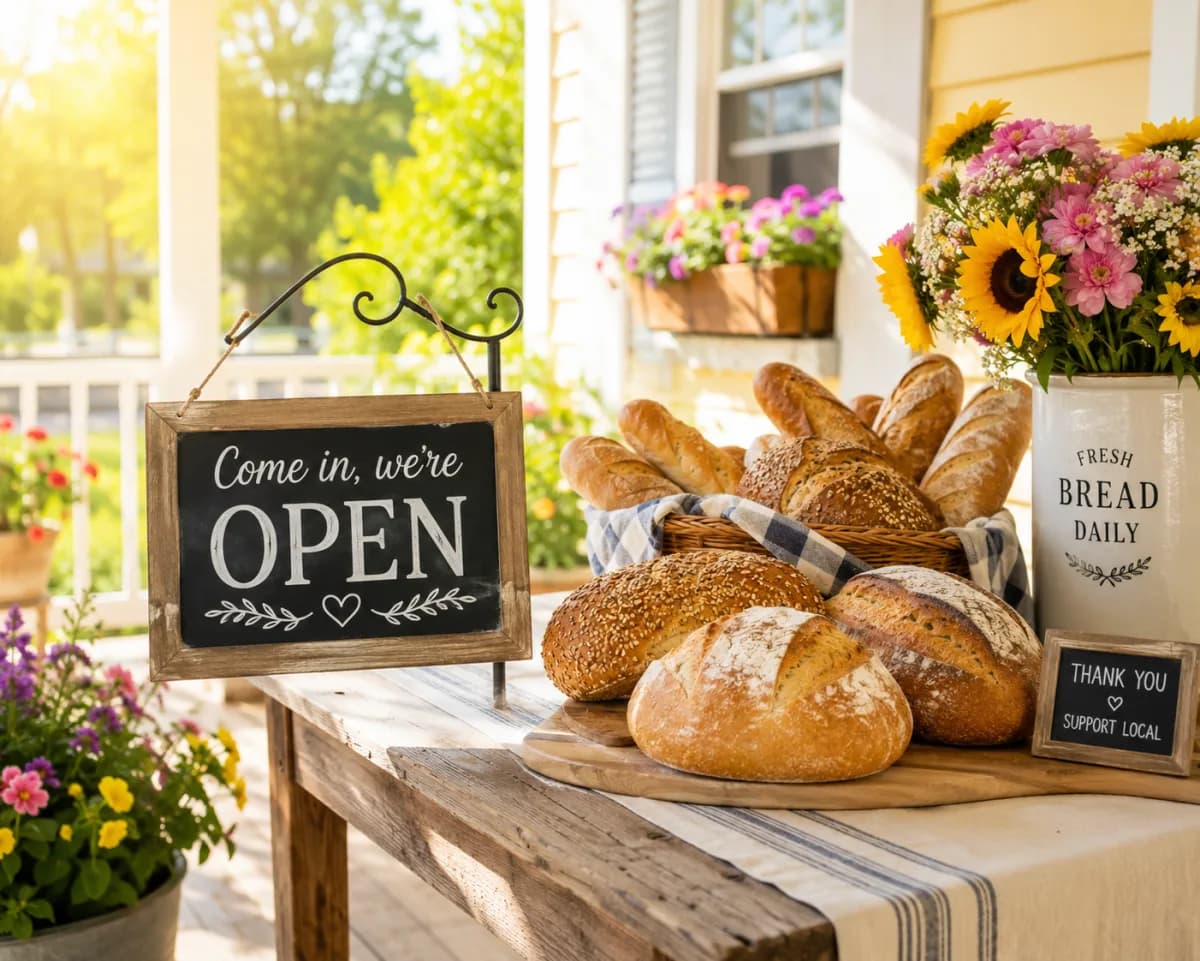
Washington sits on the stricter end of the country: there’s one home-food path, and it asks more of you than most states do. A WSDA Cottage Food Operation permit runs $355 for two years, includes an annual inspection of your home kitchen, and everyone who touches the food needs a food worker card. In exchange you can make shelf-stable goods — breads, cakes, candy, jams — and sell them in person, inside Washington, directly to the person buying. No shipping, no refrigerated products (so no cheesecake), and a $35,000-a-year ceiling, measured per home. It’s more paperwork than most states, but it’s a clear, single path. Here’s the whole picture, in plain English.
Verified against Chapter 69.22 RCW, Chapter 16-149 WAC and WSDA’s Cottage Food program
Last checked June 12, 2026 — every section links its sources.
A plain-English breakdown, not legal advice — we’re not lawyers. Always confirm the details with your own city and state before you sell.
The 2-minute version
- Sales cap
- ~$35,000/yr
- State registration
- Required
- Kitchen inspection
- Required
- Food-handler card
- Required
- Sell at markets
- Yes
- Shipping
- Not allowed
Three cards, the whole story. Everything below is detail — with the actual laws linked, so you never have to take our word for it.
What it takes to start
One path: a WSDA Cottage Food Operation permit. It costs $355 for two years, includes a kitchen inspection before your first permit and every year after, and everyone who prepares the food holds a $10 food worker card. Earnings are capped at $35,000 a year, per home — not per person.
Online orders? Shipping?
You can take an order and payment online — but the hand-off has to happen in person, inside Washington. WSDA is explicit: “delivery by mail or courier is prohibited.” No shipping, no out-of-state sales, no wholesale or grocery shelves.
Refrigerated? Cheesecake?
Shelf-stable foods only — nothing that needs refrigeration. Cheesecake fails twice: it needs refrigeration and it’s dairy. And Washington wrote no kid carve-out — a young baker faces the same permit, inspection, and food worker card as anyone.
One way to sell in Washington — the permitted path
In shortMost states with two or three legal doors make you choose. Washington has exactly one home-kitchen door — the WSDA Cottage Food Operation permit. There’s no food freedom law and no microenterprise (MEHKO) permit here.
Washington has exactly one home-kitchen door: the WSDA Cottage Food Operation permit, under RCW 69.22 and WAC 16-149. There’s no food freedom law and no microenterprise home kitchen (MEHKO) permit here — nothing like Utah’s home-consumption exemption or California’s MEHKO exists in Washington’s code. If you cook food from home to sell, the cottage permit is the path.
The whole shape of the path
- Make shelf-stable foods (nothing that needs refrigeration) from the approved list, in your own home kitchen
- Get a food worker card and pass a WSDA inspection of your kitchen before your first permit — and again every year
- Label every package correctly (including one exact sentence the statute spells out — below)
- Sell in person, directly to the buyer, inside Washington — never by mail, never out of state, never wholesale
- Stay under $35,000 a year, per home
Pick this path if: you’re making shelf-stable foods at home and selling them in person to neighbors inside Washington.
The food-processor path
The moment you want a refrigerated product, a wholesale or restaurant account, mail-order shipping, or you pass $35,000 a year, the cottage path ends. Past that line you need a food processor license under chapter 69.07 RCW — a commercial path with its own facility and licensing requirements. That’s a real step up; many porch shops never need it.
Pick this path if: you want a refrigerated product, a wholesale or restaurant account, mail-order shipping — or you pass $35,000 a year.
Sources: Chapter 69.22 RCW · RCW 69.22.010 (definitions) · Chapter 69.07 RCW (food processing) · WSDA — Cottage Food
Where you can sell
In shortIn person, in Washington — that’s the boundary. Your home, farmers markets, and bazaars are squarely allowed. Online ordering is fine; shipping is not — no mail, no courier, no out-of-state, no wholesale.
In person, in Washington — that’s the boundary. The statute, verbatim: “Cottage food products may only be sold directly to the consumer and may not be sold by internet, mail order, or for retail sale outside the state.” Your products must also be stored only in the primary domestic residence.
Online ordering is fine; shipping is not. WSDA’s own interpretation, from its application packet: you may take and pay for an order over the internet, but the product has to be handed over person to person inside Washington — “delivery by mail or courier is prohibited.” So a website order with in-person pickup or hand-delivery works; dropping it in the mail does not.
Where the in-person sales happen: your home, farmers markets, and community bazaars are all squarely allowed — WSDA’s packet uses real examples like a farmers market, a high-school bazaar, and “at home or on farm.”
The hard boundaries: no restaurants, no grocery shelves, no wholesale, no consignment, no sales outside Washington, and no shipping by mail or courier.
Local rules still apply. A permitted cottage operation is exempt from chapter 69.07 food-processor licensing and from local health-department permitting, but local zoning and business ordinances still apply — check your city or county.
Sources: RCW 69.22.020 · WSDA application packet (PDF) · RCW 69.22.100 (local exemption) · RCW 69.22.110 (zoning still applies)
What you can sell
In shortThe rule behind the list: non-potentially-hazardous and shelf-stable — if it needs refrigeration to stay safe, it’s out. Breads, cakes, candy, jams, dry mixes, vinegars — yes. Cheesecake, dairy, canned goods, juices — no.
Approved cottage foods
Per WAC 16-149-120 — shelf-stable, non-potentially-hazardous goods:
- Loaf breads, rolls, biscuits & muffins
- Cakes — incl. birthday & wedding cakes
- Pastries, scones, cookies & bars
- Crackers, cereals, trail mix & granola
- Pies (except custard, fresh-fruit & refrigerated)
- Nuts, nut mixes & snack mixes
- Donuts, tortillas, pizzelles & krumkake
- Molded candies, chocolates & fudge
- Caramels, nut brittles, taffy & marshmallows
- Jams, jellies, preserves & fruit butters
- Dry herbs, seasonings & mixtures
- Vinegars (incl. flavored)
Jams, jellies, preserves, and fruit butters must meet the federal standards in 21 C.F.R. 150 — a cooking step and sterilized containers. Dry mixes and vinegars must be built from approved sources. And no product may contain an ingredient with 0.3% or more THC.
Not cottage food
- Anything needing refrigeration
- Cream, custard & meringue pies
- Cream-cheese, cream or fresh-fruit fillings
- Milk & dairy — cheeses, yogurt, cheesecake
- Meat, poultry & jerky; fish & shellfish
- Canned fruits, vegetables, salsas & pickles
- Cut fresh fruits or vegetables
- Garlic-in-oil; raw seed sprouts
- Juices & beverages
- BBQ sauce, ketchup, mustard; ice
Cheesecake test: FAILS, on two counts. Cheesecake needs refrigeration and is a dairy product — both are explicit prohibitions under WAC 16-149-130. There are no refrigerated cottage products of any kind in Washington. If you want to make cheesecake from home, that’s the commercial food-processor path (chapter 69.07 RCW), not cottage food.
Sources: WAC 16-149-120 (approved) · WAC 16-149-130 (prohibited) · RCW 69.22.010 (THC limit) · 21 C.F.R. Part 150 (jams)
The rules that actually matter
In shortA $35,000 cap computed per home, not per person. Shelf-stable only. In person, in Washington only. Store it at home, in your own kitchen — and unlike most cottage states, WSDA inspects every year.
- $35,000 a year — per home, not per personThe statute is explicit: the cap is “computed on the basis of the amount of gross sales within or at a particular domestic residence and may not be computed on a per person basis.” WSDA can ask for documentation of your gross sales. Every four years the department reviews the cap and adjusts it by the Seattle-area consumer price index. (History: $15,000 in 2011 → $25,000 in 2015 → $35,000 in 2023.)
- Shelf-stable only, in Washington onlyNo refrigerated products, ever — the prohibited list is a hard line. And sales are in person, inside Washington: no mail order, no shipping, no out-of-state or retail-shelf sales. Products may be stored only in the primary domestic residence.
- It’s your home kitchenA cottage food operation is “a person who produces cottage food products only in the home kitchen of that person’s primary domestic residence” — no rented or shared commercial kitchens on this path.
- You get inspected — every yearUnlike most cottage states, Washington inspects your home kitchen before the first permit and every year after. Operating without a permit is a misdemeanor (gross misdemeanor on repeat), plus civil penalties up to $1,000 per violation per day.
Sources: RCW 69.22.050 (cap) · RCW 69.22.020 (sales / storage) · RCW 69.22.040 (annual inspection) · RCW 69.22.090 (penalties)
Getting set up
In shortWashington’s path has real steps — budget several weeks. WSDA asks you to submit at least six weeks ahead; a clean application takes about eight weeks to process. The permit is good for two years.
Washington’s path has real steps — budget several weeks. WSDA’s rule says submit your packet at least six weeks before you plan to start; the packet itself notes a typical error-free application takes about eight weeks to process.
- Get a food worker cardEveryone who will prepare the food takes the state-approved training and holds a valid card before you can be permitted — $10, good for 2 years initially (renewals run 3 or 5 years). The only authorized online training site is foodworkercard.wa.gov.
- Get a Washington business licenseWSDA wants a copy of your Master Business License; the name and address must match your application. (The business-license fee is set by the Department of Revenue and isn’t part of the $355 — confirm the current amount at dor.wa.gov before you budget.)
- Prove your water is safeOn a public supply, a recent water bill does it. On a private well or spring, you need a passing bacterial test taken within 60 days before you apply, and again annually.
- Fill out the application packet (form AGR-2093)WSDA’s packet asks for a kitchen floor plan, every product label for review, a packaging description, an equipment/utensil list, a cleaning-and-sanitation plan with allergen control, anticipated production dates, a sales plan, and a child- and pet-management plan.
- Pay $355 by check or money order to WSDAThat’s $75 public health review + $125 each annual inspection × 2 + $30 application/permit processing. Fees are nonrefundable once WSDA receives the application.
- Pass the inspection — before the first permit and every year afterWSDA inspects your home kitchen. Criteria include: no other domestic activity in the kitchen while you produce; no infants, small children, or pets in the kitchen during production; all food-contact surfaces and utensils washed, rinsed, and sanitized before each use; no bare-hand contact with ready-to-eat foods. You sign consent for WSDA to enter and inspect during business hours.
- Get your permit — good for two yearsIt expires two years from the last day of the month it was issued; renew every two years. (A mid-cycle change — a new product or label between renewals — runs $105, plus another $125 if WSDA decides a re-inspection is needed; new products added at renewal are free.)
That’s the whole path — heavier than most states, but a single, clear sequence.
Sources: WAC 16-149-060 (application + fees) · RCW 69.22.030 (permit / food worker) · RCW 69.22.040 (inspection) · DOH — Food Worker Card · WSDA application packet (PDF) · WA DOR business licensing
Labels
In shortThe business name AND permit number, product name, ingredients, weight, allergens — and one exact sentence, word for word, in at-least-11-point type that contrasts with the background. A personal name alone won’t satisfy it.
Washington cottage food label
- The name and permit number of the business of the cottage food operation — Washington keys this to the business, and the permit number is required alongside the name, so a personal name alone won’t satisfy it
- The name of the product
- Ingredients, in descending order by weight
- Net weight or net volume
- Allergen information per federal labeling rules — the nine major allergens (FALCPA plus the FASTER Act): milk, eggs, wheat, peanuts, soybeans, fish, crustacean shellfish, tree nuts, and sesame (the ninth major allergen, required since January 1, 2023)
- Nutritional information only if you make a nutritional claim — then federal rules apply
- This exact sentence, word for word, in at least 11-point type, in a color that clearly contrasts with the background: “Made in a home kitchen that has not been subject to standard inspection criteria.”
WSDA’s application packet renders the home-kitchen statement with an extra “a” — “…subject to a standard inspection criteria.” The statute (RCW 69.22.020) and the rule (WAC 16-149-110) have no “a”; print the statutory string above. WSDA’s packet also suggests declaring milk-derived ingredients as “Milk” — that’s agency guidance, not a separate legal element.
Sources: RCW 69.22.020 (label elements) · WAC 16-149-110 (labeling) · FDA — sesame (FASTER Act) · WSDA application packet (PDF)
What changed recently
In shortIn 2023 the cap jumped to $35,000 and permits went biennial (SHB 1500). A 2026 product-expansion bill (HB 2703) died in committee. DOH has floated folding the program into public health — but no enacted bill has done it.
- 2023 — the cap jumped to $35,000 and permits went biennialSHB 1500 became Chapter 352, Laws of 2023, effective July 23, 2023: it raised the gross-sales cap from $25,000 to $35,000, moved permits from annual to a two-year cycle, and created the four-year CPI review of the cap. WSDA implemented it in rule through WSR 24-01-031 (filed December 11, 2023, effective January 11, 2024) — which also added the food-worker-card-before-permitting requirement and updated the fee language for the two-year cycle.
- 2026 session — a product-expansion bill that didn’t passHB 2703 would have expanded which products count as non-potentially-hazardous for cottage operations. It got a first reading and a committee referral in early 2026 but never left committee before the session adjourned — it is not law.
- Possible future shift to the Department of HealthDOH has run community engagement toward proposed legislation that would fold cottage food operations into the public-health system (moving oversight toward DOH). No enacted bill has done this — the program remains at WSDA.
Sources: SHB 1500 (2023) · WSR 24-01-031 · HB 2703 (2026) · DOH — proposed legislation
Common questions
- Can I sell cheesecake from home in Washington?
- No. Cheesecake needs refrigeration and is a dairy product — both are prohibited. No refrigerated cottage products are allowed at all. That would be the commercial food-processor path (chapter 69.07 RCW).
- Can I ship my baked goods?
- No. The statute bars internet, mail-order, and out-of-state sales. You can take an order online and accept payment, but the hand-off has to be in person, inside Washington — “delivery by mail or courier is prohibited.”
- Do I really need a permit and an inspection?
- Yes — this is where Washington is stricter than most. You need a WSDA permit ($355 for two years), an inspection of your home kitchen before the first permit and every year after, and a food worker card for everyone who prepares the food.
- How much can I earn?
- Up to $35,000 a year in gross sales, measured per home (not per person). Past that you need a food-processor license under chapter 69.07 RCW.
- Can a store or restaurant carry my cookies?
- No — there’s no wholesale, retail shelf, or restaurant channel on the cottage path. Direct to the buyer, in person, in Washington.
- Can I sell salsa, pickles, or canned vegetables?
- No — canned and acidified foods (salsa, pickles, sauerkraut) are explicitly prohibited. Vinegars and dry seasoning mixes are the cottage-friendly neighbors of that craving.
- Do I need a food worker card?
- Yes — everyone who prepares the food must hold a valid card ($10) before you can be permitted; the only authorized training site is foodworkercard.wa.gov.
- Is there a separate “home bakery” or microenterprise option like other states have?
- No. Washington has one home-kitchen path — the cottage permit. There’s no food freedom law and no MEHKO permit here.
Sources: RCW 69.22.020 (direct / no shipping) · RCW 69.22.040 (annual inspection) · RCW 69.22.050 (cap, per residence) · WAC 16-149-130 (prohibited foods) · DOH — Food Worker Card
You won’t be doing this alone
98 porch bakers are already selling across Washington under these exact laws. Browse their pages and learn from people two steps ahead of you — what they sell, how they price, how they talk about their bread. Cottage bakers are famously generous with what they’ve learned, and most are a DM away on Instagram.
- Baked in the HillsLakeland
- FARMHOUSE COOKIE COMPANYTenino
- auntyhoneysdoughVancouver
- Sara’s Kitchen 🍋Seattle
- Barn Owl BakeryLopez Island
- grainandflowerEnumclaw
- HuggieB Cookies🍪💕Seattle
- Ashley | The Pop Shop | Cake Pops & TreatsCle Elum
- Ash | It’s Half Baked | CookiesVancouver
- Loaf Schack Sourdough | SAHM trying to trade dough 🍞for dough💰Snohomish








This page is educational, not legal advice — we’re not lawyers, just neighbors who read Washington’s official sources and wrote down what they say (every claim above links to its source). WSDA’s application packet prints the home-kitchen statement with a slightly different wording (“…subject to a standard inspection criteria”) than the statute and rule — print the statutory string. Your business-license fee, water-test cost, and local zoning are set elsewhere — check them. Always double-check the details with your own city and state before you sell. When something here and the law disagree, the law wins; if you spot that happening, tell us and we’ll fix it.