Cottage food laws · Utah
Yes, you can sell what you bake in Utah.
Utah is one of the friendliest states in the country for selling homemade food. No sales caps, and for most porch shops the paperwork is a label and a phone call to your city. Here’s the whole picture, in plain English.
Verified against the Utah Code and UDAF’s program documents
Last checked June 10, 2026 — every section links its sources.
A plain-English breakdown, not legal advice — we’re not lawyers. Always confirm the details with your own city and state before you sell.
The 2-minute version
Starting path: The Homemade Food Act — other paths differ (see below)
- Sales cap
- None
- State registration
- Not required
- Kitchen inspection
- Not required
- Food-handler card
- Not required
- Sell at markets
- Yes
- Shipping
- Not allowed
Three cards, the whole story. Everything below is detail — with the actual laws linked, so you never have to take our word for it.
Selling to neighbors?
Put a simple 4-line label on what you make, follow your city’s business-license rules (often free for home businesses), and sell almost anything — even cheesecake — from your porch, a market table, or any spot in Utah that works for you both. Direct sales only, never for resale.
Want grocery-store shelves?
That takes the state-registered path: an application with your recipes, a food handler permit, a kitchen check — and your goods can be stocked by Utah stores for resale.
Kids’ stands?
Utah wrote lemonade stands into the law. When the kids run the sale, even that 4-line label isn’t required — just tell buyers it’s homemade — and an occasional kid-run stand doesn’t need a city license either.
Two ways to sell — pick your path
In shortPath A is a label and your city’s license rules — done. Path B is about $200 of paperwork that unlocks store shelves. Most porch shops start with A.
Utah gives home producers two separate legal routes (most states have one) — and there’s no wrong answer. You can switch, or do both, later.
The Homemade Food Act
No state registration. No kitchen inspection. No food handler permit. You follow your city’s business-license rules, put a disclosure label on your food (below), and sell direct — never for resale — from your porch, a market table, or any spot in Utah that works for you and the person buying.
You can sell almost anything — including refrigerated treats like cheesecake — except raw dairy and meat (narrow poultry and rabbit carve-outs aside — see “What you can sell”).
Pick this path if: you’re selling to neighbors, at markets, or by arrangement, and you don’t need a store shelf.
The registered Cottage Food Program
Register with the Utah Department of Agriculture and Food (UDAF): an application with your recipes, a pre-operational kitchen check, about $200 in fees, and a food handler permit for everyone helping.
In exchange, your shelf-stable goods can be sold to Utah grocery and retail stores for resale — a path most states don’t offer at all. Allowed foods are a defined list of non-perishables.
Pick this path if: you want your goods on store shelves, or you want “registered with the state” on your label.
Many sellers do both: registered for the wholesale line, Homemade Food Act for everything else. (There’s a third, narrower route — microenterprise home kitchen permits for ready-to-eat meals through your local health department. If you’re cooking dinners rather than baking, that’s your door.)
Sources: Utah Code §4-5a-104 · §4-5-501 · §26B-7-416 · UDAF fee schedule
Where you can sell
In shortYour porch, a market stand, their office — any spot in Utah that works for you and the person buying. Direct sales only, never for resale. You can take orders online, but the hand-off is in person — nothing mails or ships. Grocery shelves need the registered path. Nothing crosses the state line.
Homemade Food Act: your porch, your neighbor’s office, a farmers market, a roadside table — any location you (or, new in 2026, someone you’ve contracted to sell for you) agree on with the person buying. The one real boundary: your sales are direct — never for resale. No selling to restaurants or stores (fresh, unprocessed fruits and vegetables are the exception — those may go to restaurants).
Selling online? You can take orders over the internet — a website, a form, a DM — but the sale has to finish as a direct, in-person hand-off somewhere in Utah: a porch pickup, or a delivery you (or, since 2026, a contracted rep) make. Neither path authorizes mailing or shipping food, even within the state. UDAF lists direct sales (and, on the registered path, sales to stores) as the channels — mail order isn’t one of them.
Cottage Food Program: your porch, regular farmers markets (display your registration when selling from a fixed structure), plus the registered path’s superpower: grocery and retail stores can stock your products, straight from you with no middleman storage or hand-offs. Two boundaries: restaurants can’t use your products as an ingredient, and direct-to-sale farmers markets are off-limits — those may only carry uninspected, unregistered products.
Both paths: Utah only. Crossing state lines puts you in federal (FDA) territory; neither Utah path covers it.
Sources: Utah Code §4-5a-102 · §4-5a-103 · §4-5a-104 · Utah Admin Code R70-560
What you can sell
In shortUnder Path A: almost anything you’d bake or make, even refrigerated treats — just not raw dairy or meat. The registered path sticks to a shelf-stable list.
Path A · Homemade Food Act — yes to almost everything
- Cheesecake
- Custom cakes
- Sourdough
- Cookies & breads
- Cream-filled pastries
- Jams & fresh salsas
- Fermented foods
- Full meals
…and nearly anything else homemade. The law prohibits only raw dairy and meat products — with two narrow, conditional carve-outs: poultry under the federal 1,000-bird exemption (you must also follow USDA’s FSIS exemption guidance), and domesticated rabbit, an allowance that depends on USDA approval of Utah’s meat-inspection role — check with UDAF before selling rabbit.
Not allowed on Path A
- Raw dairy
- Meat (carve-outs above)
Path B · registered — a defined shelf-stable list
- Breads & shelf-stable baked goods
- Jams, jellies & preserves
- Hard & freeze-dried candies
- Granola, cereals & trail mix
- Dried herbs & seasonings
- Dried acidic fruits
- Nuts, brittles & popcorn
- Roasted coffee
- Honey & vanilla extract
- Sourdough
- Flavored vinegar
- Repackaged shelf-stable foods
The fine print that trips people up: no cream, custard, or cream-cheese fillings; no fresh-fruit garnish; fruit pies only; dry-heat baking only (no frying or steaming); no ganache or truffles; preserves per the federal standard plus tomatoes (no fruit butters, no sugar-free); culinary herbs only; low-acid fruits only if freeze-dried, no melons; sourdough needs your starter’s acidity lab-verified or a commercial starter; honey sellers also register their hives with UDAF’s Plant Industry Division. If it’s not on UDAF’s permitted list, the registered path will reject it — but Path A likely covers it anyway.
Sources: Utah Code §4-5a-105 · UDAF permitted products (PDF)
The rules that actually matter
In shortNo sales cap, no revenue ceiling, no inspector at your kitchen door on Path A. The two real rules: stay inside Utah, and restaurants are mostly off the menu.
- No sales or revenue capNeither path has one — Utah removed the training wheels most states still require.
- Utah onlyShipping across state lines is federal (FDA) territory — neither path covers it.
- Restaurant sales are mostly off the tableUnder the Homemade Food Act you can’t sell to restaurants or commercial establishments at all (fresh, unprocessed produce excepted); registered sellers may stock retail shelves, but restaurants can’t use their products as an ingredient.
- Your kitchen stays yoursLocal health departments have no jurisdiction over compliant cottage operations — the state preempted them, except for foodborne-illness investigations, and as long as you’re not serving food for eating on-site. Under the Homemade Food Act you’re exempt from state and local food licensing entirely; your city’s ordinary business-license rules are the one piece of local paperwork.
Sources: Utah Code §4-5-501 · §4-5a-104 · §10-1-203
Getting set up
In shortPath A is two errands: ask your city about a home-business license, then print your labels. Path B adds an application, a 75-minute class, and about $200.
Path A — Homemade Food Act
- Check your city’s business-license rulesMany cities offer a home-business license, and under Utah law a city generally can’t charge a fee for an ordinary home-based business. Ask what yours requires.
- Make your disclosure labelFour lines — copy the sample in the next section.
- Tell buyers it’s homemade and uninspectedThe label does this, and so should you.
That’s it. No state application exists for this path — the exemption is automatic when you follow its rules.
Path B — registered Cottage Food Program
- Take the food handler courseAbout 75 minutes, online, with a short exam; the permit comes from your local health department (small fee, set by your local health department). Everyone engaged in the operation needs one.
- Send UDAF your application — recipes includedIngredients, amounts, and steps for every food you’ll sell. UDAF approves each food before you may produce it, and can ask for lab confirmation that a product is shelf-stable.
- Pass the kitchen checkYour home kitchen as-is — the state may not require commercial equipment, a separate kitchen, or a commercial dishwasher. You’ll want a separate, business-only fridge with a thermometer for refrigerated ingredients (eggs, butter, milk), separate dry storage, and sanitizer with test strips.
- Pay the fees: $100 + $100Plan review + base inspection, per the official UDAF fee schedule (older guides quote $30–50 — that’s out of date).
- Renew by December 31 each yearRegistrations run the calendar year; late renewals add $25. UDAF can also inspect after registration — for cause or on its own schedule.
Sources: Utah Code §26B-7-413 · UDAF application (PDF) · UDAF fee schedule · Utah Admin Code R70-540 · §10-1-203
Labels
In shortFour honest lines on Path A; the full grocery-style label on the registered path. Copy the samples below — for a typical porch shop, that’s the whole requirement.
Path A — four things
- Your name and address
- “Not for resale”
- “Processed and prepared without state or local inspection”
- Allergens (milk, soy, wheat, eggs, peanuts, tree nuts, fish, shellfish — if the food contains them, or your kitchen also handles them)
Path B — the full grocery-style label
- Product name on the front panel
- Net quantity (US + metric, bottom third of the front panel)
- “Home Produced” in bold, conspicuous 12-point type on the front panel
- Ingredients, heaviest to lightest, allergens declared
- Your operation’s name, full street address, and phone number
- Nutrition facts — unless the small-business exemption applies (most porch shops qualify; any health or nutrition claim, or any nutrition info, on your label or ads voids it)
Helpful carve-out from UDAF’s own guide: made-to-order items handed personally to the person who ordered them — a custom cake, for example — don’t need the full label, but you must have complete ingredient information ready for anyone who asks.
Sources: Utah Code §4-5a-104(3) · UDAF labeling guidelines (PDF) · Utah Admin Code R70-560-6
What changed recently
In short2026 made things easier, not harder: someone you’ve contracted can now sell for you, a market sign rule disappeared, and home-kitchen sales become sales-tax exempt July 1 — with one wrinkle if you’re state-registered.
- You can now have someone sell for youA contracted “designated representative” may sell, deliver, and store your homemade products — effective May 6, 2026.
- The market entrance sign is goneThe old mandatory “uninspected products” entrance signage for direct-to-sale farmers markets was repealed; separation and signage now apply only when an uninspected market shares space with a regular one.
- Sales tax exemption — July 1, 2026Food sold by a “home cook” — anyone preparing food exclusively in a private, noncommercial home kitchen — becomes exempt from Utah sales tax. The definition appears to cover both paths on this page, but the Tax Commission hasn’t published guidance yet; if you’re UDAF-registered, confirm before you stop collecting.
Sources: 2026 SB 217 (enrolled PDF) · Utah Code §59-12-102(59)
Common questions
- Can I sell cheesecake from home in Utah?
- Yes — under the Homemade Food Act. It is prohibited on the registered cottage list as a perishable, but the Homemade Food Act has no such limit: label it and sell it direct — never for resale — from your porch or any spot in Utah that works for you both.
- Can I sell my sourdough in Utah?
- Yes, on both paths. The registered Cottage Food Program wants your starter’s acidity lab-verified or a commercial starter; the Homemade Food Act has no special sourdough rule.
- Do I need a kitchen inspection to sell homemade food in Utah?
- Not under the Homemade Food Act — the law exempts home producers from inspection entirely. The registered Cottage Food Program has a pre-operational check before registration, and UDAF can inspect afterward for cause or on its own schedule.
- Can I sell at a farmers market in Utah?
- Yes, on both paths — at different markets. Homemade Food Act products belong at direct-to-sale markets or any agreed meeting spot. Registered cottage products go to regular farmers markets (display your registration when selling from a fixed structure) — but not to direct-to-sale markets, which may only carry uninspected products.
- Can a grocery store carry my home-baked goods in Utah?
- Only if you register with the Utah Department of Agriculture and Food — selling to Utah retail stores for resale is the registered Cottage Food Program’s superpower, and a path most states don’t offer at all.
- Is there a limit on how much I can earn selling homemade food in Utah?
- No. Neither Utah path has a sales or revenue cap — unusual among states.
- Can I sell homemade food online in Utah?
- You can take orders online — through a website, a form, or social media — but the sale has to end in a direct, in-person hand-off somewhere in Utah, like a porch pickup or a delivery you (or, since 2026, a contracted rep) make. Neither Utah path authorizes mailing or shipping food, even within the state. UDAF lists direct sales (and, on the registered path, sales to stores) as the channels — mail order isn’t one of them.
- Can I ship homemade food from Utah to another state?
- No — both Utah paths end at the state line. Beyond it you are in federal (FDA) territory, which neither path covers.
- Do I charge sales tax on homemade food in Utah?
- Through June 30, 2026, yes, under normal rules. From July 1, 2026, sales by a “home cook” — anyone preparing food exclusively in a private, noncommercial home kitchen — are exempt from Utah sales tax. The Tax Commission has not published guidance yet; if you are UDAF-registered, confirm before you stop collecting.
You won’t be doing this alone
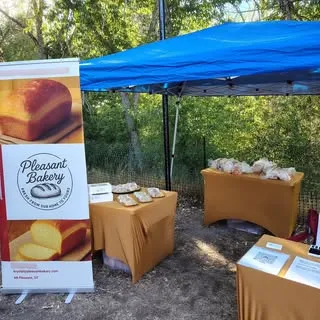
160 porch bakers are already selling across Utah under these exact laws. Browse their pages and learn from people two steps ahead of you — what they sell, how they price, how they talk about their bread. Cottage bakers are famously generous with what they’ve learned, and most are a DM away on Instagram.

This page is educational, not legal advice — we’re not lawyers, just neighbors who read Utah’s official sources and wrote down what they say (every claim above links to its source). Cities set their own business-license details, and local health departments set food-handler-permit fees — check yours. Always double-check the details with your own city and state before you sell. When something here and the law disagree, the law wins; if you spot that happening, tell us and we’ll fix it.