Cottage food laws · New Mexico
Yes, you can sell what you bake in New Mexico.
New Mexico keeps the home-food path simple: one law, no permit, no registration, no fee, and no sales cap at all. If you’re baking bread or making jam in your home — or your farm or ranch — kitchen, you get a food handler card (no state fee), print your label, and you can sell directly to neighbors anywhere in the state. The one line worth learning up front: everything you sell has to be shelf-stable (nothing that needs refrigeration to stay safe), and every sale stays inside New Mexico — but that includes shipping by mail, as long as it’s New-Mexico-to-New-Mexico. Here’s the whole picture, in plain English.
Verified against the New Mexico Homemade Food Act (HB 177) and the NM Environment Department
Last checked June 12, 2026 — every section links its sources.
A plain-English breakdown, not legal advice — we’re not lawyers. Always confirm the details with your own city and state before you sell.
The 2-minute version
- Sales cap
- None
- State registration
- Not required
- Kitchen inspection
- Not required
- Food-handler card
- Required
- Sell at markets
- Yes
- Shipping
- In-state only
Three cards, the whole story. Everything below is detail — with the actual law linked, so you never have to take our word for it.
Selling to neighbors?
Make shelf-stable foods in your home, farm, or ranch kitchen, get a food handler card before you start, put the required label on every package (one exact sentence the law spells out), and sell direct — porch, markets, roadside stands. No permit, no application, no registration, no fee.
Online orders? Mail?
New Mexico lets you sell online and ship by mail — but only New-Mexico-to-New-Mexico. You can mail a box to a neighbor in another town; you can’t mail one to family in Texas. The other hard boundary is wholesale: no restaurants, no grocery resale, ever.
Kids’ stands?
New Mexico didn’t write kids into the law — a cookie table runs under the same (light) rules as any porch shop: shelf-stable foods, a food handler card, the label. The state preemption protects a home stand the same way it protects yours.
One way to sell — and it’s the simple one
In shortMost states make you pick between two or three legal paths. New Mexico has exactly one — the Homemade Food Act — and it’s one of the lightest-touch in the country: meet the conditions and the Act applies to you automatically, with no permit from NMED.
The whole shape of the path
- Make shelf-stable foods (“not time-and-temperature-control” — nothing that needs refrigeration to stay safe) in your home, farm, or ranch kitchen
- Get a food handler card before you start producing
- Put the required label on every package (below — including one exact sentence the law spells out)
- Sell direct to the person buying, anywhere inside New Mexico — including by mail — never wholesale, never out of state
Pick this path if: you’re making shelf-stable foods at home and selling them to the people who’ll enjoy them.
The commercial-permit path
Foods that need refrigeration (cheesecake, salsa, anything “wet”), selling to restaurants, grocery stores, or wholesalers, or shipping out of state all sit past the home line — that’s an NMED-permitted food establishment under the Food Service Sanitation Act and 7.6.2 NMAC, with inspection. A real step up; many porch shops never need it. New Mexico has no in-between tier — no registered-cottage wholesale option, no home-kitchen meal permit.
Pick this path if: you want refrigerated foods, grocery shelves, restaurants — or you want to ship out of state.
Sources: Homemade Food Act (HB 177) · NMED Homemade Food Act program · NMED FAQ (PDF)
Where you can sell
In shortYour porch, markets, festivals, roadside stands — online, too — and by mail, but only New-Mexico-to-New-Mexico. The hard boundaries: never out of state, never wholesale. Your city can’t ban you, but a private market or your HOA still can.
The statute’s own list, word for word: you may sell “directly to consumers within the state, including at farmers’ markets, at festivals, on the internet, at roadside stands, at the seller’s home for pick-up or delivery or through mail delivery.” The thread through all of it: direct to the buyer, inside New Mexico.
Mail is allowed — but only New-Mexico-to-New-Mexico. The Act names “through mail delivery” right in the venue list, and NMED confirms you may sell by mail within the state while items may not be sold outside New Mexico. So you can ship a box to a neighbor in another town; you can’t ship one to family in Texas.
The hard boundary — never wholesale. No selling to restaurants, wholesalers, or distributors, and grocery stores may not purchase or resell prepackaged homemade foods. A permitted facility also can’t use your homemade food as an ingredient. Every sale runs from you to the person who’s eating it.
Private venues still set their own rules. The Act can’t require private farmers’ markets or other private venues to allow the sale of homemade foods — a market’s board can still decide who sells there.
Your city can’t ban you. Regulation of homemade food is preempted to the state: a political subdivision shall not adopt a law, policy, or resolution that regulates or attempts to regulate the production or sale of homemade food items. (One local note: NMED’s Food Safety Program doesn’t have jurisdiction in Bernalillo County and Albuquerque, which run their own program — but the City confirms no permit is required for homemade food and that it stopped issuing home-based food permits.)
Sources: Homemade Food Act (HB 177) · NMED FAQ (PDF) · City of Albuquerque EHD
What you can sell
In shortThe rule behind the list: homemade food must be “not time-and-temperature-control” — nothing that needs refrigeration to stay safe. Breads, cookies, candy, dried fruit, high-sugar jams — yes. Cheesecake, salsa, jerky — no.
NMED’s shelf-stable examples
- Non-cream-filled baked goods (cakes, cookies, breads, pies, pastries)
- Candy
- Popcorn
- Chocolate-covered pretzels
- Dehydrated fruits
- Granola & dry mixes
- Roasted coffee
- Whole fruits & vegetables
- High-sugar fruit jams & jellies
NMED notes this list “is not exhaustive.” The unifying test is shelf-stability — if it doesn’t need refrigeration to stay safe, it’s on the home path.
NMED’s not-allowed examples
- Meat & meat products (incl. jerky)
- Salsa
- Fish & smoked fish
- Cheesecake & refrigerated pies (banana cream, pumpkin, custard)
- Cream-cheese-frosted cakes
- Milk & dairy (cheese, yogurt)
- Vegetable jams/jellies (hot pepper jelly)
- Canned or pickled products
- Cut fruits & vegetables
- Caramel apples · hummus · garlic-in-oil
- Juices, kombucha, cider
- CBD/hemp foods
(Also “not exhaustive.”) If a product isn’t clearly shelf-stable, NMED points to the TCS definition on page 21 of its Retail and Manufactured Food Field Guide, or to a Process Authority, to help you decide. Foods containing CBD, hemp, or hemp extract need a separate hemp-manufacturing permit.
Sources: Homemade Food Act (HB 177) · NMED Homemade Food Act program · NMED FAQ (PDF)
The rules that actually matter
In shortNo sales cap of any kind. Shelf-stable only, in-state only, direct to the buyer only. Keep a sanitary kitchen. Taxes still apply. And nobody inspects you on a schedule — NMED knocks only if you ask, or on a complaint.
- No sales capWe read the entire Act (all nine sections of the enrolled bill) — there is no annual revenue limit, no gross-sales cap, and no volume limit of any kind. Sell as much as your neighbors will buy.
- Shelf-stable, in-state, direct onlyFoods must be not-time-and-temperature-control; refrigerated items are off the home path. Every sale is in-state — no out-of-state sales or shipping. And no restaurants, wholesalers, distributors, or grocery resale.
- Keep a sanitary kitchenThe Act requires a sanitary kitchen, good hygiene, protection from rodents and pests, pets and children kept out of the kitchen during production, and sanitary storage and transport. (Taxes still apply too — the Act doesn’t exempt you from business registration or tax law; see “Common questions.”)
- No routine inspectionsNMED inspects only at the processor’s request, and may investigate a foodborne-illness or labeling complaint. And enforcement is warning-first: for any violation (e.g. a mislabeled product) NMED issues a written warning before any fine; failing to fix it after the warning is a misdemeanor, with a fine not to exceed $100 per violation. The honest frame: nobody inspects you on a schedule; the state can look into it if there’s a complaint.
Sources: Homemade Food Act (HB 177) · NMED FAQ (PDF)
Getting set up
In shortThis is where New Mexico shines: there is no permit step. No application, no registration, no fee, no kitchen inspection — the exemption is automatic when you meet the conditions. The one thing to do first is get your food handler card.
- Get your food handler card firstThe Act requires the seller to complete a food handler certification course approved by the department, and NMED says you must obtain the card from an approved program before beginning production. “Approved” means an accredited (ANSI/ANAB-listed) program. The course is run by private providers, so any price is set by the provider — there’s no state fee.
- Check your productsAgainst the shelf-stable rule and NMED’s allowed / not-allowed lists (above).
- Make your labelNext section — it’s the one mandatory artifact the law requires.
- Keep a sanitary kitchenFollow the production and transport duties — hygiene, pest protection, pets and children out during production, sanitary storage.
- Sort out business registration and taxThe Act doesn’t exempt you from business registration or tax law — most sellers will deal with New Mexico gross receipts tax through Taxation & Revenue, and any local business registration. Confirm your own obligations.
That’s it — no one signs off first. Compare: in most states, step 1 is an application and a fee. Here it’s a food handler card.
Sources: Homemade Food Act (HB 177) · NMED FAQ (PDF) · NMED food handler training
Labels
In shortFour pieces on every item: the processor’s name, home address, phone, and email; the product’s common name; ingredients heaviest to lightest; and one exact sentence, word for word. There’s no font-size floor — just print it legibly.
New Mexico homemade food label
- The name, home address, telephone number, and email address of the processor — the individual who makes the food. The Act has no business-name field; you can add a porch-shop name as branding, but your own name plus home address is the required identifier. The Act requires a home address — on our reading a P.O. box alone wouldn’t satisfy it
- The common or usual name of the food item (e.g. “chocolate chip cookies”)
- The ingredients, in descending order of predominance — NMED guidance adds that sub-ingredients are broken out too, e.g. “butter (cream (milk), salt)” (agency guidance, not a separate statutory line)
- The exact sentence in the sample label, word for word
There’s no font-size or point-size floor in the Act — it requires the information and the verbatim statement, but doesn’t specify type size or color contrast (unlike some states). Print it legibly.
How you can deliver that information: on a label affixed to the package; on a label on a bulk container, when sold from bulk; on a placard at the point of sale, when the item is neither packaged nor in bulk; on the webpage where the item is offered; and for a telephone or custom order, no label is required, but you must disclose to the consumer that the homemade food item is produced at a private residence that is exempt from state licensing and inspection and may contain allergens. Either way, keep the required information readily available and provide it to a consumer on request.
Sources: Homemade Food Act (HB 177), Section 3 · NMED FAQ (PDF)
What changed recently
In shortStable since the Homemade Food Act took effect July 1, 2021 — it hasn’t been amended. A 2025 rule rewrite touches only the commercial path, and one pre-2021 home-processor rule lingers on the books but is superseded in practice.
- July 1, 2021 — the Act you’re readingThe Homemade Food Act (HB 177) took effect July 1, 2021 and has not been amended since — the 2024 NMSA edition mirrors the 2021 enacted text, and no 2022–2026 bill amending it turned up. The seller-facing rules on this page are the current law.
- 2025 — a commercial-path rule rewrite (doesn’t touch the home path)NMED ran public hearings in 2025 on amendments to 7.6.2 NMAC, the commercial food-establishment rule. Its adoption status and effective date are unconfirmed as of this check — but it governs the permitted-establishment path, not the statutory Homemade Food Act, so it doesn’t change anything in this guide.
- One stale rule still on the booksThe pre-2021 rule 7.6.2.15 NMAC (“Home-Based Food Processing,” effective 2018) still reads as if a home processor needs a permit. It’s been superseded in practice since 2021 — NMED stopped issuing those permits when the Act took effect. If you find that old rule, the statute controls: no permit for the home path.
Sources: Homemade Food Act (HB 177) · NMED FAQ (PDF)
Common questions
- Do I need a license or permit to sell homemade food in New Mexico?
- No. There is no New Mexico homemade-food license, permit, registration, or state fee — the Homemade Food Act lets you sell shelf-stable food directly to consumers without a permit from NMED. Anyone selling you a “cottage food permit” for New Mexico is selling something that doesn’t exist.
- Is there a limit on how much I can earn?
- No — there’s no sales cap of any kind in the Act. No annual revenue limit, no gross-sales cap, no volume limit.
- Do I need a food handler card?
- Yes — you must obtain a Food Handler Card from an approved program before beginning production. “Approved” means an accredited (ANSI/ANAB-listed) program. There’s no state fee; the private provider sets any price.
- Can I sell cheesecake from home in New Mexico?
- No — cheesecake needs refrigeration, so it’s time-and-temperature-controlled and off the home path. NMED lists it by name among foods that aren’t allowed; it’s commercial-permit territory.
- Can I sell salsa or jerky?
- No — both are on NMED’s not-allowed list (salsa, and meat products including jerky). Dry seasoning mixes and high-sugar fruit jams are the home-friendly neighbors of those cravings.
- Can I ship my cookies by mail?
- Yes — within New Mexico. The Act lists “through mail delivery” as an allowed channel, and NMED confirms in-state mail is fine. What you can’t do is ship across the state line.
- Can I ship to family out of state?
- No — sales must stay within the state, and homemade items may not be sold outside New Mexico. Selling out of state takes a commercial permit.
- Can a grocery store or restaurant carry my goods?
- No — homemade items can’t be sold to restaurants, wholesalers, or distributors, and grocery stores can’t resell them. That’s the commercial (manufactured-food-permit) path.
- Can my city shut down my porch shop?
- Not for being a homemade-food operation — regulation is preempted to the state. (Albuquerque and Bernalillo County run their own food program, but the City confirms no permit is required for homemade food.) A private market or your HOA can still set their own rules.
- Do I charge gross receipts tax?
- Maybe — the Act doesn’t exempt you from business registration or tax law. New Mexico’s gross receipts tax and any local registration are separate from the food law; check with New Mexico Taxation & Revenue. We don’t give tax figures here.
- Does anyone inspect my kitchen?
- Not routinely. NMED inspects only if you ask, and may investigate a foodborne-illness or labeling complaint.
You won’t be doing this alone
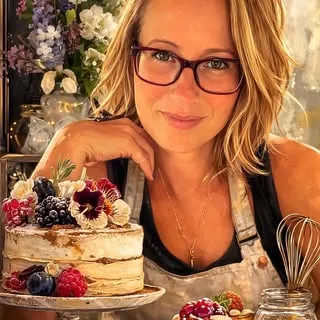
20 porch bakers are already selling across New Mexico under this exact law. Browse their pages and learn from people two steps ahead of you — what they sell, how they price, how they talk about their bread. Cottage bakers are famously generous with what they’ve learned, and most are a DM away on Instagram.
- Daring Delights Micro BakeryAlbuquerque
- Marquez Sunrise SourdoughAlbuquerque
- Eat WellAlbuquerque
- Hobbs NM Cake and treat makerHobbs
- Pastry Chef, Christiana RomeroAlbuquerque
- DAS_BROTKOERBCHEN • German MicrobakeryAlbuquerque
- Batch & BloomAlamogordo
- LeLa | The Wild BakerTaos
- Juniper Rose Bakery | Sourdough Cottage Bakery | ChristaRio Rancho
- Tweeter WilliamsLas Cruces

This page is educational, not legal advice — we’re not lawyers, just neighbors who read New Mexico’s official sources and wrote down what they say (every claim above links to its source). The food handler card is issued by private accredited providers, who set their own prices — we don’t list a figure because no official state fee exists. Business registration and gross receipts tax are separate from the food law; check your own obligations with New Mexico Taxation & Revenue. Albuquerque and Bernalillo County run their own food program, and private markets and HOAs set their own rules — check yours. Always double-check the details with your own city and state before you sell. When something here and the law disagree, the law wins; if you spot that happening, tell us and we’ll fix it.