Cottage food laws · Mississippi
Selling homemade food in Mississippi
Mississippi keeps the paperwork simple — one law, no license, no registration, no fee. But it draws one hard line you have to know before your first sale: every sale is face-to-face, in Mississippi. No shipping, no mail order, no selling online, no wholesale, no store shelves — you have to be standing there, handing your jam to the person buying it, inside the state. Stay under that line and on the shelf-stable food list, and you can be selling to neighbors as soon as your label’s printed. Here’s the whole picture, in plain English.
Verified against Miss. Code Ann. § 75-29-951(as enacted by HB 326, effective July 1, 2020) and the MSDH Cottage Food Operation FAQ
Last checked June 12, 2026 — every section links its sources.
A plain-English breakdown, not legal advice — we’re not lawyers. Always confirm the details with your own city and state before you sell.
The 2-minute version
- Sales cap
- $35,000/yr
- State registration
- Not required
- Kitchen inspection
- Not required
- Food-handler card
- Not required
- Sell at markets
- Yes
- Shipping
- Not allowed
Three cards, the whole story. Everything below is detail — with the actual laws linked, so you never have to take our word for it.
Selling to neighbors?
Make shelf-stable foods in your home kitchen, put the required label on every package (one exact sentence the law spells out), and sell direct. No application, no registration, no fee, no state agency to notify.
Online orders? Mail?
This is Mississippi’s hard line. You can advertise online — but the sale itself must close in person, with you present, inside Mississippi. No shipping of any kind, no mail order, no wholesale, no store shelves, no out-of-state sales.
Refrigerated? Cheesecake?
Shelf-stable foods only — nothing that needs refrigeration. Cheesecake fails twice: it needs refrigeration and it’s a dairy product (custard pies are named, too). And Mississippi wrote no kid carve-out — a young baker runs under the same light, free rules as anyone.
One way to sell in Mississippi — simple, with one hard boundary
In shortMost states make you pick between two or three legal paths. Mississippi has exactly one home-food path — the cottage food operation. It’s light on paperwork, with one boundary you can’t cross: every sale is in person, in Mississippi.
Mississippi has exactly one home-food path: the cottage food operation, § 75-29-951. It’s light on paperwork — no application, no registration, no fee, no agency to notify, and no inspection unless someone files a complaint. You follow the rules in this section and the exemption applies to you automatically.
The whole shape of the path
- Make shelf-stable foods (nothing that needs refrigeration to stay safe — not even after opening) in your own home kitchen
- Put the required label on every package (below — including one exact sentence the law spells out)
- Sell in person, directly to the person buying, inside Mississippi — and only that way
- Stay under $35,000 a year in gross sales
Pick this path if: you’re making shelf-stable foods at home and selling them in person to neighbors inside Mississippi.
The food-permit path
If you want to ship, sell online, supply stores or restaurants, sell refrigerated foods, cater, make beverages, or pass $35,000 a year, the cottage path ends and the food-permit path begins — a permitted food establishment under the MSDH permitting statute (§ 41-3-18), with plan review and inspections. That’s a real step up in cost and process; many porch shops never need it.
Pick this path if: you want to ship, sell online, supply stores or restaurants, cater, make refrigerated foods — or you pass $35,000 a year.
Sources: Miss. Code Ann. § 75-29-951 · MSDH Cottage Food FAQ (PDF) · MSDH Cottage Foods page
Where you can sell
In shortIn person, in Mississippi — that’s the whole map. Anywhere you can stand and hand your food to the buyer works: your porch, farmers markets, roadside stands. No internet sales, no mail, no shipping, no wholesale, no out-of-state — repeated because it matters most.
In person, in Mississippi — that’s the whole map. The statute doesn’t list allowed venues; it lists prohibited channels and requires the sale to be direct, producer-to-consumer. MSDH puts it plainly: “The sale must be from the Cottage Food producer to the actual customer (person to person). You must be present to sell your food.” So anywhere you can stand and hand your food to the buyer in Mississippi works — your home or porch, where the food is made and stored, and farmers markets, fairs, and roadside stands where you present in person.
The hard boundary — the channel limit. This is the rule that trips up Mississippi sellers most, because it’s stricter than many neighboring states. The statute bars selling cottage food products “over the Internet, by mail order, or at wholesale or to a retail establishment.” In plain terms:
- No internet sales — you can advertise online and on social media (the law changed in 2020 to allow that), but the actual sale has to close in person.
- No mail order, no shipping — not across the country, not across the street.
- No wholesale, no grocery shelves, no restaurants, no convenience stores, no consignment.
- No catering — that needs a retail permit.
- Mississippi only — you can’t ship out of state, and cottage foods made in other states can’t be sold here.
Your city or county may still want a business license. MSDH’s answer: check with your city — or county, if you’re outside city limits — about whether a local business license or other permit is required, plus taxes, zoning, and insurance. There’s no statewide cottage business-license fee; it varies locally.
Sources: Miss. Code Ann. § 75-29-951 · MSDH Cottage Food FAQ (PDF)
What you can sell
In shortThe rule behind the list: non-potentially-hazardous, shelf-stable food — if it needs refrigeration even after opening, it’s out. Breads, candy, jams, dried foods, true pickles — yes. Cheesecake, custard pies, dairy, beverages, sugar-free jams — no.
MSDH’s approved list
The statute defers the definition to MSDH — “cottage food products are nonpotentially hazardous food products as defined by the department” — and MSDH reads that as food that can be safely kept at room temperature and doesn’t require refrigeration even after opening:
- Baked goods (no cream, custard or meat fillings)
- Candy
- Chocolate-covered nonperishables (except melons)
- Dried fruit (except melons)
- Dried pasta
- Dried spices & dry rubs
- Dry baking mixes
- Granola, cereal & trail mixes
- Fruit pies
- Jams, jellies & preserves (21 CFR 150)
- Nut mixes
- Popcorn
- Vinegar & mustard
- Waffle cones
- Acidified products, pH ≤ 4.6 (21 CFR 114)
Item-level rulings from MSDH’s FAQ, the ones sellers ask about most: ✓ chocolate-covered strawberries and caramel apples — but only as whole, uncut fruit, and you can’t pierce them with a stick; the customer inserts the stick after purchase. ✗ plain canned fruits or vegetables — only acidified plant-based foods (pH ≤ 4.6) are allowed. ✗ sugar-free or reduced-sugar jams made with sugar substitutes. MSDH “highly encourage[s]” a food-safety course before you make any acidified or pickled product — improper acidification can cause botulism.
Not cottage food
- Anything needing refrigeration
- Dairy — incl. custard pies & cheesecake
- Meat, fish & poultry
- Eggs (except air-dried hard-cooked, shell intact)
- Cooked vegetables, potatoes, legumes & beans
- Sliced melons; raw seed sprouts
- Garlic & fresh herbs in oil
- Nut butters
- Fruit & vegetable juices; all beverages
- Low-acid canned foods; smoked fish
- Sugar-free / reduced-sugar jams
Cheesecake test: FAILS. Cheesecake needs refrigeration, and dairy products “(including custard pies)” are expressly prohibited. MSDH’s operating rule is blunt: if a product requires refrigeration, it’s not a cottage food. Cheesecake, cream pies, and custard pies all sit on the food-permit side of the line. And no beverages or liquid foods at all — cottage kitchens aren’t inspected, so the water source can’t be verified.
Sources: Miss. Code Ann. § 75-29-951 · MSDH Cottage Food FAQ (PDF)
The rules that actually matter
In shortA $35,000 cap counted across all locations (keep records — MSDH can ask). In person, in Mississippi, direct-to-buyer — no exceptions. Make it and store it in your own home. No beverages. And nobody inspects you on a schedule — the state can knock only on a complaint.
- $35,000 a year in gross salesThe cap counts “all sales of cottage food products at any location, regardless of the types of products sold or the number of persons involved in the operation” — so you can’t split it across family members. MSDH can ask for written documentation of your annual gross sales, so keep records.
- In person, in Mississippi, direct — no exceptionsNo internet sales, no mail or shipping, no wholesale, no stores, no consignment, no catering, no out-of-state. This is the load-bearing limit — see “Where you can sell” above. An operation that sells out of bounds is treated as an illegal food establishment, subject to a cease-operations order and a fine of up to $1,000.
- Make it and store it in your homeCottage food must be made in your home kitchen and stored in your single-family domestic residence — not a shed, barn, outbuilding, or rented kitchen.
- No routine inspectionsBut if someone files a complaint, MSDH may enter and inspect, and refusing entry is grounds for disciplinary action. The honest frame: nobody inspects you on a schedule; the state can knock if there’s a complaint. And the cottage law doesn’t exempt you from any federal tax law (see the sales-tax question below).
Sources: Miss. Code Ann. § 75-29-951 · MSDH Cottage Food FAQ (PDF)
Getting set up
In shortMississippi’s setup is short, because there’s no state step to file. No form, no fee, no registration — the exemption is automatic when you follow the rules. The whole checklist is mostly reading.
Mississippi’s setup is short, because there’s no state step to file. No form, no fee, no registration — the exemption is automatic when you follow the rules.
- Check your productsAgainst the approved list and the no-refrigeration rule (above).
- Confirm the channel works for youEverything is in-person, in-Mississippi, direct-to-buyer — no online checkout, no shipping, no stores. If your plan needs any of those, you’re on the permit path, not the cottage path.
- Make your labelNext section — it’s the one mandatory artifact the law requires.
- Ask your city or county about a local business licenseMSDH points you to your city (or county, if outside city limits) for any local business license or permit, plus taxes, zoning, and insurance — these vary locally and have no statewide fee.
- Keep simple sales recordsEnough to document your annual gross sales if MSDH ever asks.
That’s it. Training and certification aren’t required, though MSDH “highly encourage[s]” general food-safety education — especially if you make acidified or pickled products. For contrast, the permit path past the cottage limits runs through MSDH plan review ($224.25) and a risk-based annual food permit ($40.00 / $132.25 / $198.00 / $264.50 by risk tier, plus a $165.00 re-inspection fee).
Sources: Miss. Code Ann. § 75-29-951 · MSDH Cottage Food FAQ (PDF) · MSDH Food Permits & Fees
Labels
In shortThe name and address of the operation, product name, ingredients, weight, allergens — and one exact sentence, word for word, in at-least-10-point type that contrasts with the background.
Mississippi cottage food label
- The name and address of the cottage food operation — Mississippi keys this to the operation, not your personal legal name as a separate element (if you operate under your own name with no separate business name, your name is the operation’s name). The statute provides no substitute for the address — name and address are both required
- The name of the product
- Ingredients, in descending order of predominance by weight
- Net weight or net volume
- Allergen information per federal labeling rules — MSDH reads this as the nine federal allergen groups (milk, eggs, wheat, peanuts, soybeans, fish, shellfish, tree nuts, and sesame), in the ingredient list or a “Contains:” statement; tree nuts named by specific type (“almonds,” not “nuts”)
- Nutritional information only if you make a nutritional claim — then federal rules apply
- This exact sentence, word for word, in at least 10-point type, in a color that provides a clear contrast to the label background: “Made in a cottage food operation that is not subject to Mississippi’s food safety regulations.”
The disclaimer sentence is statutory — print it word for word, including the lowercase “food safety regulations”; don’t recase it to title case or all caps. The only typographic requirement is the 10-point floor and a color that clearly contrasts with the label background.
Sources: Miss. Code Ann. § 75-29-951 · MSDH Cottage Food FAQ (PDF)
What changed recently
In shortThe law hasn’t changed since July 1, 2020 — and the stability is the story. HB 326 set the $35,000 cap and the advertise-online allowance in 2020; every expansion bill since has died, though HB 910 passed the House in 2026 before dying in the Senate.
- 2020 — HB 326 is the law you’re readingHB 326 raised the cap from $20,000 to $35,000 and added the allowance to advertise (not sell) over the internet and social media. Effective July 1, 2020 — this is the version in force today. Watch for older guides still quoting the $20,000 cap.
- 2024–2026 — every expansion bill diedLawmakers have repeatedly tried to raise or remove the cap and open online and shipping sales, and none has passed. HB 910 (2026) would have removed the cap entirely and allowed online, mail, wholesale, and third-party sales delivered in-state — it passed the House (as amended) on Feb. 10, 2026, the furthest an online-sales bill has gotten, then died in the Senate Public Health and Welfare committee on March 3, 2026. HB 1108, SB 2283, SB 2398, and SB 2394 (all 2026) died in committee; SB 2638 (2024, cap → $50,000) failed on the Senate floor; SB 2265 (2025) died in committee.
- The direction of travel — worth re-checking after 2027The pressure is clearly toward a higher cap and online sales, and HB 910’s House passage is the closest call yet. But as of today, the rules above are the law: $35,000, in person, in Mississippi. A page worth re-checking after the 2027 session.
Sources: HB 326 (2020) history · HB 910 (2026) history · § 75-29-951 code-section index (2026) · SB 2638 (2024) history · SB 2265 (2025) history
Common questions
- Can I sell my baked goods online or ship them?
- No — and this is Mississippi’s most important rule. The statute bars selling “over the Internet, by mail order, or at wholesale or to a retail establishment.” You can advertise online and on social media, but the sale itself has to close in person, with you present, inside Mississippi. No shipping of any kind.
- Can I ship to my sister in Alabama?
- No. Cottage foods may be sold only in Mississippi, and there’s no mail or shipping channel at all.
- Do I need a license or permit?
- No state one. There is no Mississippi cottage food license, permit, registration, or fee — anyone selling you one is selling something that doesn’t exist. Your city or county may require a local business license (check with them) — that’s a local business matter, not a food credential.
- Is there a limit on how much I can earn?
- Yes — $35,000 a year in gross cottage food sales, counting everything you sell at any location. Past it, you’re in food-permit territory.
- Can I sell cheesecake from home in Mississippi?
- No — cheesecake needs refrigeration, and dairy products including custard pies are prohibited. Refrigerated baked goods sit on the food-permit side of the line.
- Can I sell salsa, sauces, or other “wet” products?
- Only acidified products that meet 21 CFR Part 114 (a finished pH of 4.6 or below — true pickles, for instance) are allowed; ordinary salsa, low-acid canned foods, and sugar-free jams are not. MSDH “highly encourage[s]” a food-safety course before you make any acidified or pickled product — improper acidification can cause botulism.
- Can a grocery store or restaurant carry my cookies?
- No — that’s wholesale or sale to a retail establishment, both prohibited; consignment is out too. Direct to the person buying, in person, always.
- Can I cater an event?
- Not under the cottage law — catering requires a retail permit.
- Can I sell lemonade or other drinks?
- No — beverages and liquid foods aren’t cottage foods (the water source can’t be verified in an uninspected kitchen).
- Do I charge sales tax?
- Possibly. One narrow exemption is settled: sales of Mississippi-grown or -made food products sold from a Mississippi Department of Agriculture and Commerce–certified farmers market are exempt from sales tax. Whether a cottage operator selling from home must register with the Department of Revenue and collect sales tax — and at what rate — isn’t resolved by any source we could cite; if sales tax matters to your plan, ask the Department of Revenue before you rely on an answer.
- Does anyone inspect my kitchen?
- Not routinely — no pre-approval, no scheduled visits. MSDH may enter and inspect only if someone files a complaint, and refusing that inspection is grounds for disciplinary action.
- Where can I make and store my products?
- In your home kitchen and your single-family residence — not a shed, barn, outbuilding, or rented kitchen.
Sources: Miss. Code Ann. § 75-29-951 · MSDH Cottage Food FAQ (PDF) · MS DOR — Sales Tax Exemptions · MDAC Certified Farmers Markets
You won’t be doing this alone
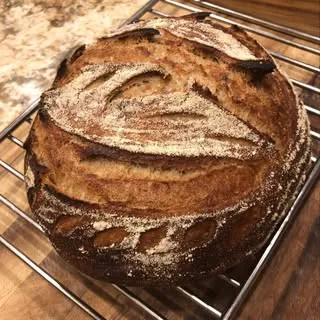
4 porch bakers are already selling across Mississippi under these exact laws. Browse their pages and learn from people two steps ahead of you — what they sell, how they price, how they talk about their bread. Cottage bakers are famously generous with what they’ve learned, and most are a DM away on Instagram.

This page is educational, not legal advice — we’re not lawyers, just neighbors who read Mississippi’s official sources and wrote down what they say (every claim above links to its source). Mississippi’s defining rule is that every cottage food sale is in person, inside Mississippi — no online sales, no shipping, no wholesale; build your plan around that. Cities and counties set their own business-license and zoning details, and sales-tax treatment for a home seller isn’t fully settled in the sources — check with your city or county and the Department of Revenue. Always double-check the details with your own city and state before you sell. When something here and the law disagree, the law wins; if you spot that happening, tell us and we’ll fix it.