Cottage food laws · Arkansas
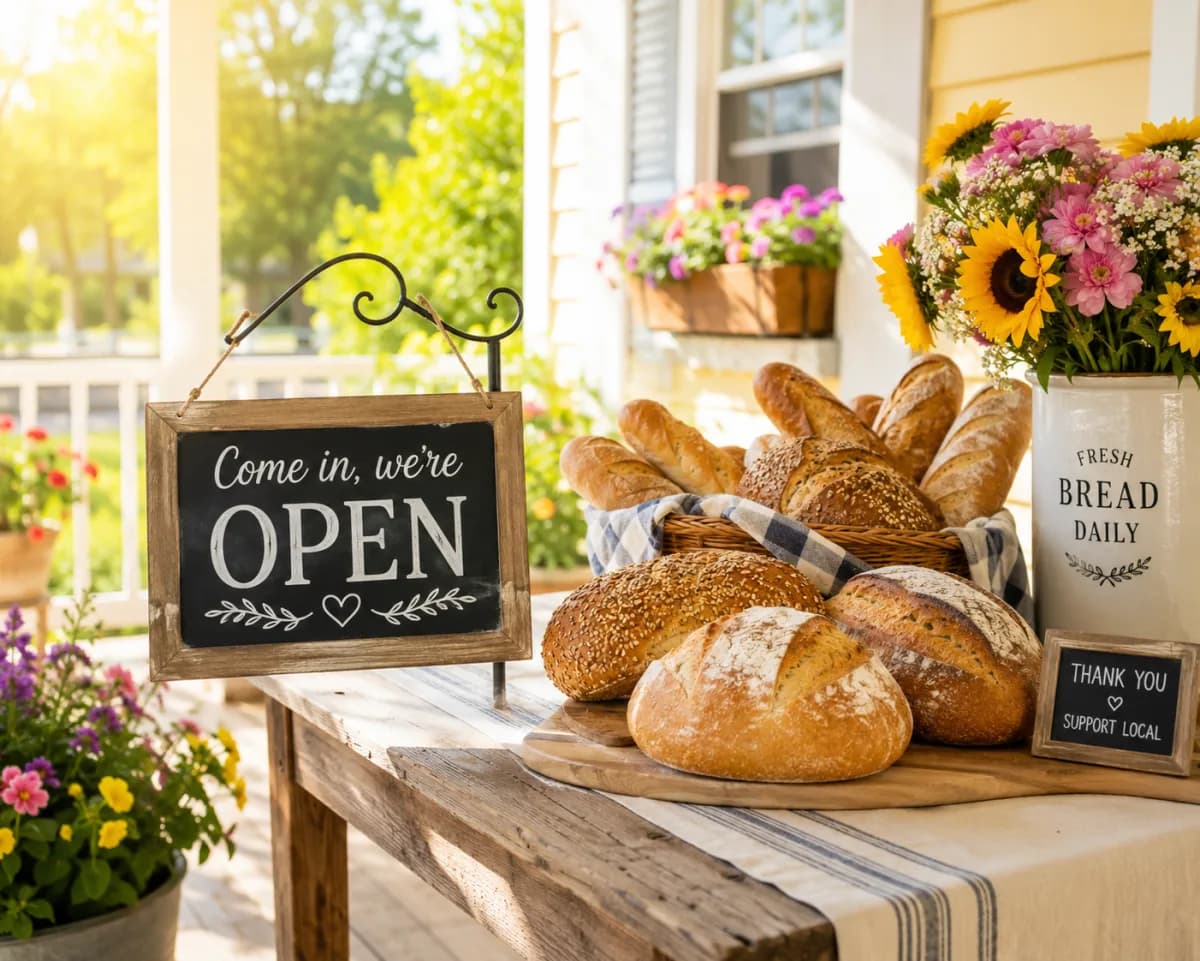
Yes, you can sell what you bake in Arkansas.
Arkansas has one of the most permissive homemade-food laws in the country, and it’s refreshingly simple: no license, no permit, no registration, no inspection, no fee, and no sales cap. One law — the Arkansas Food Freedom Act — covers it all. If your food is shelf-stable (breads, cookies, cakes, jams, candy, pickles), you can sell it in person, by phone, online, on a store shelf, and ship it by mail — and your city can’t stand in the way. The one hard line is the refrigerator: Arkansas is a shelf-stable-only state, so anything that needs to stay cold — cheesecake, custard pie, cream-filled cakes — has to come out of a permitted, inspected kitchen, not your home. Here’s the whole picture, in plain English.
Verified against Arkansas Food Freedom Act (Act 1040 of 2021) and ADH Homemade Food Production Guidelines
Last checked June 12, 2026 — every section links its sources.
A plain-English breakdown, not legal advice — we’re not lawyers. Always confirm the details with your own city and state before you sell.
The 2-minute version
- Sales cap
- None
- State registration
- Not required
- Kitchen inspection
- Not required
- Food-handler card
- Not required
- Sell at markets
- Yes
- Shipping
- In-state only
Three cards, the whole story. Everything below is detail — with the actual law linked, so you never have to take our word for it.
Selling to neighbors?
Make shelf-stable foods in your home kitchen, put the required disclosure on every package (one exact sentence the law spells out), and sell direct — porch, markets, by phone, online. No application, no registration, no fee, no agency to notify, no cap on what you earn.
Store shelves? Mail?
Arkansas is unusually broad: a grocery store or retail shop can carry your shelf-stable goods, and you can ship them by commercial carrier — both within Arkansas. The buyer always has to be the end consumer, not someone who’ll resell, and never a restaurant.
Kids’ stands?
Arkansas didn’t write kids into the law — a cookie table runs under the same (light) rules as any porch shop: shelf-stable foods, the short disclosure. The state preemption protects a home stand the same way it protects yours.
One way to sell — and it’s a generous one
In shortMost states make you choose between two or three legal paths. Arkansas has exactly one — the Food Freedom Act — and it’s one of the lightest-touch in the country: follow the disclosure, the shelf-stable line, and the end-consumer boundary, and the law applies to you automatically.
The whole shape of the path
- Make shelf-stable food or drink (“non-TCS” — nothing that needs refrigeration to stay safe) at your private residence
- Put the required disclosure on every package, container, placard, or webpage (below — including one exact sentence the law spells out)
- Sell to the informed end consumer — the last buyer, who doesn’t resell — in person, by phone, or online
- You can sell it yourself, through an agent, or through a retail shop or grocery store, and deliver by hand, by agent, or by mail/parcel carrier
- There’s no cap — sell as much as you can make
Pick this path if: you’re making shelf-stable foods at home and selling them to the people who’ll enjoy them.
The permitted-facility path
Anything that needs the fridge — cheesecake, custard and cream pies, dairy — plus meat, poultry, seafood, low-acid canned goods, sprouts, and fresh juice all sit past the shelf-stable line. That’s an ADH-permitted, inspected facility — a retail food establishment or food processing plant (the application fee runs $35 a year per ADH’s official permit application), with plan review and inspections. A real step up; many porch shops never need it. Arkansas, unlike a handful of newer food-freedom states, did not open a refrigerated home tier.
Pick this path if: you want refrigerated foods (cheesecake, dairy), meat/poultry/seafood, low-acid canned goods, sprouts, or fresh juice.
Sources: Ark. Code Ann. §§ 20-57-501–507 · SB248 (2021) bill detail · ADH Homemade Food Guidelines · ADH Retail Food Permit ($35/yr)
Where you can sell
In shortYour porch, markets, by phone, online — and, unusually, on grocery and retail shelves, with mail/parcel shipping inside Arkansas. Every channel runs to the informed end consumer. Never to a reseller, never to a restaurant. Your city and county can’t ban you.
In person and around town: sell from a retail space at the ranch, farm, home, or office where the food is made — your porch is the home base — and at farmers’ markets (ADH’s quick-reference table marks the market as allowed).
By phone and online: the Act defines a “transaction” as the exchange of buying and selling in person, by telephone, or online, and ADH marks internet sales as allowed.
On a store shelf — the unusual part: the seller may be the producer, an agent of the producer, or a third-party vendor including a retail shop or grocery store, and the goods may be sold at that vendor’s retail location. This is genuinely rare for a cottage/food-freedom state — Arkansas lets a grocer or shop stock your shelf-stable goods and sell them to the end consumer. One condition: a third-party seller who also sells food made in a licensed facility has to keep your homemade goods separate from the items prepared in that licensed establishment.
Shipped by mail: delivery may be by the producer, the producer’s agent, a third-party vendor, or a third-party carrier — ADH lists “mail, parcel post, etc.” and marks commercial-carrier shipping as allowed. (Within Arkansas.)
Out of state — read this carefully. The statute allows a transaction to occur in Arkansas, or in another state “if the seller complies with all applicable federal laws” — and it separately preserves any federal law prohibiting the sale of certain food items in interstate commerce. ADH tells producers to contact the FDA and the destination state’s public-health authorities before any out-of-state sale. The short version: Arkansas law allows it; federal law is the constraint — confirm it before you rely on it. No Arkansas source resolves which products clear federal law, so don’t treat interstate shipping as generally open. Within Arkansas, mail shipping is explicitly fine.
The hard boundaries: never to a reseller — the buyer must be the informed end consumer, who doesn’t resell (wholesale-for- resale is out) — and never to a restaurant: a homemade product can’t be sold or used in any food service establishment, because homemade foods aren’t from approved sources.
Your city and county can’t ban you. The Act preempts county, municipal, and other political-subdivision jurisdictions from prohibiting and regulating the production and sale of homemade food or drink products. A local government can’t prohibit or regulate a Food Freedom Act porch shop’s food sales. (General state tax law still applies — see “Getting set up.”)
Sources: Ark. Code Ann. §§ 20-57-504, -506, -507 · ADH Homemade Food Guidelines
What you can sell
In shortThe rule behind the list: nothing that needs refrigeration to stay safe. Breads, cookies, jams, candy, honey, even pH-controlled pickles — yes. Cheesecake, dairy, meat, low-acid canned goods — no.
Allowed — shelf-stable (non-TCS)
Arkansas defines homemade food by the safety line, not an approved list: a “non-TCS” food is one that doesn’t need time or temperature control to stay safe. If it’s shelf-stable, it’s in. ADH’s guide gives detailed allowed / not-allowed tables; the highlights:
- Breads, rolls, biscuits & quick breads
- Cakes, cookies, cupcakes & pastries
- Doughnuts, pretzels & fruit-filled pies
- Jams, jellies, preserves & fruit butters (pH ≤ 4.6)
- Pickled cucumbers & acidified veg (pH ≤ 4.6)
- Candy & confections (incl. chocolate-covered non-TCS)
- Dried fruit, granola, popcorn & dried herbs
- Baking mixes, seasonings & eggless pasta
- Frozen fruit treats & fruit freezer jams
- Buttercream, fondant & royal icing (non-TCS)
- Microgreens (cut at harvest)
- Honey you produced (incl. creamed & dry-spiced)
- Hemp-seed foods (hulled seed, protein, oil)
Acidified pickles and jams carry conditions — pH ≤ 4.6, an ADH-approved or lab-verified recipe (or a calibrated pH meter on every batch), batch numbers, and records (see “The rules that actually matter”). Not the shelf-stable kind: pumpkin/squash/sweet-potato butters, refrigerator jam or pickles, reduced-sugar versions, raw seed sprouts.
Not allowed from home — permit territory
- Cheesecake (the headline no)
- Custard / cream / meringue pies & pumpkin pie
- Anything needing refrigeration
- Dairy — milk, cheese, butter, sour cream
- Meat, poultry & seafood (incl. jerky, cured)
- Low-acid canned foods (pH > 4.6)
- Raw sprouts, cut leafy greens, cut tomatoes/melons
- Garlic-in-oil mixtures
- Fresh / raw juice & cold-brew coffee
- Infused oils, pesto, hummus, nut butters
- Alcoholic beverages
- CBD or THC products
ADH names cheesecake directly as a TCS food, alongside dairy, cheeses, meat and poultry, deli salads, casseroles, and cream or custard pies — all of which “can only be sold or served from an ADH permitted and inspected facility.” Dairy specifically is routed to a separate raw-milk law (see “What changed”). If your product isn’t clearly on the shelf-stable side of the line, ask ADH — the guide directs questions to the Environmental Health Specialist at your Local Health Unit — before you sell it. (Separately from the Food Freedom Act, whole uncut fresh produce and the maple syrup, sorghum, or honey you produced may be sold with no permit at all.)
Sources: Ark. Code Ann. §§ 20-57-503, -504 · ADH Homemade Food Guidelines (Appendix A)
The rules that actually matter
In shortNo sales cap, $0 to the state, no food-handler card, no inspection (the one carve-out: the Health Department can investigate a reported foodborne illness). The single hard line is shelf-stable-only. Acidified foods carry extra batch conditions — and taxes still apply.
- No sales cap — noneThe full text of Act 1040 carries no annual revenue limit, no transaction limit, and no volume limit — sell as much as you can make. (If a guide tells you Arkansas caps homemade sales, it’s confusing the repealed 2017 Cottage Food Act with today’s law.)
- $0 to the state — and no food-handler cardNo registration, permit, license, certification, inspection, or fee exists under the Act — you’re “exempt from state licensure, certification, inspection, and packaging and labeling requirements,” and ADH confirms “NO PERMIT REQUIRED.” Nothing in the Act or the ADH guide requires food-safety training or a food-handler permit either.
- Shelf-stable only — the one hard lineThe single most important line on this page: a transaction may “not involve the sale of meat, poultry, seafood, or time/temperature control for safety food products.” If it needs the fridge, it needs a permitted facility.
- Acidified / pickled foods carry extra conditionsPickled cucumbers and acidified vegetables count as non-TCS only if the recipe is from an ADH-approved source or verified by a Food Process Authority — or you test every batch with a calibrated pH meter to confirm equilibrium pH ≤ 4.6 — and each batch is labeled with a unique number and you keep records (batch number, recipe, recipe source or pH result, and the date prepared).
- No inspection — with one exception, and taxes still applyNobody inspects your kitchen on a schedule; the Act’s only reserved power is that it doesn’t “impede the Department of Health in any investigation of food-borne illness.” And the Act exempts you from food licensing, not from tax law — sales tax is separate (see “Getting set up”).
Sources: Ark. Code Ann. §§ 20-57-503, -504, -507 · ADH Homemade Food Guidelines
Getting set up
In shortThis is where Arkansas shines: there is no state food step. No form, no fee, no registration, no inspection — the exemption is automatic when you follow the rules. The whole checklist is reading and a label.
- Confirm your product is shelf-stable (non-TCS)Check it against the food list above and the ADH guide’s tables — if it needs refrigeration, it’s the permitted path, not this one.
- Make your label / disclosureNext section — it’s the one mandatory artifact the law requires.
- If you make acidified / pickled foods, line up the recipe + recordsAn ADH-approved recipe (or a Food Process Authority-verified process, or a calibrated pH meter to test every batch), a unique number per batch, and a batch-record log.
- Optional: request a producer ID numberFrom the Arkansas Department of Agriculture, if you’d rather not print your home address and phone on the label — the statute lets a Department of Agriculture ID number be used in their place “to protect the producer’s safety.” (We don’t list a fee because none is stated in the statute or the guide.)
- Mind the general business + tax piecesThe Act exempts you from food licensing, not tax law — sales tax and any local business-license question are separate (confirm with the Department of Finance and Administration and your city/county). The Act preempts local regulation of food sales but doesn’t speak to a generic business license.
- Keep simple sales recordsNo cap means nothing to prove on volume, but clean records make the tax piece easy (and acidified-food producers keep batch records regardless).
That’s it. Compare: in most states, step one is an application and a fee.
Sources: Ark. Code Ann. §§ 20-57-504, -507 · ADH Homemade Food Guidelines
Labels and disclosure
In shortThe Act exempts you from state labeling laws but imposes its own short disclosure: the date made, the producer’s name/address/phone (or a Dept of Agriculture ID number), the product’s common name, ingredients heaviest-first — and one exact sentence, word for word. No font-size floor, no permit number.
Arkansas Food Freedom Act disclosure
- The date the product was manufactured, produced, or processed
- The name, address, and telephone number of the producer — the individual who made it (a shop name is optional branding). Privacy substitute: instead of your name/address/phone, you may print an identification number provided by the Department of Agriculture “if requested by the producer to protect the producer’s safety.”
- The common or usual name of the product
- The ingredients, in descending order of predominance
- This exact statement, word for word: “This product was produced in a private residence that is exempt from state licensing and inspection. This product may contain allergens.”
- Where it goes depends on how you sell: on a label on a packaged item; on the container plus a separate written document for a bulk container; on a placard at the point of sale for unpackaged goods; and on the website for online sales (ADH adds that the package itself must be labeled for online sales too).
- Acidified foods, one more: each batch must be labeled with a unique batch number (and you keep the batch records from the rules above).
No font-size floor, no permit number, no “cottage food operation” string. Arkansas requires exactly the items above and the two-sentence statement — nothing about minimum type size, and no registration number (there’s no registration).
Sources: Ark. Code Ann. § 20-57-505 · ADH Homemade Food Guidelines
What changed recently
In shortThe big structural change predates this page: the 2021 Food Freedom Act repealed and replaced the old 2017 Cottage Food Act, dropping the sales cap and approved-list approach. The Act itself hasn’t been amended since. The 2025 raw-milk changes were a separate law.
- The old Cottage Food Act is goneADH states it plainly: during the 93rd session the Cottage Food Act (Act 399 of 2017) was “removed and replaced by the Food Freedom Act (Act 1040 of 2021).” The Food Freedom Act dropped the old law’s sales cap and approved-list approach in favor of the $0 / no-cap / broad-channel structure on this page. If a guide still quotes a dollar cap for Arkansas, it’s describing the repealed 2017 law.
- No change to the Food Freedom Act itselfSections 20-57-501–507 haven’t been amended since enactment — no bill in the 2023, 2024 (fiscal), 2025, or 2026 (fiscal) sessions touched them. The Act was approved April 29, 2021.
- 2025 raw-milk changes — a separate lawTwo 2025 acts amended Arkansas’s raw (unpasteurized) milk regime at § 20-59-248 — which is not the Food Freedom Act and not a home-bakery path. Act 125 clarified that raw-milk “incidental sales” aren’t limited to on-farm sales, and Act 698 rewrote the section, allowing raw-milk products off-farm with a warning label, ≤40 °F refrigeration, and a signed consumer risk acknowledgment. The May 21, 2026 ADH guide points dairy sellers to Act 698. If you’re selling raw dairy from your own farm, that’s the regime to read — not this page.
Sources: ADH Homemade Food Guidelines · Acts search, 2025 Regular Session · Act 125 of 2025 (raw milk) · Act 698 of 2025 (raw milk)
Common questions
- Can I sell cheesecake from home in Arkansas?
- No. Cheesecake needs refrigeration, which makes it a “time/temperature control for safety” food — and Arkansas’s Food Freedom Act covers shelf-stable foods only; a transaction may not involve the sale of TCS food. ADH names cheesecake specifically as TCS, and says TCS food can only be sold or served from an ADH permitted and inspected facility. (Unlike Tennessee, Arkansas never opened a refrigerated tier — there’s no in-person exception for cheesecake here.)
- Can a grocery store or shop carry my cookies?
- Yes — and that’s unusual. The Act lets a third-party vendor, including a retail shop or grocery store, sell your shelf-stable items to the end consumer, and ADH confirms selling to grocery or retail stores is allowed. The shop just has to keep your homemade goods separate from anything made in a licensed facility.
- Can I ship my goods?
- Within Arkansas, yes — the Act allows delivery by a third-party carrier and ADH lists “mail, parcel post.” Across state lines is the careful part: the statute allows an out-of-state transaction only “if the seller complies with all applicable federal laws,” and preserves any federal law prohibiting the sale of certain foods in interstate commerce. ADH tells producers to contact the FDA and the destination state first. We won’t tell you interstate shipping is generally fine — no Arkansas source resolves it. Treat in-state shipping as clearly allowed and out-of-state as a check-with-FDA question.
- Do I need a license, permit, or registration?
- No. There’s no Arkansas Food Freedom Act license, permit, registration, or fee — anyone selling you one is selling something that doesn’t exist. ADH marks homemade non-TCS food “NO PERMIT REQUIRED.” (You may still owe sales tax or a local business license — that’s tax/business law, not a food credential.)
- Is there a limit on how much I can earn?
- No — Arkansas has no sales cap, income limit, or volume limit on homemade food. That’s one of the most generous setups in the country. (A dollar cap you may have read about belonged to the repealed 2017 Cottage Food Act.)
- Does anyone inspect my kitchen?
- No — there’s no pre-approval and no scheduled visits. The Act reserves only the Health Department’s power to investigate a reported foodborne illness.
- Do I need a food-handler card or food-safety class?
- No — neither the Act nor the ADH guide requires any training, food-handler permit, or certification for the homemade path.
- Can my city or county shut down my porch shop?
- Not for being a homemade-food operation — the Act preempts local governments from prohibiting and regulating the production and sale of homemade food or drink products. (A generic local business license is a separate question the Act doesn’t address — check your city/county.)
- Can I sell pickles or canned vegetables?
- Pickled cucumbers and acidified vegetables at pH ≤ 4.6 are explicitly allowed — the statute writes them in as non-TCS — but only with an ADH-approved or lab-verified recipe (or a calibrated pH meter on every batch), a unique batch number, and batch records. Low-acid canned foods (green beans, plain vegetables) are out — botulism risk.
- Can I sell to a restaurant?
- No. A homemade product can’t be sold or used in any food service establishment; ADH explains it’s because homemade foods are not from approved sources. (Selling to a grocery store or retail shop for resale to the end consumer, though, is allowed — that’s the unusual channel above.)
- Can I sell dairy, cheese, or butter from home?
- No — dairy is TCS and not allowed under the Food Freedom Act. Raw (unpasteurized) milk from your own farm runs through a separate law (§ 20-59-248); see “What changed.”
You won’t be doing this alone
10 porch bakers are already selling across Arkansas under this exact law. Browse their pages and learn from people two steps ahead of you — what they sell, how they price, how they talk about their bread. Cottage bakers are famously generous with what they’ve learned, and most are a DM away on Instagram.


This page is educational, not legal advice — we’re not lawyers, just neighbors who read Arkansas’s official sources and wrote down what they say (every claim above links to its source). Arkansas is a shelf-stable-only state — if your food needs refrigeration, it’s the permitted-facility path, not this one, so make sure you know which side of the line your product is on. Out-of-state shipping turns on federal law this page can’t resolve for you — contact the FDA and the destination state before you ship across a state line. Sales tax, any local business license, and raw-dairy sales are separate laws set elsewhere — check those directly. Always double-check the details with your own city and state before you sell. When something here and the law disagree, the law wins; if you spot that happening, tell us and we’ll fix it.