Cottage food laws · West Virginia
Selling homemade food in West Virginia.
West Virginia has one of the best free starting deals around — and it just got a new door. The free path costs $0: shelf-stable goods like breads, cookies, cakes, candies, honey, and jams need no permit, no fee, no inspection, no training, and there’s no sales cap. Anything that needs refrigeration — a cheesecake, a cream pie, a fresh salsa — rides a $35-a-year permit with a kitchen check and a short food-safety course. And as of June 12, 2026, the state added a brand-new way to sell those refrigerated items direct from your own porch statewide — though it hasn’t published that permit’s fee and rules yet. Here’s the whole picture, in plain English.
Verified against the West Virginia Code and the WVDA Farmers Markets rule (61CSR38)
Last checked June 13, 2026 — every section links its sources.
A plain-English breakdown, not legal advice — we’re not lawyers. Always confirm the details with your own city and state before you sell.
The 2-minute version
Starting path: Shelf-stable cottage food — other paths differ (see below)
- Sales cap
- None
- State registration
- Not required
- Kitchen inspection
- Not required
- Food-handler card
- Not required
- Sell at markets
- Yes
- Shipping
- In-state only
Three cards, the whole story. Everything below is detail — with the actual laws linked, so you never have to take our word for it. (The third path is law as of June 2026 but not yet usable — the state hasn’t published its rules.)
Selling shelf-stable goods?
That’s shelf-stable cottage food — exempt from West Virginia licensing, permitting, inspection, packaging, and labeling laws. Put the right label on breads, cookies, cakes, candies, honey, or jams and sell straight to your neighbors, in person or shipped in-state. No registration, no fee, no training.
Want to sell cheesecake?
That takes the farmers-market vendor permit — $35 a year, a Food Handler’s Card, and a WVDA kitchen inspection (billed at $27/hr). In exchange you can sell refrigerated and acidified foods — cheesecake, cut produce, salsa, hot sauce — at farmers markets and your own farm stand.
Direct from your porch?
A new §19-40 permit lets you sell refrigerated cottage foods direct from home statewide — no farmers market needed. The right exists in law, but the WVDA hasn’t published the fee, application, or label rules yet, so you can’t apply until that rule lands. Watch the WVDA page.
Three ways to sell in West Virginia — pick your path
In shortThe paths split on one question: does what you make need to be kept cold? Shelf-stable → the free path. Refrigerated → a permit. As of June 2026 there are two permit doors: the $35 farmers-market permit (operational today) and a new §19-40 direct-from-home permit (law as of June 12, 2026, but not usable until its rule publishes).
West Virginia’s home-food paths split on one question — does what you make need to be kept cold (or hot) to be safe? If it’s shelf-stable, you’re free. If it needs refrigeration, you pick a permit — and as of June 2026 there are two permit doors, not one. The cleanest way to see it: a cheesecake can’t ride the free shelf-stable path (it’s “potentially hazardous”), but you can sell it today at a farmers market under the $35 vendor permit — and, once the new rule publishes, direct from your home under §19-40. Same dessert, three different answers depending on the door.
Shelf-stable cottage food
West Virginia law makes “nonpotentially hazardous” foods — the shelf-stable ones — exempt from licensing, permitting, inspection, packaging, and labeling laws when you follow the cottage-food section and the state rule. No registration, no fee, no inspection, no training, no sales cap.
You make shelf-stable food at home, label it correctly, and sell it directly to the person eating it — in person or remotely, with delivery by you, an agent, a third-party vendor, or a third-party carrier.
Pick this path if: everything you sell is shelf-stable — breads, cakes, cookies, candies, honey, tree syrup, apple butter, molasses, standardized jams and jellies, dehydrated fruits and vegetables, or home-canned tomatoes/tomato sauce/tomato juice at pH 4.6 or below.
Farmers-market vendor permit
A $35-a-year WVDA permit, valid statewide, lets you sell refrigerated and acidified “potentially hazardous” foods at farmers markets — and West Virginia defines “farmers market” broadly enough to include a single-producer farm stand and even a multi-vendor online farmers market.
It takes a Food Handler’s Card or higher, a WVDA kitchen inspection (billed at $27/hr), and a label review; canned acidified foods (salsa, hot sauce, pickles, ferments) add a process-authority approval and water testing.
Pick this path if: you want to sell refrigerated baked goods, cut produce, salsas, pickles, hot sauce, or fermented foods, and a farmers-market-shaped venue (including your own farm stand) works for you.
Direct-from-home permit (§19-40)
Effective June 12, 2026, West Virginia added a potentially hazardous cottage food vendor permit: a WVDA permit to produce refrigerated cottage foods at your residential property and sell them directly to consumers anywhere in the state — no farmers-market framing, and no food-establishment permit needed to sell from home. It does not cover meat, poultry, seafood, or Grade A dairy. In-state sales only.
The catch: the statute hands the fee, application, inspection, and label details to a WVDA rule, and that rule isn’t published yet — so we can’t tell you the cost or the steps, and you can’t actually apply until it lands.
Pick this path if: once it’s operational, you want to sell refrigerated items straight from your porch statewide rather than at a market. Watch for the WVDA rule before you rely on it.
Beyond all three paths: meat, poultry, seafood, Grade A dairy, true wholesale, and selling for resale fall to the conventional food-establishment route through your local health department — most porch shops never need it.
Sources: W. Va. Code §19-35-6 · W. Va. Code §§19-40-1 to 19-40-6 (SB 44) · 61CSR38 (Farmers Markets rule) · WVDA — Farmers Market Vendor Permit
Where you can sell
In shortShelf-stable cottage food: direct to the buyer, in person or remotely, statewide — no vendor permit. Path B (the $35 permit) is for farmers-market-shaped venues, including your own farm stand. Path C is direct-from-home statewide but in-state only — and not usable until its rule publishes.
Shelf-stable cottage food — direct to the buyer, in person or remotely. From your home, at a farmers market, at a stand — shelf-stable cottage goods need no vendor permit at a farmers market. The statute lets the producer sell “whether in person or remotely,” with delivery by the producer, an agent, a third-party vendor, or a third-party carrier. For online sales, the label information may be published on the website instead of affixed to each package.
The boundary — direct, not for resale. The labeling rule’s scope is “direct, non-wholesale, purchase by consumers” — true wholesale (supplying a store to resell) falls to the conventional food-establishment regime, not the cottage exemption.
Shipping across state lines isn’t blocked by West Virginia — but federal law applies. The statute allows remote sale and third-party-carrier delivery without naming a state-line limit, but it also says the exemption does not waive “any applicable law of the federal government, including any federal law prohibiting the sale of certain food items in interstate commerce,” or another state’s laws. Once a package crosses a state line you’re in FDA territory plus the destination state’s rules; no West Virginia source resolves that, so confirm before you ship out of state.
Permitted refrigerated/acidified foods — Path B (today). Farmers markets, farm stands, fairs, and online farmers markets under the $35 vendor permit. West Virginia’s “farmers market” definition is broad — a single-producer farm stand qualifies, and so does a two-or-more-vendor “online farmers market.” (Consignment markets require a local food establishment permit, so they sit outside the simple vendor-permit path.)
Permitted refrigerated foods — Path C (rule pending / not yet usable). Once the §19-40 rule publishes, this path is direct to consumers anywhere in West Virginia, from your residential property — no farmers market needed, and no food-establishment permit to sell from home. It is in-state only: the statute says cottage food under Article 40 “shall be sold only within the geographic boundaries of the State of West Virginia.” A Path C permittee is not required to also hold a farmers-market vendor permit. None of this is usable until the WVDA rule lands.
Sources: W. Va. Code §19-35-6 · W. Va. Code §§19-40-1 to 19-40-6 · 61CSR38 §3.9 (farmers-market definition) · 61CSR38 §7 (labeling scope)
What you can sell
In shortThe free path is the shelf-stable (“nonpotentially hazardous”) list, plus pH-controlled home-canned tomatoes. The $35 permit adds refrigerated/acidified “potentially hazardous” foods. Path C will cover potentially hazardous cottage foods too — minus meat, poultry, seafood, and Grade A dairy — but its exact list awaits the WVDA rule.
Shelf-stable (free path) — the “nonpotentially hazardous” list
These need no permit. A refrigerated cheesecake needs temperature control, so it’s “potentially hazardous” and outside this free shelf-stable exemption — it rides a permit path instead.
- Breads & cakes
- Cookies
- Candies
- Honey & tree syrup
- Apple butter & molasses
- Standardized jams & jellies
- Dehydrated fruits & vegetables
- Home-canned tomatoes (pH ≤ 4.6)
Also covered: whole uncut produce (with an annual Produce Affidavit) and commercially harvested mushrooms on the approved species list. Home-canned whole/chopped tomatoes, tomato sauce, and tomato juice are the one canned exception that rides the free path — only at a finished equilibrium pH of 4.6 or below. The rule’s list is “include, but are not limited to,” so other shelf-stable foods are covered per the WV Farmers Market Vendor Guide.
Refrigerated / acidified — the $35 permit (Path B)
- Refrigerated baked goods (cheesecake)
- Canned acidified foods
- Salsas, hot sauce, marinara
- Pickled & fermented products
- Non-standardized jams & jellies
- Cut produce
- PHF freeze-dried foods
With the $35 vendor permit you can sell “potentially hazardous” foods: refrigerated baked goods (“baked goods that require time and temperature control” — permit-eligible with a Food Handler’s Card or higher); canned acidified foods (pickled products, hot sauce, marinara, salsas, fermented products, acidified condiments, non-standardized jams/jellies — these add process-authority approval and water testing); cut produce, infused honeys/syrups, and condiments. Meat, poultry, fish, and milk/dairy (including cheese) are listed in the rule but carry additional WVDA/health permits on top, so they’re beyond a simple porch shop.
Direct-from-home (§19-40, Path C) — rule pending / not yet usable
- Potentially hazardous cottage foods
- No meat / poultry / seafood
- No Grade A dairy
- Exact list: rule pending
The new §19-40 path covers potentially hazardous cottage foods produced at your home and sold direct — but excludes meat, meat products, poultry, poultry products, seafood, and Grade A dairy products (milk products made under the federal Pasteurized Milk Ordinance). The exact allowed/prohibited list and any conditions are set by the WVDA rule, which isn’t published yet — so this path is not usable. A cheesecake contains dairy but isn’t a “Grade A dairy product,” so it does not appear to be excluded from Path C — though that reading awaits the WVDA rule.
Prohibited at farmers markets entirely
- Wild-harvested mushrooms
- Sprouted seeds
Wild-harvested mushrooms and sprouted seeds are barred at farmers markets entirely. Separately, eggs are sellable at farmers markets without a vendor permit if you hold a WVDA Small Egg Producer Permit.
Sources: 61CSR38 §6.1 (NPH list) · 61CSR38 §6.2 / §8.1 (PHF list) · W. Va. Code §§19-40-1 to 19-40-6 (Path C scope) · 61CSR38 §6.4 (prohibited)
The rules that actually matter
In shortNo sales cap on any path. The free path is shelf-stable-only; the permit paths are venue- or rule-bound. Business and tax registration are separate from the food law, and local rules can still apply in a few narrow spots.
- No sales cap on any pathNeither the cottage-food section, the new Article 40, nor the farmers-market rule sets an annual revenue limit. (The only revenue-keyed number nearby is a business-registration exemption — a tax-registration threshold, not a food sales cap.)
- The free path is shelf-stable-only; permits are venue- or rule-boundNothing that needs refrigeration rides the free path. Path B is for farmers-market-shaped venues (including your own farm stand). Path C is direct-from-home statewide but in-state only — and not operational until its rule publishes.
- Business + tax registration are separate from the food lawThe food exemptions don’t waive tax law or the requirement to register your business name and address with the state. West Virginia’s business registration certificate runs $30, with an exemption for sellers whose gross business income was $4,000 or less in the prior tax year. That’s a business-tax step, not part of the food law — check the Tax Division’s current renewal practice directly.
- Local rules can still apply in narrow spotsWest Virginia preempts counties and cities from regulating shelf-stable food sales — except space rentals at government-owned facilities, government-sanctioned events, product-placement agreements at government facilities, and temporary events of 14 days or less. Zoning and home-occupation permits are outside the food law — check yours.
Sources: W. Va. Code §19-35-6 · W. Va. Code §§19-40-1 to 19-40-6 · W. Va. Code §11-12-3 (business registration) · 61CSR38 (Farmers Markets rule)
Getting set up
In shortPath A is nothing to file — confirm your products are shelf-stable and label them. Path B is a WVDA application (due March 1), an approved food-safety course, the $35 fee, and a kitchen inspection. Path C has no real steps yet — the WVDA rule isn’t published.
Path A — Shelf-stable cottage food (nothing to file)
- Confirm everything you sell is shelf-stableNo food that needs refrigeration or hot-holding. If you home-can tomatoes or tomato products, keep the finished pH at 4.6 or below; if you also sell fresh uncut produce, file the annual Produce Affidavit.
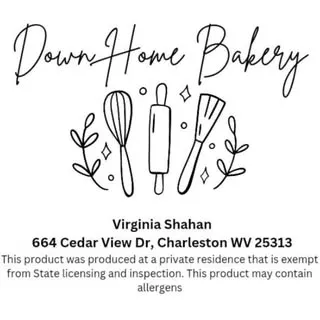
- Label your products correctlyThe free path is exempt from packaging and labeling laws, but the rule still sets a labeling standard you follow — including the verbatim §7.5 non-commercial-kitchen statement. Copy the sample below.
That’s it — no permit, no fee, no WVDA registration, no inspection, no training. (Register your business name/address with the state and handle sales tax — separate from the food law.)
Path B — Farmers-market vendor permit ($35/year)
- Apply to the WVDAOn the Commissioner’s form. Applications are due March 1; the permit is valid April 1 – March 31, costs $35/year, and is valid statewide. A $20 late fee applies after March 1.
- Complete approved food-safety training and keep it currentServSafe Food Handler, Better Process Control School, Acidified Foods Manufacturing School, a GMP certificate program, or another WVDA-approved course. Refrigerated baked goods, cut produce, infused foods, and condiments need a Food Handler’s Card or higher; canned acidified foods need Better Process Control School or higher.
- Canned acidified foods only: get your process approvedGet a WVDA-recognized process authority’s approval before selling, keep batch records, and test your water supply (coliform under 1 cfu/100 mL) if you’re on a private supply.
- Pass a WVDA kitchen inspectionOn your initial application and after each renewal — billed at $27/hour, excluding travel hours. A home, farm, community, or commercial kitchen is fine. Inspectors check that no other domestic activities happen during production, that no infants, small children, or pets are in the kitchen during production, that surfaces can be cleaned and sanitized, and that ill workers stay away from exposed food.
- Submit your labels for review and display your permitSubmit your labels for the WVDA review and display your permit conspicuously at the point of sale. (Meat, poultry, fish, and dairy/cheese sellers need the underlying WVDA/health permits on top — beyond a simple porch shop.)
There’s no state food-handler card or kitchen inspection for the free shelf-stable path — only this permit path.
Path C — Direct-from-home permit (rule pending / not yet usable)
- Watch for the WVDA rule — you can’t apply yetThe §19-40 right took effect June 12, 2026, but the WVDA rule that sets the fee, application form, inspection cadence, training, and label specifics isn’t published yet — so there are no real steps or a cost we can list, and you can’t actually apply until the rule lands. Press coverage suggested it will look like the farmers-market regime (inspection, food-handler training, water testing), but that’s reported, not confirmed — no filed rule confirms it as of June 13, 2026. Watch the WVDA page.
When the WVDA publishes the rule, this path gains a real fee, application, and label — until then it’s law-on-the-books only.
Sources: W. Va. Code §19-35-6 · 61CSR38 §9 (permit / fees) · 61CSR38 §11 (inspections) · 61CSR38 §8 (training) · WVDA — Farmers Market Vendor Permit
Labels
In shortThe free path and the $35 permit path render labels under the SAME WV rule, 61CSR38 §7 — both carry the same verbatim non-commercial-kitchen statement and key the label to the company name. West Virginia sets no minimum type size. The new §19-40 path’s label isn’t pinned yet — its rule isn’t published.
Shelf-stable (Path A) & farmers-market permit (Path B) label
- Statement of identity — the common name of the product.
- The company name of the producer, packer, or distributor — and if the labeler isn’t the actual producer, a statement noting the relationship. West Virginia keys this to the operation/company name (the producer’s business name), not a personal legal name.
- City, state, and ZIP code of the producer, packer, or distributor
- Ingredients in descending order by weight, beginning with “Ingredients:”
- Net contents or count, in the bottom third of the primary label panel, in U.S. measures (metric in parentheses)
- Allergen statement beginning with “Contains”, naming each major allergen
- Safe-handling instructions (refrigeration/freezing, minimum safe heating temperatures) when applicable, and date or lot codes for potentially hazardous foods
- The required statement — any product made in a home, farm, or community kitchen — quoted verbatim (61CSR38 §7.5): “This product was made in a non-commercial kitchen that may not be subject to inspection and may contain cross-contact allergens not included in the allergen statement.”
Direct-from-home (§19-40, Path C) label — rule pending
- Not yet pinned. Article 40 says potentially hazardous cottage foods “shall be labeled in compliance with the department’s labeling standards” — but the WVDA rule that sets those standards for this path isn’t published yet.
- The 61CSR38 §7 elements at left are the closest existing template and a reasonable expectation, but we are not stating Path C’s exact label — or its required statement — as verified until the rule lands.
- Watch the WVDA page; this label firms up when the §19-40 rule publishes.
West Virginia’s rule sets no minimum type size for these labels (unlike some states’ 10-point floors) — everything must just be legible, with net contents in the bottom third of the primary panel. The “Contains” allergen statement names each major allergen. One note on an old string: some secondary sources still circulate a different “exempt from state licensing and inspection” disclaimer — that wording is not in the current rule; the §7.5 sentence above is the operative one.
Sources: 61CSR38 §7.4 / §7.5 / §7.6 (labels) · W. Va. Code §§19-40-1 to 19-40-6 (Path C label deferral)
What changed recently
In shortA brand-new direct-from-home permit (SB 44) took effect June 12, 2026 — but its WVDA implementing rule isn’t published yet, so it’s law-on-the-books only. A broader 2025 “Food Freedom Act” did NOT pass. The $35 farmers-market rule (61CSR38) was last rewritten in 2023.
- A brand-new direct-from-home permit took effect — June 12, 2026SB 44 (2026) created W. Va. Code Article 19-40, “Cottage Foods.” It lets the WVDA issue a potentially hazardous cottage food vendor permit for producing refrigerated cottage foods at home and selling them directly to consumers statewide — no food-establishment permit required to sell from home, and no need to also hold a farmers-market vendor permit. It excludes meat, poultry, seafood, and Grade A dairy products, and gives local health departments power to halt production on an imminent-hazard finding. The bill passed the Senate 2/26/2026 and the House 3/13/2026, the legislature completed action / concurred on 3/14/2026 (treat 3/14/2026 as “passage”), the Governor approved it 3/27/2026, and it took effect June 12, 2026 — 90 days from passage (3/14). The WVDA’s implementing rule — fee, application, inspection, training, and label terms — is not yet published, and the agency’s farmers-market-permit page doesn’t yet mention the new path. So the right exists today; the operating details don’t yet.
- A broader “Food Freedom Act” did NOT pass — 2025SB 588 (2025) would have deregulated homemade food much more sweepingly (including some home-kitchen meat and dairy). It died in the Senate Health and Human Resources committee with no further action. SB 44 is the narrower successor that became law.
- The farmers-market rule was last rewritten — May 1, 202361CSR38 (the WVDA “Farmers Markets” legislative rule that carries the $35 permit fee, the food lists, the label rules, and the inspection terms) took effect May 1, 2023 and has been stable since. A pending “in-progress” revision exists in the Secretary of State’s database — likely the SB 44 conforming update — but its content and filing status are not yet known.
Sources: W. Va. Code §§19-40-1 to 19-40-6 (SB 44) · SB 44 (2026) bill history · SB 588 (2025) bill history · 61CSR38 (Farmers Markets rule)
Common questions
- Can I sell cheesecake from home in West Virginia?
- Not on the free path — cheesecake needs refrigeration, so it’s a “potentially hazardous” food the free shelf-stable exemption excludes. You can sell it today at a farmers market or your own farm stand under the $35 vendor permit (with a Food Handler’s Card and a WVDA kitchen inspection), and — once the new §19-40 rule publishes — direct from your home statewide.
- What does it cost to start in West Virginia?
- $0 for shelf-stable cottage food. $35 a year for the farmers-market vendor permit that adds refrigerated and acidified foods, plus a kitchen inspection billed at $27/hour. The brand-new direct-from-home permit’s fee isn’t set yet — the WVDA rule is pending, so that path isn’t usable.
- Is there a limit on how much I can sell in West Virginia?
- No. None of the three paths sets a revenue cap. (There’s a separate business-tax registration exemption for sellers under $4,000 in gross income — that’s a tax-registration threshold, not a food sales cap.)
- Can a store carry my cookies in West Virginia?
- Not under the free cottage exemption — its scope is direct, non-wholesale purchase by consumers, so supplying a store to resell falls to the conventional food-establishment route.
- Can I ship my cookies out of state from West Virginia?
- West Virginia’s cottage law allows remote sales and third-party-carrier delivery and doesn’t draw a state line — but it also says the exemption doesn’t waive federal law, including federal limits on selling certain foods in interstate commerce, or another state’s laws. Once a package crosses a state line you’re in FDA territory plus the destination state’s rules, and no West Virginia source resolves that. (The new §19-40 home-sales path is in-state only by statute.) Confirm the federal side before you build on out-of-state shipping.
- Can I sell salsa, pickles, or hot sauce from home in West Virginia?
- Those are canned acidified foods — “potentially hazardous,” so not on the free path. With the $35 farmers-market vendor permit you can, after process-authority approval, batch records, and water testing if you’re on a private well. (Home-canned tomatoes, tomato sauce, or tomato juice at pH 4.6 or below are the one canned exception that rides the free path.)
- Do I need a food-handler card to sell homemade food in West Virginia?
- Not for the free shelf-stable path — it has no training requirement at all. The farmers-market vendor permit requires a Food Handler’s Card or higher (or Better Process Control School for canned acidified foods).
- Can my kid run a stand in West Virginia?
- Yes — shelf-stable cookies, breads, or candies from a porch stand are on the free path, with no minimum age and no permit, and the town generally can’t require a license to sell shelf-stable food. Refrigerated items move it into the permit conversation.
- When can I use the new direct-from-home permit in West Virginia?
- The right took effect June 12, 2026, but you can’t actually apply until the WVDA publishes the rule that sets the fee, application, and inspection terms — and that rule isn’t out yet. Watch the WVDA farmers-market / licensing page for it.
Sources: W. Va. Code §19-35-6 (shelf-stable cottage food) · W. Va. Code §§19-40-1 to 19-40-6 (direct-from-home permit, SB 44) · 61CSR38 (Farmers Markets rule — the $35 permit)
You won’t be doing this alone
12 porch bakers are already selling across West Virginia under these exact laws. Browse their pages and learn from people two steps ahead of you — what they sell, how they price, how they talk about their bread. Cottage bakers are famously generous with what they’ve learned, and most are a DM away on Instagram.





This page is educational, not legal advice — we’re not lawyers, just neighbors who read West Virginia’s official sources and wrote down what they say (every claim above links to its source). West Virginia’s paths carry different rules — make sure you know which one you’re on. We don’t list a fee or steps for the new direct-from-home (§19-40) permit because the West Virginia Department of Agriculture hasn’t published its implementing rule yet — check the WVDA page for it before relying on that path. Business and sales-tax registration, zoning, and home-occupation permits are separate from the food law and set elsewhere — check yours. Always double-check the details with your own city and state before you sell. When something here and the law disagree, the law wins; if you spot that happening, tell us and we’ll fix it.