Cottage food laws · Oregon
Selling homemade food in Oregon
Oregon gives home cooks more than one door, and the most common one is wide open: the Cottage Food Exemption is free — no license, no registration, no inspection, no fee — and covers shelf-stable baking and candy up to $52,700 a year. The only real cost is a $10 food handler card for each person who helps make the food. If you need refrigeration — a cheesecake, a cream pie — or you outgrow the cap, there’s a licensed home-kitchen path (a Domestic Kitchen Bakery, $179 a year). And if you grow what you sell, the Farm Direct exemption is a third, separate door. Here’s the whole picture, in plain English.
Verified against Oregon Revised Statutes 616.723(as enacted by SB 643, 2023) and the Oregon Dept. of Agriculture
Last checked June 12, 2026 — every section links its sources.
A plain-English breakdown, not legal advice — we’re not lawyers. Always confirm the details with your own city and state before you sell.
The 2-minute version
Starting path: Path A — the Cottage Food Exemption — other paths differ (see below)
- Sales cap
- ~$52,700/yr
- State registration
- Not required
- Kitchen inspection
- Not required
- Food-handler card
- Required
- Sell at markets
- Yes
- Shipping
- In-state only
Three cards, the whole story — two free exempt paths plus one licensed path. Everything below is detail, with the actual laws linked, so you never have to take our word for it.
Selling shelf-stable goods?
That’s the Cottage Food Exemption — fully exempt from state licensing. Bake cookies, breads, cakes, candy, or low-pH jams in your home kitchen, label them right, and sell up to $52,700 a year (2026, rises with inflation). The one upfront step everyone forgets: a $10 food handler card for each person who helps make the food.
Need refrigeration — or past the cap?
A cheesecake or cream pie can’t come out of a cottage kitchen — it needs refrigeration, which the exemption excludes. That takes a licensed Domestic Kitchen Bakery — $179 a year and routine ODA inspections. Same path if you outgrow the $52,700 cap.
Grow what you sell?
A separate free door: the Farm Direct exemption, for growers selling what they grew — fresh produce, eggs, honey, plus producer-processed acidic goods (jams, syrups, canned fruit) up to $50,000 a year. It stacks with the cottage exemption.
A few ways to sell in Oregon — pick your path
In shortOregon has three doors, and which one fits turns on two questions: do you grow the main ingredients yourself? and does what you make need refrigeration (or will you pass $52,700 a year)? Most home bakers use the free Cottage Food Exemption.
Most home bakers in Oregon use one free, license-free path. But Oregon actually has three doors, and which one fits turns on two questions: do you grow the main ingredients yourself? and does what you make need refrigeration (or will you pass $52,700 a year)?
The Cottage Food Exemption
If you bake or make shelf-stable treats in your home kitchen, you’re exempt from ODA food-establishment licensing entirely — no application, no registration, no fee, no routine inspection. You follow the food list, label rules, and sanitation basics, and the exemption applies automatically.
The one upfront step everyone forgets: each person who helps prepare the food needs a $10 food handler card. Stay under $52,700 a year.
Pick this path if: you make cookies, breads, cakes (shelf-stable icing), candy, jams from low-pH fruit, honey, syrups, dried teas, or repackaged dried/freeze-dried goods — and you expect under ~$52k a year.
The Farm Direct exemption
A separate license-free path for agricultural producers selling what they grow — fresh produce, eggs, honey, nuts — plus a list of producer-processed acidic value-added goods (fruit syrups, preserves, jams, canned fruits and vegetables, fruit/vegetable juices). The principal ingredients must be grown by you. The processed subset is capped at $50,000 a year; raw produce, eggs, and honey are uncapped.
It stacks with the cottage exemption — ODA confirms you can sell up to the dollar limits of both in the same year ($52,700 cottage + $50,000 farm-direct processed in 2026).
Pick this path if: you grow the main ingredients yourself (farm, orchard, garden, hives).
The Domestic Kitchen license
A real ODA food-establishment license for your home kitchen, with an annual fee and routine inspections. Two flavors: Domestic Kitchen Bakery ($179/yr at ≤$50,000 gross sales, tiered higher above that) and Domestic Kitchen Food Processor ($223/yr flat).
This is the path for anything the exemption can’t cover — refrigerated baked goods (cheesecake, cream pie), passing the $52,700 cap, or operating as a fully licensed home processor.
Pick this path if: you outgrow the cap, or your product needs refrigeration, or you want to run a licensed home kitchen.
The cleanest way to see the difference: a cheesecake can’t legally come out of a Cottage Food kitchen — it needs refrigeration after baking, which the exemption excludes. To sell one from home, you license a Domestic Kitchen Bakery — $179 a year and routine inspections. Same product, two answers. (Smaller side exemptions also exist that aren’t full regimes — selling your own shell eggs direct to consumers, retail honey extraction from your own hives, and very small raw-milk producers (no more than three dairy cows, nine sheep, or nine goats, on-farm) — each has its own rules.)
Sources: ORS 616.723 (SB 643) · ORS 616.683 (SB 507, Farm Direct) · ODA — Cottage Food FAQ · ODA — Domestic Kitchen
Where you can sell
In shortCottage food: within Oregon, through many channels — home, markets, farm/roadside stands, online, by mail, and limited retail (a coffee shop or grocery store, not a restaurant). Out of state is the destination state’s call. Farm Direct and the licensed kitchen have their own venue rules.
Cottage Food — within Oregon, through many channels. The statute’s own words: direct to the person buying, “in any manner, including from the home, online, through the mail and at events.” ODA lists the home, farmers markets, farm stands, roadside stands, and online — and answers “Can I sell my cottage food products over the Internet?” with a one-word “Yes.”
Limited retail (not general wholesale): you may sell packaged cottage foods to a retailer — a grocery store counts, and the definition includes coffee shops but excludes restaurants — if the retailer agrees to store and display them separately and clearly indicate they’re homemade and not from an inspected establishment. The hard boundary: you may not sell cottage foods to an institution — “a caterer, school, day care center, hospital, nursing home, correctional facility or restaurant.”
Out of state: Oregon doesn’t ban it, but ODA disclaims jurisdiction — “We do not have jurisdictional authority in other states” — and points you to the destination state’s rules before you ship across the line. Mail and shipping within Oregon are expressly fine.
Farm Direct: direct sales, consignment (title stays with the producer until the goods sell; consigned goods carry the producer’s name and business address), internet sales to persons within Oregon, and third-party delivery/marketing contracts. The statute sets no “same or adjoining counties” limit on consignment — that restriction sometimes attributed to the program isn’t in the current law.
Domestic Kitchen license: a full food-establishment license with no venue restrictions beyond the named exclusion (catering is prohibited). As a licensed establishment it can sell wholesale and retail. (Shipping across state lines also brings in federal FDA rules — worth knowing before you do it.)
Sources: ORS 616.723 (SB 643) · ORS 616.683 (SB 507) · ODA — Cottage Food FAQ · ODA — Domestic Kitchen handout
What you can sell
In shortCottage food is a shelf-stable, not-potentially-hazardous list — anything needing refrigeration is out (the cheesecake line). Farm Direct allows what you grew plus producer-processed acidic goods. A Domestic Kitchen license is broader, with its own hard exclusions.
Cottage food — allowed
The statutory list (ORS 616.723(2)): “baked goods, confectionary items, coffee beans, teas, popcorn, jams, jellies, honey, syrups, fruit butters, nut mixes, repackaged freeze-dried foods, repackaged dried and dehydrated foods and powdered drink mixes.”
- Baked goods & confections
- Coffee beans & teas
- Popcorn
- Jams, jellies & fruit butters (pH < 4.60)
- Honey & syrups
- Nut mixes
- Repackaged dried & freeze-dried foods
- Powdered drink mixes
The fine print from the rule: jams, jellies, and fruit butters only from fruit with a natural pH below 4.60; teas, spice/herb blends, repackaged dried and freeze-dried goods, and powdered drink mixes must be made from commercially sourced food; freeze-drying as a process is allowed only for confectionary items (you may repackage commercially purchased freeze-dried foods); flavored honey is fine if the flavorings are commercial foods, with no beehive limit beyond the $52,700 sales cap.
Cottage food — prohibited
- Cheese cakes & cream pies
- Custard / meringue / cream-cheese fillings
- Focaccia with vegetables or cheese
- Candy/caramel apples & chocolate-covered fruit
- Meat, fish or shellfish baked goods
- Pickles & pepper jelly (pH > 4.60)
- Marijuana / hemp-leaf tea
- Home-brewed bottled tea
- Pet treats
The refrigeration line is the key one. ODA’s examples that don’t qualify because they need temperature control: “Baked goods that require refrigeration after production, such as cream pies, cheese cakes”; “Pastries containing cream, custard, meringue, or cream cheese icings or fillings”; “Focaccia - style breads containing vegetables or cheese”; “Candied fresh fruit products, including caramel and candy apples, and chocolate covered strawberries”; and baked goods containing meat, fish, or shellfish. Also out: marijuana/ cannabinoid items and hemp-leaf tea, home-bottled brewed tea (only commercially dried tea is allowed), pet treats (human food only), and pickles or pepper jelly — a cucumber or pepper’s natural pH is above 4.60.
Farm Direct — what you grew (+ producer-processed acidic)
- Fresh fruit, vegetables & herbs
- Producer-dried produce, herbs & herbal teas
- Shelled & unshelled nuts
- Acidic fruit syrups, preserves & jams
- Canned fruits & vegetables
- Fruit/vegetable juices
Producer-processed acidic goods are bottled, packaged, water-bath or steam canned; the principal ingredients must be self-grown. Foods that have been commingled are excluded (ORS 616.683(2)).
Domestic Kitchen Bakery — adds refrigerated baked goods
- Cheesecake
- Cream pie
- …plus everything a cottage kitchen bakes
Refrigerated baked goods (cheesecake) are the reason most home bakers move to this license — ODA routes over-cap and non-exempt home producers to a Domestic Kitchen Bakery, and the license requires separate refrigerated storage for perishables. Prohibited even with the license: low-acid canned foods; processing milk or dairy (yogurt, cheese, ice cream); processing meat; animal-food processing; and catering. Acidified foods (pickles, salsas) may be possible only with a process-authority analysis and Better Process Control School certification. (No ODA source states “cheesecake is allowed” in those exact words — this rests on ODA’s routing of non-exempt home producers to the license plus the refrigerated-storage requirement. If a seller wants certainty, ODA Food Safety can confirm before they start.)
Sources: ORS 616.723 (SB 643) · ORS 616.683 (SB 507) · OAR 603-025-0320 · ODA — Cottage Food FAQ · ODA — Domestic Kitchen handout
The rules that actually matter
In shortTwo distinct caps that don’t bleed together: $52,700/yr cottage (CPI-indexed) and $50,000/yr farm-direct processed (flat). They stack. A food handler card is required on the cottage path. No routine inspection on the exempt paths.
- Cottage Food: $52,700 a year (2026, rises with inflation)The statute set a $50,000 base and adjusts it every year for inflation (Consumer Price Index, West Region), rounded to the nearest $100; the current figure is in the rule and ODA’s FAQ. Keep sales records — the statute requires retaining them at least three years and making them available to ODA on request.
- Farm Direct: $50,000 a year — flat, not indexedThe $50,000 cap covers only the producer-processed subset (syrups, preserves, jams, canned goods, juices); fresh produce, eggs, and honey are uncapped. This cap is flat — SB 507 removed the CPI authority the old farm-direct limit carried, so don’t “harmonize” it with the cottage cap.
- The two exempt caps stackODA: “you can sell up to $52,700 of Cottage Foods and up to $50,000 of Processed Farm Direct foods in the calendar year.” A Domestic Kitchen license, by contrast, has no sales cap — the annual fee simply rises with gross sales (tiers run past $10M).
- A $10 food handler card is required on the cottage pathEach person who helps prepare the food needs an Oregon food handler card — a short course, $10, valid three years, good statewide. Cottage food can’t go to institutions (no caterers, schools, day cares, hospitals, nursing homes, correctional facilities, or restaurants).
- No routine inspection on the exempt pathsBut ODA keeps the authority to inspect — and to require a license — if there’s a food-safety concern, a complaint, or you operate outside the exemption’s terms. (A Domestic Kitchen license carries routine ODA inspections.)
Sources: ORS 616.723 (SB 643) · ORS 616.683 (SB 507) · OAR 603-025-0320 · ODA — Cottage Food FAQ · ODA — fee schedule
Getting set up
In shortThe cottage path has nothing to file with ODA — get every preparer a $10 food handler card, build your label, keep records. Farm Direct is also license-free. The Domestic Kitchen license is a real application + inspection + annual fee.
Path A — Cottage Food (nothing to file with ODA)
- Every preparer gets an Oregon food handler cardA short course, $10, valid three years, and a card from any county is valid statewide. The statute requires it for each person involved in preparing the food.
- Keep the kitchen clean and pets out during prepPets may live in the home but can’t be in the kitchen while you’re making cottage food.
- Build your labelNext section. Optionally request a $25 Unique Identification Number (UIN) to keep your home street address off the label.
- Keep sales and product-type records for three years
- Check local zoning and business rulesThe exemption only covers ODA licensing — your city or county may have its own requirements. No ODA application, no state kitchen inspection.
That’s it — no ODA application, no fee, no state kitchen inspection.
Path B — Farm Direct (no ODA license)
- Follow the product rules and the farm-direct labelEggs and honey have their own side rules (egg-handler exemptions, hive limits). The farm-direct label uses the SHORT statement — see Labels.
Path C — Domestic Kitchen license
- Contact your city/county firstLand Use Compatibility Statement (LUCS), zoning, fire/plumbing/electrical codes.
- The kitchen must be in your primary residenceA secondary home, ADU, garage, basement, or other room needs a different license.
- On a well or spring? Lab-test for coliforms and E. coliBefore approval and annually; septic systems need DEQ/local sign-off.
- Apply with ODA, pass the initial inspection, and pay the annual fee$179 (Domestic Kitchen Bakery, at ≤$50,000 sales) or $223 (Domestic Kitchen Processor).
- Ongoing requirementsRoutine ODA inspections (be available weekdays 8–5); separate closed storage for ingredients and finished goods; separate refrigerated storage for perishables; no children, pets, or other household activity in the kitchen during production; pet presence still goes on the label.
Sources: ORS 616.723 (SB 643) · ORS 624.570 (food handler card) · OHA — food handler cards · ODA — Domestic Kitchen handout · ODA — fee schedule
Labels
In shortOregon’s exempt paths carry DIFFERENT label statements — get the path right first. Cottage food = the long-form statement (with the “stored and displayed separately” clause); Farm Direct = the short form, no retailer clause. Don’t swap them.
Cottage Food label
- The verbatim statement: “This product is homemade, is not prepared in an inspected food establishment and must be stored and displayed separately if merchandised by a retailer.”
- The name and phone number of the food establishment (the business/operation)
- The address of the food establishment — full street address; or city, state, and zip if listed in a city directory; or the ODA-issued UIN. A P.O. box is not allowed.
- The product name
- The ingredients, in descending order by weight
- The net weight or net volume
- Allergen warnings under federal rules — the nine major allergens, including sesame
- Nutritional information only if the label makes a nutrient or health claim
- Pet disclosure — if pets live in the dwelling, the label must say so and name the species by common name (“cat, dog, or rabbit”)
Farm Direct label — the SHORT form
- Ingredients
- The producer’s name and address
- The verbatim SHORT statement — without the retailer clause: “This product is homemade and is not prepared in an inspected food establishment.”
Don’t swap the two strings — the cottage statement is the long form with the “stored and displayed separately” clause; the farm-direct statement is the short form. Two more cottage rules from ODA’s FAQ: a wedding-cake-type item delivered to the buyer needs all the label information on a receipt or similar document delivered with it; selling single items (one cookie, one muffin) at a market needs a placard at the stand reading, verbatim: “This product is homemade and is not prepared in an inspected food establishment.” The label maker below builds the cottage food label.
Sources: ORS 616.723(6) (SB 643) · ORS 616.683(7) (SB 507) · OAR 603-025-0325 · ODA — Cottage Food FAQ
What changed recently
In shortSB 643 (2023) rewrote the cottage law — $50k base with annual inflation indexing (now $52,700), a much bigger food list, and legal online/mail/limited-retail sales. SB 507 (2023) expanded Farm Direct with a flat $50,000 processed cap.
- SB 643 (2023) — the big rewriteIt overhauled ORS 616.723: raised the cap from $20,000 to $50,000 with annual inflation indexing (now $52,700 in 2026); expanded the allowed-foods list well beyond baked goods and confections (jams, honey, syrups, teas, repackaged dried/freeze-dried goods, powdered drink mixes); legalized online, mail, and event sales (the old law banned internet sales); legalized limited retail sales to retailers like coffee shops; added the UIN address-privacy option; and added the pet-disclosure rule.
- SB 507 (2023) — Farm Direct expansion · eff. Sept. 24, 2023Consignment for eligible products, in-state internet sales, third-party delivery, and a broader processed-products list (fruit/vegetable juices, steam canning), with the processed cap set at a flat $50,000 (the CPI authority was deleted).
- OAR implementation (2024) + annual cap updatesThe rules (OAR 603-025-0311 through -0335) were rewritten in 2024 to match SB 643 — the pH-below-4.60 limit, the commercial-source qualifiers, labeling, and the UIN. The cottage cap rises each year with inflation; the current OAR figure is $52,700 (2026). No 2025–2026 bill amends the cottage-food or farm-direct chapters in a way that touches a seller-facing fact (checked June 2026).
Sources: SB 643 (2023) · SB 507 (2023) · OAR 603-025-0320 · ODA — Cottage Food FAQ
Common questions
- Do I need a license to sell baked goods from home in Oregon?
- Usually no. If your goods are shelf-stable and you stay under $52,700 a year, the Cottage Food Exemption applies with no application, registration, or fee — just a $10 food handler card per preparer, plus the label.
- Can I sell cheesecake from home in Oregon?
- Not under the Cottage Food Exemption — cheesecake needs refrigeration after baking, which the exemption excludes. To sell one from home, you’d license a Domestic Kitchen Bakery ($179/yr) and accept routine inspections.
- What does it cost to start?
- $0 for the cottage path (plus the $10 food handler card); $0 for farm direct; $179/yr for a Domestic Kitchen Bakery license or $223/yr for a Domestic Kitchen Processor license.
- Can I sell online or ship my products?
- Yes within Oregon — ODA explicitly allows internet and mail sales. Across state lines, ODA disclaims jurisdiction and points you to the destination state’s rules before you ship.
- Is there a sales cap?
- $52,700 a year for cottage foods in 2026 (it rises with inflation each year); $50,000 a year for farm-direct processed goods (a flat cap); no cap under a Domestic Kitchen license.
- Can I sell pickles or salsa under the cottage exemption?
- No — a cucumber or pepper’s natural pH is above 4.60, so pickles and pepper jelly don’t qualify. Farm Direct can allow some acidic canned goods, and a Domestic Kitchen license can handle acidified foods with a process-authority review.
- Can a grocery store or coffee shop carry my cookies?
- A coffee shop or other retailer can — a grocery store counts too — if they store and display your cottage foods separately and post that they’re homemade and not from an inspected establishment. Not a restaurant, and not an institution like a school or hospital. This is limited retail, not general wholesale.
- Do I need a food handler card?
- Yes for the Cottage Food path — every person who prepares the food, $10, valid three years, good statewide.
- Can I keep my home address off the label?
- Yes — request a $25 Unique Identification Number (UIN) from ODA and print that instead of your street address (a P.O. box isn’t allowed; the UIN renews each June 30 for $25).
- Does the cottage law combine with the Farm Direct exemption?
- Yes — the two caps are separate, so a grower-baker can sell up to $52,700 of cottage foods and $50,000 of processed farm-direct foods in the same year.
Sources: ORS 616.723 (SB 643 — cottage cap, food list, sales channels, label) · ORS 616.683 (SB 507 — Farm Direct, $50,000 flat processed cap) · OAR 603-025-0320 (cottage conditions — $52,700, pH < 4.60, food handler) · ODA — Cottage Food Exemption FAQ
You won’t be doing this alone
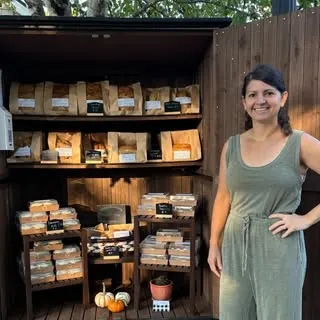
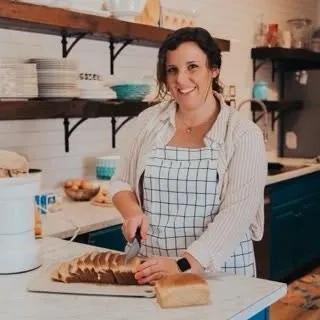
140 porch bakers are already selling across Oregon under these exact laws. Browse their pages and learn from people two steps ahead of you — what they sell, how they price, how they talk about their bread. Cottage bakers are famously generous with what they’ve learned, and most are a DM away on Instagram.
- Five & WildCave Junction
- The Porch BakeryHines
- West Coast Dough | PDX Home BakerySherwood
- Dallas' Sourdough Co - Fresh Sourdough & Baked GoodsEagle Point
- Cottage Bakery Oregon - UmaWilsonville
- Butter.Crumb.BakeryGresham
- Maggy’s Farm BakeryOregon City
- showstopper cookiesPortland
- Shelly BowerBoring
- Bells BakeryPortland


This page is educational, not legal advice — we’re not lawyers, just neighbors who read Oregon’s official sources and wrote down what they say (every claim above links to its source). The cottage-food sales cap is adjusted for inflation every year — the $52,700 figure here is the 2026 number and will change; check the current figure before you rely on it. Oregon’s exempt and licensed paths carry different rules and different label statements — make sure you know which one you’re on, and don’t confuse the $52,700 cottage cap with the separate $50,000 farm-direct cap. Local zoning and business rules are separate and set locally — check yours. Always double-check the details with your own city and state before you sell. When something here and the law disagree, the law wins; if you spot that happening, tell us and we’ll fix it.