Cottage food laws · New York
Yes, you can sell homemade food in New York.
New York doesn’t have a law called a “cottage food law” — but it has the next best thing: a free state registration that lets you sell breads, cookies, cakes, jams, and dozens of other shelf-stable foods from your home kitchen, with no fee, no expiration, and no inspection before you start. There’s a catch worth knowing up front — anything that needs refrigeration (yes, cheesecake) takes a real license — and one genuine perk most states don’t offer: you can sell wholesale to local shops and restaurants. Here’s the whole picture, in plain English.
Verified against Agriculture & Markets Law Article 20-C, 1 NYCRR 276.4 and the NY Dept. of Agriculture & Markets
Last checked June 12, 2026 — every section links its sources.
A plain-English breakdown, not legal advice — we’re not lawyers. Always confirm the details with your own city and state before you sell.
The 2-minute version
Starting path: Path A — the Home Processor Exemption — other paths differ (see below)
- Sales cap
- None
- State registration
- Required
- Kitchen inspection
- Not required
- Food-handler card
- Not required
- Sell at markets
- Yes
- Shipping
- In-state only
Three cards, the whole story. Everything below is detail — with the actual laws linked, so you never have to take our word for it.
Selling shelf-stable goods?
That’s the Home Processor Exemption — a free state registration that exempts you from the Article 20-C food-processing license. Put approved shelf-stable foods on the list — breads, cookies, cakes, high-acid jams, candy, snack mixes — label them, and sell across New York. No fee, no expiration, no inspection before you start.
Want to sell cheesecake?
That takes an Article 20-C license — $400 per two years ($175 small-scale). It covers refrigerated and canned goods the free path bans (cheesecake, cream-filled pastries, pickles, salsa), but a plain home kitchen can’t hold it: you need a “home annex” or a commercial kitchen.
Kid stands or wholesale?
New York writes no minor carve-out, but the home-processor path is free with no stated minimum age — so a young baker’s shelf-stable cookies follow the same path an adult’s do. And uniquely, home processors may sell wholesale to New York shops and restaurants.
Two ways to sell — pick your path
In shortNew York runs its whole homemade-food economy through Agriculture & Markets, with two routes: the free Home Processor Exemption for shelf-stable foods, or the Article 20-C license for refrigerated/canned goods — which needs a home annex or commercial kitchen.
New York runs its whole homemade-food economy through one agency — the Department of Agriculture & Markets(Ag & Markets), Division of Food Safety and Inspection — and gives you two routes through it. The two split on one question: does what you make need refrigeration? Shelf-stable goes the free Home Processor path; refrigerated or canned goes the Article 20-C license. Knowing which one fits what you make is 80% of “is this legal?”
Home Processor Exemption
A free registration that exempts you from the Article 20-C food-processing license when you make approved shelf-stable foods in your ordinary home kitchen. No fee, no expiration date, no pre-approval inspection, no food-handler permit. You register your products, label them, and sell — direct to neighbors, online within New York, or wholesale to local stores and restaurants that want to carry them.
The one hard line: you can only sell inside New York State.
Pick this path if: everything you sell is on the approved list — breads, cookies, cakes without perishable frosting, double-crust fruit pies, high-acid jams, candy, snack mixes, repacked dry goods — and you sell only inside New York.
Article 20-C Food Processing license
The real license, from Ag & Markets — required for anything off the exempt list: refrigerated items (cheesecake, cream-filled pastries, buttercream), pickles, salsas, sauces, chocolates, canned goods. The fee is $400 per two years, or $175 for a qualifying small-scale processor (not a chain store, ten or fewer full-time employees).
Here’s the wrinkle: a plain home kitchen cannot hold a 20-C license. The agency’s guidance describes a “home annex” — a separate, licensable space at your residence with its own cleaning/sanitizing/handwashing facilities and cleanable surfaces — that can, as can a commercial kitchen. Low-acid or acidified canned foods add a scheduled-process filing and FDA registration on top.
Pick this path if: you want to sell refrigerated or canned/acidified products, or you’ve outgrown the exemption.
A third door, not cottage food but neighbors ask: New York also exempts maple-syrup and honey producers selling their own product, and farm wineries/breweries/distilleries, through separate Article 20-C exempt registrations. If syrup or honey is your thing, that’s your path — different from the home-processor list above.
Sources: AGM Article 20-C · AGM § 251-z-3 (fees) · Ag & Markets — Home Processing · Ag & Markets — Food Business Licensing
Where you can sell
In shortAnywhere in New York — farms, farm stands, farmers markets, craft fairs, home delivery, online (in-state), and uniquely wholesale to NY shops and restaurants. The one hard boundary: New York only; interstate is federal (FDA) territory.
Direct retail at agricultural venues — farms, farm stands, farmers markets, green markets, craft fairs, flea markets. Home delivery is allowed, and so are internet sales — within New York State only (online sales have been authorized since the agency’s April 2018 program expansion).
Wholesale — yes. This is the home-processor path’s quiet superpower: you may sell wholesale to local establishments — restaurants, cafes, grocery stores — that want to carry your products. Most cottage-food regimes don’t allow this at all.
The one hard boundary: New York only. “All items must be sold within New York State.” Interstate shipping is prohibited — cross the state line and you’re in federal (FDA) territory. In-state shipping and delivery are fine. Products must be pre-packaged and labeled in your home before sale.
Sources: Ag & Markets — Home Processing · Ag & Markets press release (2018)
What you can sell
In shortThe home processor path is a defined list of shelf-stable foods. The governing line: “Any finished food product that requires refrigeration is prohibited from being produced as a Home Processor.” Refrigerated and canned goods are the 20-C license path.
Home Processor — approved shelf-stable foods
- Breads, rolls, bagels, muffins
- Cookies, biscotti, scones
- Doughnuts (no cream)
- Cakes (no perishable frosting), cupcakes, brownies
- Double-crust fruit pies
- High-acid jams, jellies & marmalades
- Fudge, peanut brittle, toffee, caramel apples
- Popcorn, caramel corn, granola, trail mix
- Crackers, pretzels, waffle cones, pizzelle
- Repacked spices, dried soup mixes, roasted coffee, dry baking mixes
The governing rule, quoted from the agency page: “Any finished food product that requires refrigeration is prohibited from being produced as a Home Processor.” Frosting carve-out, verbatim: an acceptable frosting must be “solely composed of shelf stable non-perishable ingredients such as shortening, sugar and commercially produced meringue powder,” or be commercially produced. Jams are high-acid fruits only. Pet treats are allowed — but they need a separate registration (see “Getting set up”). If it’s not on the agency’s list, you can’t sell it as a home processor.
Not allowed as a home processor
- Cheesecake, cream pies, meringue pies
- Cream-filled pastries, buttercream
- Vegetable breads (zucchini, pumpkin)
- Pickles, relishes, sauces, salsas
- Tempered chocolate, candy melts
- Cheese, dairy, meat, fish, poultry
- Beverages, freeze-dried foods, anything with alcohol
The agency’s explicit prohibited list: cheesecake, cream-filled pastries, cream pies, meringue pies, buttercream/cream-cheese frostings, no-bake items, vegetable breads (zucchini/pumpkin — they hold too much moisture), pickles and relishes, sauces/salsas, pepper jellies, cooked or canned fruits and vegetables, oils and dressings, tempered chocolate and candy melts, raw nuts, nut butters, cheese and dairy, meat/fish/poultry, quiche, beverages, freeze-dried foods, and anything with alcohol. All of these are the 20-C license path, in a licensable facility.
Sources: Ag & Markets — Home Processing · 1 NYCRR 276.4 · Ag & Markets — Food Business Licensing
The rules that actually matter
In shortNo sales cap on the free path. New York only — interstate is federal. Shelf-stable only on the free path. One location per registration, and you can’t simultaneously hold a Health Dept. permit or another Ag & Markets license at the same address.
- No sales cap on the free pathThe home-processor path has no revenue or volume limit — none in the statute, the regulation, or the agency page.
- New York onlyEvery item must be sold inside the state. The cheesecake line is the bright one: if it needs refrigeration, the free path can’t carry it — that’s the 20-C license. Cross the state line and you’re in federal (FDA) territory.
- One location, one registrationRegistration is tied to your kitchen’s address — move, and you re-register; add a product, and you re-submit your form marked supplemental.
- No food-handler permit — and no double-licensingNo food-handler permit is required for home processors, and no food-safety training requirement appears in the statute, the regulation, or the agency page. You also can’t simultaneously hold a Health Department permit or another Ag & Markets license at the same location while registered as a home processor.
Sources: AGM Article 20-C · 1 NYCRR 276.4 · Ag & Markets — Home Processing
Getting set up
In shortPath A is a free registration form, a private-well water test if you’re on a well, and no pre-approval inspection. Path B is a 20-C license: a licensable facility (home annex or commercial kitchen), pre-licensing + routine inspections, and $400/2yr.
Path A — Home Processor (most porch shops)
- Confirm every product you plan to sell is on the approved listThe agency’s Home Processing page is the live list.
- Complete the Home Processor Registration Request formList each product by its common name. Use the agency’s download button on agriculture.ny.gov for the current form.
- Private well only: attach a certified-lab water testShowing the water is negative for Total Coliform and E. coli. On municipal water? No test needed.
- Submit by email or mail to the Division of Food Safety and InspectionNo fee.
No pre-approval inspection — “kitchens are reviewed on a complaint basis only.” No food-handler permit or food-safety training requirement appears anywhere in the statute, the regulation, or the agency page. Use ordinary home-kitchen equipment (no commercial equipment), and don’t hold a Health Department permit or another Ag & Markets license at the location. New York doesn’t publish a guaranteed turnaround — submit early and confirm your registration is in hand before you start selling. Selling pet treats? That’s a SEPARATE registration — the Pet Food Registration, $100 per year per product, mailed in to Ag & Markets (limited to non-perishable shelf-stable snacks).
Path B — Article 20-C license
- Apply to Ag & Markets through the food-business licensing pageYour facility must meet licensable standards — a home kitchen itself doesn’t qualify, but a separate “home annex” with its own cleaning/sanitizing/handwashing facilities and cleanable surfaces can.
- Plan on documented potable water, a pre-licensing inspection, and routine inspections afterPlus a scheduled-process and FDA filing for any low-acid or acidified canned foods.
- Pay the license fee$400 per two years (or $175 small-scale).
Check local zoning either way — the agency’s guidance flags zoning and planning-board review.
Sources: Ag & Markets — Home Processing · Ag & Markets — Pet Food Registration · Ag & Markets — Food Business Licensing · Ag & Markets — Kitchen Standards (PDF)
Labels
In shortEvery package carries a short set of required elements, including a home-kitchen identification phrase in font 1/16 inch or larger and all nine allergens (sesame included). The name on the label is the individual processor’s name + full address; a business or brand name is optional.
Home Processor label
- The common or usual name of the product
- The ingredient list, in descending order by weight
- The net quantity of contents
- Your name as the processor + full street address — the rule requires “the name and address of the home processor.” A separate business or brand name is OPTIONAL; New York doesn’t require you to register or print one
- All nine allergens declared clearly in the ingredient statement — eggs, milk, fish, shellfish, soybeans, peanuts, tree nuts, wheat, and sesame (sesame reflects the federal FASTER Act)
- A home-kitchen identification phrase like “Made at Home by [Name],” “Made in the Home Kitchen of [Name],” or “Made in a Home Kitchen,” in font 1/16 inch or larger
The phrases above are offered by the agency as acceptable examples rather than one single mandated string — but carrying one of them is required. The label maker below builds this Home Processor label.
Sources: 1 NYCRR 276.4 · Ag & Markets — Home Processing
What changed recently
In shortNothing recent — the last real change was the 2018 expansion, which predates this window. The “Homegrown Foods Act” (A5836-A) is pending, not law: a separate $12,500/yr exemption. The approved-foods list is reviewed annually.
- No change to the home-processor regime in 2024–2026The last real program change was the April 30, 2018 expansion, which added products and authorized online sales within New York. That predates this window — so don’t read it as recent news; it’s historical context, not a fresh development.
- The “Homegrown Foods Act” (A5836-A) — pending, not lawA bill that would create a separate exemption for home-grown and home-processed food sold direct to consumers — up to $12,500 a year, with a food list broader than today’s (pickles, honey, condiments). As of June 2026 it’s not law — still in the Assembly Agriculture Committee (amended and recommitted May 26, 2026). Bill status moves; check the live page before relying on it.
- The approved-foods list is reviewed annuallyThe agency states it reviews its approved-foods list annually — re-pull the live Home Processing page when you set up, so you’re working from the current version.
Sources: Ag & Markets press release (2018) · A5836-A (2025–2026) · Ag & Markets — Home Processing
Common questions
- Can I sell cheesecake from home in New York?
- Not on the free path — cheesecake needs refrigeration, and “any finished food product that requires refrigeration is prohibited” for home processors. To sell it you’d need an Article 20-C license in a licensable facility (a home annex or commercial kitchen).
- Can a grocery store or restaurant carry my cookies in New York?
- Yes — and that’s unusual. Home processors may sell wholesale to local shops, cafes, and restaurants that want to carry their products.
- Do I need a kitchen inspection in New York?
- Not before you start. Home-processor kitchens are “reviewed on a complaint basis only.” The 20-C license path does include a pre-licensing inspection and routine inspections after.
- Is there a limit on how much I can earn in New York?
- No — the home-processor path has no revenue or volume cap.
- Can I sell my jam from home in New York?
- Yes — high-acid fruit jams, jellies, and marmalades are on the approved list. Low-acid or canned fruit isn’t (that’s the licensed path).
- Can I sell homemade food online in New York?
- Yes — within New York State only. Shipping across the state line isn’t allowed on either path.
- Do I need a food-handler permit to sell homemade food in New York?
- No — none appears in the statute, the regulation, or the agency page for home processors.
- Can I ship my baked goods to another state from New York?
- No — all items must be sold within New York; beyond the state line you’re in federal (FDA) territory.
Sources: Ag & Markets — Home Processing (lists, labels, venues, $0 fee) · AGM § 251-z-3 (20-C license fees) · 1 NYCRR 276.4 (home-processed-foods exemption)
You won’t be doing this alone
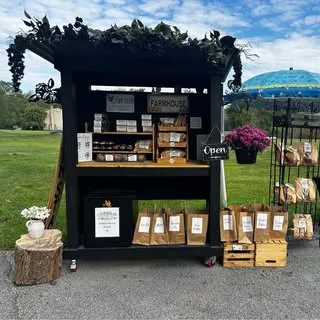
158 porch bakers are already selling across New York under these exact laws. Browse their pages and learn from people two steps ahead of you — what they sell, how they price, how they talk about their bread. Cottage bakers are famously generous with what they’ve learned, and most are a DM away on Instagram.




This page is educational, not legal advice — we’re not lawyers, just neighbors who read New York’s official sources and wrote down what they say (every claim above links to its source). The approved-foods list is agency policy and is reviewed annually — pull the live Home Processing page before you start. Cities (and New York City especially) may add their own zoning and health-code wrinkles this page doesn’t cover; check yours. Local zoning and sales-tax rules are separate and set locally. When something here and the law disagree, the law wins; if you spot that happening, tell us and we’ll fix it. Always double-check the details with your own city and state before you sell. When something here and the law disagree, the law wins; if you spot that happening, tell us and we’ll fix it.