Cottage food laws · New Jersey
Selling homemade food in New Jersey
New Jersey was the last state in the country to allow selling home-baked food — the rules took effect in October 2021. Now there’s one clear path: a Cottage Food Operator permit from the state Department of Health. It costs $100, lasts two years, and once you have it you can sell shelf-stable foods straight to your neighbors. The one rule that surprises everyone: every sale has to happen in person, in New Jersey — no mailing, no shipping, not even within the state. Here’s the whole picture, in plain English.
Verified against N.J.A.C. 8:24 Subchapter 11(the Cottage Food rules, effective October 4, 2021) and the NJ Department of Health’s program pages
Last checked June 12, 2026 — every section links its sources.
A plain-English breakdown, not legal advice — we’re not lawyers. Always confirm the details with your own city and state before you sell.
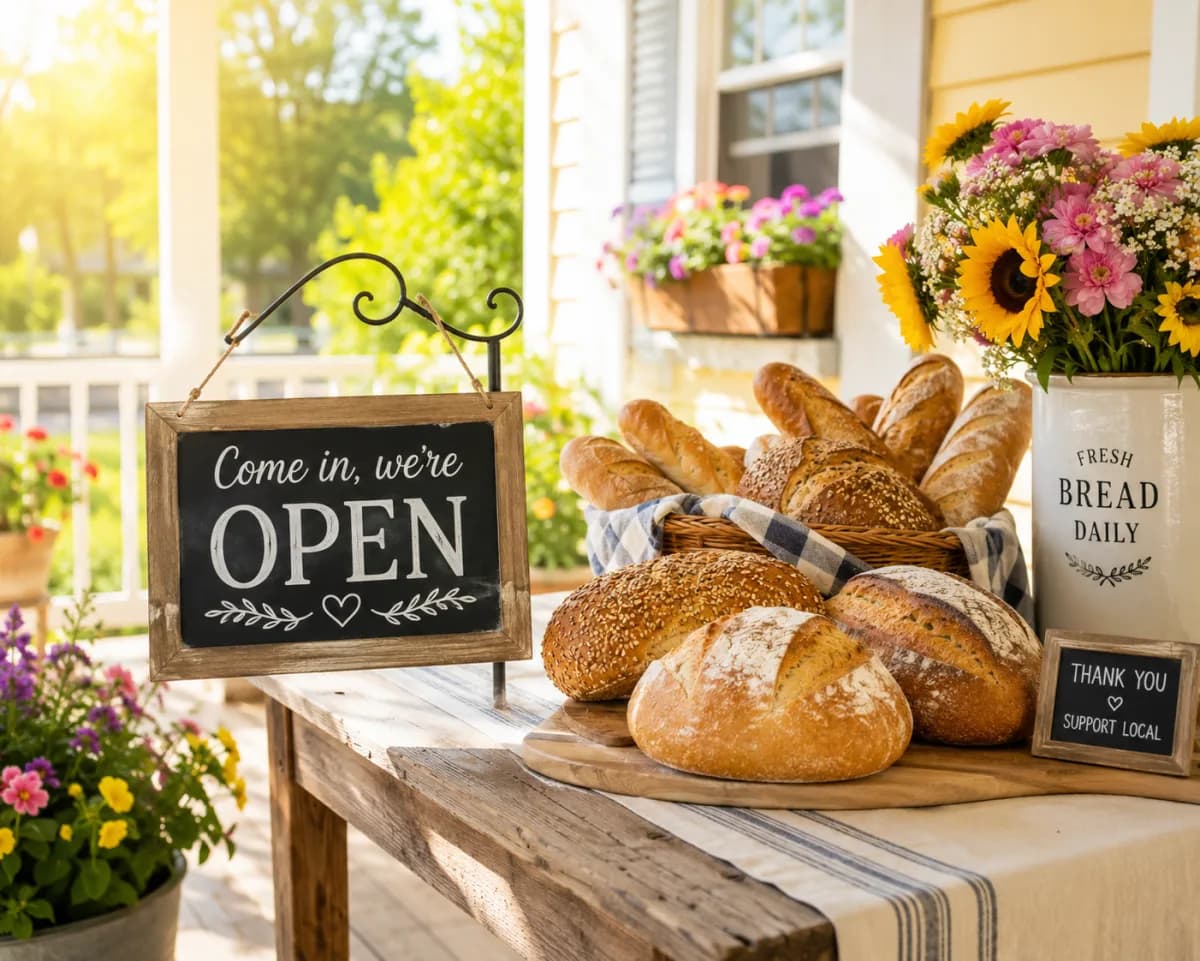
The 2-minute version
- Sales cap
- $50,000/yr
- State registration
- Not required
- Kitchen inspection
- Not required
- Food-handler card
- Required
- Sell at markets
- Yes
- Shipping
- Not allowed
Three cards, the whole story. Everything below is detail — with the actual rule linked, so you never have to take our word for it.
Selling to neighbors?
Make shelf-stable foods in your home kitchen, hold a $100 Cottage Food Operator permit (good for two years) and a manager-level food-safety certificate, put the required label on every package, and sell up to $50,000 a year. Cheesecake and anything that needs refrigeration are out.
Online orders? Shipping?
New Jersey lets you advertise, take orders, and accept payment online — but the handoff is the catch: every product has to be handed to the buyer in person, inside New Jersey. No mailing, no commercial carrier, no out-of-state, not even within the state.
How long to start?
This isn’t a print-a-label-and-go state. The Department of Health publishes a ~16-week processing time after you apply, on top of getting your manager certificate first — so start well before you plan to sell.
One way to sell in New Jersey — the Cottage Food Operator permit
In shortMost states make you pick between two or three legal paths. New Jersey has exactly one home-kitchen path: get the permit, follow the food list and the label, sell in person in New Jersey, and you’re operating legally. There’s no under-the-radar bake-sale tier.
New Jersey has exactly one home-kitchen path: the Cottage Food Operator (CFO) permit, created by the Department of Health’s rules at N.J.A.C. 8:24 Subchapter 11. Get the permit, follow the food list and the label, sell in person in New Jersey, and you’re operating legally. There’s no “under-the-radar” tier — the rule is explicit that anyone who produces or sells food to consumers either holds a CFO permit or complies with the full retail-food-establishment law. Unlike some states, there’s no small-bake-sale exemption written into the cottage rule.
The whole shape of the path
- Make shelf-stable (non-TCS) foods — nothing that needs refrigeration to stay safe — in the kitchen of your own home, and nowhere else
- Hold a $100 CFO permit (good for two years) and a Food Protection Manager certificate
- Put the required label on every package — including one exact sentence the rule spells out
- Hand every sale to the buyer in person, inside New Jersey — never by mail or carrier, never across a state line
- Stay under $50,000 a year in gross sales
Pick this path if: you’re making shelf-stable foods at home and selling them, in person, to neighbors in New Jersey.
The two non-cottage paths
If you want to sell foods that need refrigeration (cheesecake, cream pies, custard), run a storefront or catering operation, or pass $50,000 a year, you’ve left cottage food for retail food establishment territory: a commercial or licensed kitchen, licensed and inspected by your local health department under N.J.A.C. 8:24 (subchapters 1–10). Local licensing fees vary by town.
If you want to sell to stores, restaurants, or distributors — wholesale — that’s a wholesale food establishment license under N.J.A.C. 8:21-9, and home kitchens don’t qualify. The cottage rule expressly bars selling to wholesale establishments.
Pick this path if: you want refrigerated foods, a storefront, more than $50,000 a year — or to sell to stores and restaurants.
Sources: N.J.A.C. 8:24-11 (chapter PDF) · N.J.A.C. 8:24-1.5 (definitions) · N.J.A.C. 8:21-9.4 (wholesale) · NJ DOH — Cottage Food
Where you can sell — in person, in New Jersey, full stop
In shortYour home, the buyer’s home, NJ farmers’ markets and fairs — anywhere in New Jersey, direct to the buyer, in person. Online orders and payment are allowed; the handoff is not. No mail, no carrier, no out-of-state.
From home and around New Jersey: a cottage food operator may hand off products only, and only inside New Jersey — at your own home (no eating on-site), at the buyer’s home (as long as it’s in New Jersey), at a New Jersey farmers’ market or farm stand, at a New Jersey temporary retail food establishment (a craft fair, street fair, or county fair — the event’s own permits and board rules still apply on top of the state rule), or anywhere else in New Jersey, direct to the buyer, where local law doesn’t prohibit it.
Online is allowed — for everything except the handoff. New Jersey explicitly lets you advertise online, take orders, and accept payments over the internet, phone, or mail — these are “ancillary” business activities. What you can’t do is deliver the food any way but in person. The DOH FAQ puts it bluntly: “You may advertise your business online, accept online orders, and process online payments. You may not send products to your customers through the mail.”
The hard boundaries — written into the rule: No mail or common carrier — no USPS, no FedEx, no DHL; the rule bars delivery “by United States postal mail or a common carrier,” and the DOH FAQ confirms it applies even within New Jersey. Every product has to be transferred to the customer in person. No out-of-state sales — no interstate commerce, every buyer’s handoff is inside New Jersey. And no selling to anyone who isn’t the end consumer — no wholesalers, no retail stores, no restaurants, no consignment.
Sources: N.J.A.C. 8:24-11 (chapter PDF) · NJ DOH — Cottage Food FAQ
What you can sell
In shortThe rule behind the list: a cottage food product is non-TCS food — food that doesn’t need refrigeration to stay safe — that you prepare yourself. Breads, cookies, jams, candy, honey — yes. Cheesecake and anything refrigerated — no.
The rule’s list — 19 categories
- Baked goods — bread, cakes, cookies & pastries
- Candy, brittle & toffee
- Chocolate-covered nuts & dried fruit
- Dried fruit
- Dried herbs, seasonings & mixtures
- Dried pasta
- Dry baking mix
- Fruit jams, jellies & preserves
- Fruit pies, empanadas & tamales (no pumpkin)
- Fudge
- Granola, cereal & trail mix
- Honey & sweet sorghum syrup
- Nuts & nut mixtures
- Nut butters
- Popcorn & caramel corn
- Roasted coffee & dried tea
- Vinegar & mustard
- Waffle cones & pizzelles
The list ends with a catch-all: anything else non-TCS, by written application to the Department — you can petition the Public Health and Food Protection Program to approve another shelf-stable food. DOH keeps an expanded approved list with examples (macarons, babka, doughnuts, cake pops, infused honey or vinegar with no particles).
Prohibited — anything that needs refrigeration to stay safe
- Cheesecake & anything refrigerated
- Cream, sour cream, custard & puddings
- Cheese & cream cheese
- Meat & fish
- Vegetables (fresh, cooked, or dried)
- Fresh fruit, pumpkin, sweet potato, carrots
- Alcohol, CBD & THC
- Home-grown or foraged plants as ingredients
DOH also bars these post-baking icings and frostings: cream cheese, meringue, Swiss meringue, buttercream (including French and German), whipped cream, and ganache. Cheesecake fails the test: it needs refrigeration and is built on cream cheese — squarely on the prohibited list and outside the non-TCS definition. Selling cheesecake from home means the retail food establishment path (a licensed, inspected kitchen), not the cottage permit.
Sources: N.J.A.C. 8:24-1.5 (definitions) · NJ DOH — Approved products · NJ DOH — Prohibited products
The rules that actually matter
In shortA $50,000 cap. In-person, in-state sales only. A two-year, $100 permit (renew before it lapses). A manager-level certificate, not a handler card. Your home kitchen only — and it isn’t inspected, unless there’s a complaint.
- $50,000 a year in gross salesThe rule is exact: “The gross annual sales (that is, before deductions of taxes and operating expenses) that a cottage food operator generates from the sale of cottage food products shall not exceed $50,000.” Past that, you’re in retail-food-establishment territory.
- In-person, in-state sales onlyNo mail, no carrier, no interstate — covered above; it’s the single biggest difference between New Jersey and a mail-friendly state. Every handoff is to the buyer, in person, inside New Jersey.
- A two-year, $100 permit — renew before it lapsesThe permit is valid for two years from issuance; renewal is another $100; file the renewal no later than 45 days before the permit expires to prevent a lapse.
- Manager-level food-safety trainingYou must hold a Food Protection Manager certificate from an accredited program — the manager-level certification, “appropriate for an individual who manages their own business,” not the basic food-handler card meant for someone working under a manager. It has to be valid and in good standing when you apply or renew.
- Your home kitchen only — and it isn’t inspectedYou may produce cottage food “in the private kitchen of the operator’s residence and at no other location,” and the permit lets you sell “without being subject to initial or periodic inspection.” DOH confirms: “Home kitchens are not inspected by the Department of Health.” The catch: a health authority can still enter and inspect on a complaint — contamination, foodborne illness, misbranding, or adulteration.
- Comply with local lawThe rule requires you to “ascertain and comply with applicable local laws of the municipality” where you operate — DOH frames this as checking with your local zoning office before you start. (The rule requires complying with local law; it does not impose a universal formal zoning-board approval — confirm what your town actually requires.)
Sources: N.J.A.C. 8:24-11 (chapter PDF) · N.J.A.C. 8:24-11.6 (fee + term) · NJ DOH — Food Protection Manager · NJ DOH — Cottage Food FAQ
Getting set up
In shortThere’s a real application here — budget for the ~16-week review DOH publishes. Check local rules, get your manager certificate, prove your water’s potable, fill out the form plus a product questionnaire, pay $100, and renew every two years.
- Check your local rules firstConfirm with your municipality’s zoning office that a home cottage food operation is allowed where you live — the rule makes local-law compliance your responsibility.
- Get your Food Protection Manager certificateTake a manager-level course and exam from an accredited program — DOH names ServSafe (National Restaurant Association), the National Registry of Food Safety Professionals, StateFoodSafety, The Always Food Safe Company, 360training, and others (13 accredited providers in all). The certificate must be valid and in good standing at application.
- Prove your water is potableOn a private well, submit a microbiological (total-coliform) analysis from a sample taken no earlier than 60 days before you file; on municipal water, a copy of your most recent water bill.
- Fill out the applicationForm CFO-1 (the Subchapter Appendix A form) plus a product questionnaire for each finished product, frosting, and filling — seven questions per item covering ingredients, sources, and the label.
- Pay the $100 fee and submitPay through the state portal (dohpay.nj.gov), put the confirmation number on the form, and email the completed packet to the address on DOH’s apply/renew page. The fee is non-refundable. If DOH flags the application incomplete, you have 30 days to fix it or it’s deemed abandoned.
- No kitchen inspectionThere’s no initial or periodic inspection of your home kitchen.
- Renew every two yearsAnother $100, a fresh application and supporting documents, filed at least 45 days before expiration.
Plan for ~16 weeks of DOH processing after you apply — this is not a same-week permit.
Sources: N.J.A.C. 8:24-11 (chapter PDF) · NJ DOH — Apply / Renew · NJ DOH — Food Protection Manager
Labels — and whose name goes on them
In shortEvery package carries a label: product name, ingredients, allergens, BOTH your own name and a business name plus your permit number and physical + mailing addresses — and one exact sentence, word for word. At a market or fair, a placard carries that same sentence too.
New Jersey cottage food label
- The common name of the product
- Ingredients, in descending order by weight
- Allergens — if the product contains a major food allergen, the word “Contains” followed by the list of major allergens
- Your own name AND a business name, plus your physical and mailing addresses and your permit number. New Jersey’s rule is one of the few that requires both the operator’s own name and a business name — a business name is not optional here, and there’s no phone-book or state-ID substitute for the physical address (worth knowing if home-address privacy matters to you)
- This exact sentence, word for word: “This food is prepared pursuant to N.J.A.C. 8:24-11 in a home kitchen that has not been inspected by the Department of Health.”
At a market or fair, there’s a placard too. If you’re selling somewhere other than your home or the buyer’s home, you must conspicuously display your permit and a placard carrying that same exact sentence: “This food is prepared pursuant to N.J.A.C. 8:24-11 in a home kitchen that has not been inspected by the Department of Health.” Selling from your home or the buyer’s home, you just keep the permit available for inspection on request.
Sources: N.J.A.C. 8:24-11.4 (label + placard)
What changed recently — New Jersey was the last to legalize
In shortNew Jersey was the 50th and final state to allow selling homemade food — and it got there by regulation, not legislation. The Department of Health adopted the Cottage Food Operator rules, effective October 4, 2021. They’re the operative text today.
- For years, the Legislature never passed a cottage food billBills were introduced repeatedly and died. Home bakers who sold so much as a labeled cookie faced fines — New Jersey was, for a long time, the only state with a flat ban.
- A court fight forced the door open — effective October 4, 2021After litigation brought on behalf of home bakers (the Institute for Justice’s “bake sale” challenge), the Department of Health — not the Legislature — adopted the Cottage Food Operator rules. They were proposed in April 2020 (52 N.J.R. 838(a)) and took effect October 4, 2021 (53 N.J.R. 1711(a)). That regulation is the program that exists today.
- Stable sinceAs of this writing the 2021 rules are the operative text — the $100 permit, the two-year term, the $50,000 cap, the non-TCS food list, and the in-person/in-state limit all trace to the 2021 adoption, and the official code shows no amendment after October 2021. We found no 2024–2026 bill amending the program (this is a “none found,” not a guarantee). If New Jersey ever lifts the mail ban or the cap, this is the section that’ll say so.
Sources: N.J.A.C. 8:24-11.6 (history note) · NJ DOH news release (Apr 2020)
Common questions
- Do I need a permit to sell homemade cookies in New Jersey?
- Yes — there’s no bake-sale exemption in the cottage rule. You need a Cottage Food Operator permit ($100, good for two years) and a Food Protection Manager certificate before you sell.
- Can I ship my baked goods, even just across New Jersey?
- No. The rule bars delivery “by United States postal mail or a common carrier,” and DOH confirms it applies even in-state — “You may not send products to your customers through the mail.” Every product has to be handed to the buyer in person, in New Jersey.
- Can I sell to someone in New York or Pennsylvania?
- No — New Jersey’s cottage permit doesn’t allow interstate sales; the buyer’s handoff has to happen inside New Jersey.
- Can I take orders and payment on my website?
- Yes — advertising, online orders, and online payments are all allowed as “ancillary” activities. It’s only the delivery that must be in person.
- Can I sell cheesecake from home in New Jersey?
- No — cheesecake needs refrigeration and is built on cream cheese, both off the cottage list. That’s the licensed retail-food-establishment path.
- Is there a limit on how much I can sell?
- Yes — $50,000 a year in gross sales. Past that you’re into retail food establishment territory.
- Does anyone inspect my kitchen?
- Not routinely — “Home kitchens are not inspected by the Department of Health.” But a health authority can enter on a complaint (contamination, foodborne illness, misbranding).
- Can a grocery store or restaurant carry my cookies?
- No — selling to a retail or wholesale establishment is prohibited; cottage sales go straight to the person eating the food.
- What training do I need?
- A Food Protection Manager certificate — the manager-level course (ServSafe and 12 other accredited programs), not the basic food-handler card.
- How long does the permit take?
- DOH publishes a ~16-week processing time, so apply well before you plan to sell.
Sources: N.J.A.C. 8:24-11 (chapter PDF) · NJ DOH — Cottage Food FAQ · NJ DOH — Food Protection Manager
You won’t be doing this alone
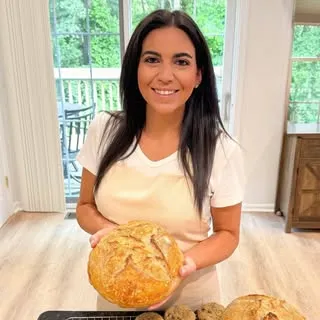
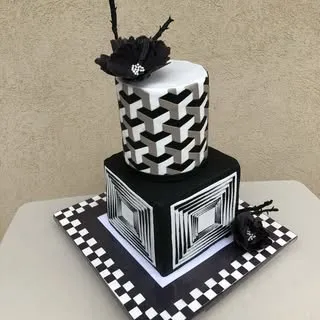
246 porch bakers are already selling across New Jersey under these exact rules. Browse their pages and learn from people two steps ahead of you — what they sell, how they price, how they talk about their bread. Cottage bakers are famously generous with what they’ve learned, and most are a DM away on Instagram.
- Heritage Sourdough Co.Manalapan
- Daisy | Sunrise SweetsBarnegat
- Creative Cakes by Sweta (LLC)Princeton
- Two Wives and A WhiskMoorestown
- Bread by KurtaviusMoorestown
- Bakeology By SueMorris Plains
- frenchbakingseeds | Alexia PattenMorristown
- Linderman Bagels 🥯Morristown
- Kaths Baking CreationsMount Laurel
- Sweet Creations by Devon LLCMount Olive Township





This page is educational, not legal advice — we’re not lawyers, just neighbors who read New Jersey’s official sources and wrote down what they say (every claim above links to its source). New Jersey’s one home-kitchen path is the Cottage Food Operator permit; selling refrigerated foods, running a storefront, or selling wholesale is a different, locally licensed path. Local zoning and your municipality’s rules are set locally — check with your town and your local health department. Always double-check the details with your own city and state before you sell. When something here and the law disagree, the law wins; if you spot that happening, tell us and we’ll fix it.