Cottage food laws · Maine
Selling homemade food in Maine.
Maine doesn’t have the free, license-free cottage food tier most states do — but it has something cheaper and, in the right town, far more generous. The everyday path is a Home Food License: $20 a year, one kitchen visit when you start, and you can sell shelf-stable goods from home and through stores, anywhere in Maine. Want a farmers’-market table too? That’s a second $20 license. And Maine is the one state where your town can hand you a bigger door — under the Food Sovereignty Act, a town that adopted a local ordinance can let you sell direct to neighbors with no state license at all. Here’s the whole picture, in plain English.
Verified against the Maine Food Sovereignty Act, Maine’s food-establishment licensing law and the Maine Dept. of Agriculture, Conservation and Forestry
Last checked June 13, 2026 — every section links its sources.
A plain-English breakdown, not legal advice — we’re not lawyers. Always confirm the details with your own city and state before you sell.
The 2-minute version
Starting path: The Home Food License — other paths differ (see below)
- Sales cap
- None
- State registration
- Required
- Kitchen inspection
- Required
- Food-handler card
- Not required
- Sell at markets
- Yes
- Shipping
- Not allowed
Three cards, the whole story. Everything below is detail — with the actual laws linked, so you never have to take our word for it.
Selling shelf-stable goods?
That’s a Home Food License — $20 a year and one kitchen visit when you start. Make shelf-stable foods (cookies, breads, jams, candy, pickles) and sell them from home and through stores, anywhere in Maine. No annual inspection, no sales cap.
Is your town a food-sovereignty town?
Under Maine’s Food Sovereignty Act, a town that adopted a local food ordinance can let you sell direct to neighbors with no state license — even refrigerated things a Home Food License can’t touch. But it’s entirely town-by-town: if your town never opted in, this door doesn’t exist for you.
Want a farmers’-market table?
Selling off-premise at a farmers’ market or craft fair takes a second license — the Mobile Vendor License, another $20 a year. Most porch bakers hold the Home Food License and the Mobile Vendor License both; an existing license can be amended to add it.
Three ways to sell in Maine — pick your path
In shortMaine’s paths split on two questions: what are you making (shelf-stable, or something refrigerated like cheesecake?), and did your town adopt a food-sovereignty ordinance? Shelf-stable from home or stores → the $20 Home Food License (+$20 to add markets). Direct to neighbors in an opted-in town → the $0 food-sovereignty path, which even covers refrigerated goods.
Maine’s home-food paths split on two questions — what are you making (shelf-stable, or something refrigerated like cheesecake?) and did your town adopt a food-sovereignty ordinance? The cleanest way to see the difference: a cheesecake can’t legally come out of the Home Food License path — it needs refrigeration, so the state points you to a commercial license instead. But in a food-sovereignty town, that same cheesecake sold direct to a neighbor can be legal with no state license at all. Same product — and the answer depends on what town you live in.
Home Food License
Apply to the Department of Agriculture, Conservation and Forestry (DACF), pass one kitchen inspection, and pay $20 a year. You can then make shelf-stable (non-potentially-hazardous) foods at home and sell them “from home and/or at retail stores” — DACF describes the license as letting you “produce and sell shelf-stable food products from your home and at wholesale throughout the state of Maine and the United States.”
The hard line: nothing that has to be refrigerated or frozen to stay safe. That’s where cheesecake falls out.
Pick this path if: everything you make is shelf-stable — cookies, brownies, breads, candy, jams and jellies, pickles, dry mixes — and you want to sell from home or get into stores.
Mobile Vendor License
Selling your prepared, packaged food off-premise — at a farmers’ market or a craft fair — requires a second license, the Mobile Vendor License, for another $20 a year. Your food still has to come from a licensed source, so most porch bakers hold the Home Food License and the Mobile Vendor License; DACF says an existing license “can be easily amended to add mobile vending.”
Pick this path if: you already make shelf-stable goods at home and you want a table at the market or fair, not just home and store sales.
Food Sovereignty
This is Maine’s signature. Under the Food Sovereignty Act, a municipality (or plantation, or a county for unorganized territory) may adopt a local food ordinance, and where it does, the State recognizes it “by not enforcing those laws or implementing rules” against direct producer-to-consumer sales. In an ordinance town you can sell food directly to your neighbors with no state food license — even refrigerated things the Home Food License bans, like cheesecake.
Two hard limits: it’s town-by-town — if your town never opted in, this path simply doesn’t exist for you, and you’re back to Path A; and meat and poultry are carved out — those always require state/federal inspection, “without exception,” even in an ordinance town.
Pick this path if: your town has adopted a food-sovereignty ordinance AND you sell direct to the consumer (not wholesale, not to stores).
If you need to make a refrigerated product (cheesecake, cream pie) and your town has no food-sovereignty ordinance, the state’s answer is a Commercial Food Processor License ($50) rather than the Home Food License. And anything sold outside the direct-to-consumer channel — wholesale, to stores — even in an ordinance town, falls back under full state food law.
Sources: DACF — Home Food License 101 · DACF — Mobile Vendor License 101 · DACF — Food & Fuel License fee schedule · 7 M.R.S. §284 (Food Sovereignty Act — authority) · 7 M.R.S. §282 (Food Sovereignty Act — definitions)
Where you can sell
In shortThe Home Food License covers selling from home and through stores statewide; add the $20 Mobile Vendor License for farmers’ markets and craft fairs. The food-sovereignty path is direct-to-consumer only in an ordinance town — selling through a store there falls back under state law.
Home Food License — from home and through stores, statewide. You can sell “from home and/or at retail stores,” and DACF describes the wholesale reach as “throughout the state of Maine and the United States.” Direct-from-home sales and store/wholesale sales both come with the Home Food License.
Farmers’ markets and craft fairs take the Mobile Vendor License. Selling your prepared, packaged food off-premise — “such as at a farmers’ market or a craft fair” — requires the second $20 Mobile Vendor License. If you already hold a Home Food License, DACF says it “can be easily amended to add mobile vending.”
Food-sovereignty path — direct to the consumer only, in an ordinance town. On your own property, at a roadside stand, at a fundraiser, at a farmers’ market, through a buying club, by delivery, or through a CSA — all inside the law’s definition of a direct producer-to-consumer transaction. But selling through a store is not direct-to-consumer, so on this path it falls back under full state food law, and the ordinance only reaches that one municipality.
Shipping and out of state. DACF’s wholesale phrase reaches “throughout … the United States,” but no source we read addresses consumer-direct online sales or shipping mechanics, and crossing a state line brings in federal (FDA) rules — confirm before you ship across state lines.
Sources: DACF — Home Food License 101 · DACF — Mobile Vendor License 101 · DACF — Permits & Licenses page · 7 M.R.S. §286 (sales beyond direct-to-consumer)
What you can sell
In shortThe Home Food License is the shelf-stable rule — nothing that needs refrigeration; home-canned goods need a UMaine process review first. The food-sovereignty path is far broader (it even covers refrigerated items and cheesecake) — but meat and poultry are carved out everywhere, without exception.
Home Food License — the shelf-stable rule
- Breads & cookies
- Brownies & cakes
- Candy
- Jams & jellies
- Dry mixes
- Process-reviewed canned pickles & relishes
The foods must be shelf-stable (non-potentially-hazardous); “products that have to be refrigerated or frozen to control microbial growth are not allowed.” Two conditions on the canned side: home-canned shelf-stable products (pickles, relishes, BBQ sauces) must be submitted to the University of Maine Food Testing Services or another acidified process authority for review before licensing, and home-canned foods that require pressure cooking for sealing may not be sold at all. Selling only fresh produce, eggs from a farm with fewer than 3,000 birds, or poultry under the fewer-than-1,000-bird exemption needs no Home Food or Mobile Vendor license.
Not allowed on the Home Food License
- Cheesecake & cream pies
- Anything refrigerated
- Anything frozen for safety
A refrigerated cheesecake is a potentially-hazardous food, so it’s outside the Home Food License — DACF points you to a commercial food processing license instead. (In a food-sovereignty town, the same cheesecake sold direct to a neighbor can be legal with no state license — see the next card.)
Food-sovereignty path — much broader (in an ordinance town)
- Refrigerated items & cheesecake
- Milk & milk products
- Baked goods & prepared meals
- Honey, maple, nuts
- Canned & acidified foods
In an ordinance town the definition of “food or food products” is sweeping — vegetables, fruit, eggs, grain, herbs, milk or milk products, cider or juice, acidified foods, canned fruits or vegetables, honey, nuts, maple products, condiments, and combinations “such as baked goods, sandwiches or other meals.” So refrigerated items the Home Food License bans — including cheesecake — can be sold direct-to-consumer, subject to whatever the town’s own ordinance says. The one carve-out is the next card.
The one carve-out everywhere: meat & poultry
- Meat & meat products
- Poultry
- No exceptions — even in an ordinance town
Even in a food-sovereignty town, meat and poultry production “must be conducted under State licensure or registration,” and “State statutes supersede any municipal ordinances regarding meat and poultry production … There are no exceptions.” The right-to-food door does not open for meat and poultry.
Sources: DACF — Home Food License 101 · 7 M.R.S. §282 (broad “food” definition) · 7 M.R.S. §285 + DACF meat/poultry factsheet · 01-001 C.M.R. ch. 345 (Home Food Manufacturing rule)
The rules that actually matter
In shortNo Maine home-food path has a sales cap. The Home Food License is shelf-stable-only and inspected once; the Mobile Vendor License is a second $20 license to leave your premises. The food-sovereignty path is direct-to-consumer only and entirely town-by-town — and local zoning and sales tax are separate everywhere.
- No sales cap on any Maine home-food pathWe found no annual gross-sales limit in the food-establishment chapter, the Home Food Manufacturing rule, DACF’s guidance, or the Food Sovereignty Act — none of Maine’s home-food paths is revenue-capped.
- The Home Food License is shelf-stable-onlyNothing that needs refrigeration or freezing to stay safe — that’s a commercial-license question instead.
- Mobile Vendor is required to leave your premisesHome and store sales come with the Home Food License; a farmers’-market or craft-fair table needs the second $20 Mobile Vendor License.
- The food-sovereignty path is direct-only, and town-by-townNo ordinance in your town = no path; sales beyond direct-to-consumer revert to state law; meat and poultry are always state-regulated. The Act prescribes no required ordinance form, so what’s allowed varies town to town — you have to read your own town’s ordinance text.
- Local rules are separateMaine has no general state “business license,” but town zoning, home-occupation rules, and sales-tax registration are set locally — check yours (we didn’t research them).
Sources: DACF — Home Food License 101 · 22 M.R.S. ch. 551 (food-establishment law) · 7 M.R.S. §§284–286 (Food Sovereignty Act)
Getting set up
In shortPath A is an application with a $20 fee and one initial kitchen inspection — no annual inspection. Add the $20 Mobile Vendor License with the same form for markets. Path B has no state steps, but homework: find out whether your town adopted an ordinance, then read its text.
Path A — Home Food License ($20/year)
- Confirm everything you make is shelf-stableNothing that needs refrigeration or freezing to stay safe.
- If you home-can, get a process review firstPickles, relishes, BBQ sauces: get a process review from the University of Maine Food Testing Services (or another acidified process authority) before you apply.
- Set up your kitchen to the basics DACF inspects forNon-absorbent, easy-to-clean food-contact surfaces; a two-bay sink (or one-bay plus dishwasher) with hot and cold running water; a refrigerator thermometer kept at 41°F or less; pets removed from the prep area during processing; and — if you’re on a private well — an annual water test for coliform and nitrates.
- File the Food and Fuel License Application with the $20 feeThe application form lives on DACF’s application-forms page.
- Pass the initial kitchen inspectionDACF staff visit to confirm proper labeling, sanitation, food protection, and thermometers; the license issues when those are met. Annual inspections are not required.
- Renew each year$20 a year.
No food-handler card or food-safety course is required by DACF’s Home Food License guidance. Questions? DACF says to call its licensing office at 287-3841.
Path A+ — Mobile Vendor License (another $20)
- Use the same application formIf you already hold a Home Food License, DACF says it “can be easily amended to add mobile vending” — just call 287-3841.
- Keep temperatures right at the standCold foods at 41°F or below, hot foods at 135°F or above; food not held at those temperatures must be destroyed after 4 hours.
Path B — Food Sovereignty (no state steps, but homework)
- Find out whether your town adopted a food-sovereignty ordinanceMaine does not publish an official statewide list of opted-in towns, so check directly with your town office or read your town’s ordinances.
- Read the ordinance textThe Act sets no required form, so what’s allowed (which foods, what venues, any local labeling) varies town to town.
- Confirm you’re selling direct to the consumerOn your property, at a stand, at a market, via delivery/CSA. Wholesale and store sales fall back under state law.
- Remember the meat-and-poultry carve-outThose always need state licensing, ordinance or not.
Sources: DACF — Home Food License 101 · DACF — Mobile Vendor License 101 · DACF — Food & Fuel License Application · 7 M.R.S. §284-B (ordinances vary by town)
Labels
In shortMaine’s Home Food License label is four standard elements — and no “homemade” or “uninspected” disclaimer (Maine inspects once, so an “uninspected” line would be inaccurate). The label keys to the producer or operation. The food-sovereignty path’s label is set by your town’s ordinance — there’s no statewide string.
Home Food License label (and Mobile Vendor)
- The common or usual name of the product (e.g., “apple pie,” “dill pickles”).
- Ingredients in order of predominance (greatest to least amount).
- Net weight, net volume, or numerical count.
- Name, address, and zip code of the producer. Maine keys this to the producer / operation, not necessarily an individual’s personal name — the statute requires “the name and place of business of … the manufacturer, packer or distributor,” and the home-manufacturing rule says “the name and address of the producer, manufacturer or distributor and zip code.”
- No state disclaimer line. Maine does not require any “homemade” or “not inspected” statement — none appears in DACF’s guidance, the statute, or the rule. (Maine home kitchens are inspected once at the start, so an “uninspected” line would be inaccurate anyway.) No label is required at all if the product is sold directly to the consumer from the home. Federal labeling law still applies to packaged food, so list major allergens.
Food-sovereignty path label
- Set by your town’s ordinance — there is no statewide string. No state labeling requirement applies to ordinance-governed direct sales, but the town ordinance may impose its own label rules, and they vary town to town. Read your ordinance.
Maine sets no minimum type size for the Home Food License label, but everything must be legible. The four elements are the whole list — there is no required Maine disclaimer line to add. The label maker below builds the Home Food License label; the food-sovereignty path has no encoded label spec because it’s set town by town.
Sources: DACF — Home Food License 101 · 22 M.R.S. §2157 (label elements) · 01-001 C.M.R. ch. 345 §7 (label rule)
What changed recently
In shortThe Food Sovereignty Act was substantially strengthened in 2025 (LD 124), adding a “food producer” definition that clearly covers someone baking from bought ingredients. The 2023 amendments broadened direct-sale channels. The $20 Home Food License chapter hasn’t changed on these seller-facing facts.
- Food Sovereignty Act strengthened — 2025 (PL 2025 c. 309, LD 124)“An Act to Protect the Right to Food” — reflected in the statute text current through October 1, 2025 — added statutory definitions of “consumer,” “food sovereignty,” and, importantly for bakers, “food producer,” which now explicitly includes a person who “acquires from another source and then processes or prepares in a kitchen” — clearer cover for someone baking from bought ingredients, not just a grower. It also added a “liberal construction” rule for ordinances and extended ordinance authority to counties for unorganized territories.
- Direct-sale channels broadened — 2023 (PL 2023 c. 420)The definition of a “direct producer-to-consumer transaction” was widened beyond face-to-face sales at the site of production to include roadside stands, fundraisers, farmers’ markets, community social events, buying clubs, deliveries, and CSAs.
- No 2024–2026 change to the $20 Home Food LicenseNo change to the food-establishment licensing chapter (22 M.R.S. ch. 551) that touches these seller-facing facts was found; the licensing chapter’s statute text is current through January 5, 2026. The older Home Food Manufacturing rule is read together with current DACF guidance, which controls in practice.
Sources: 7 M.R.S. §282 (definitions, as amended by PL 2025 c. 309) · 7 M.R.S. ch. 8-F (Food Sovereignty Act) · 22 M.R.S. ch. 551 (food-establishment law)
Common questions
- Can I sell cheesecake from home in Maine?
- Not on the Home Food License — it needs refrigeration, and DACF says refrigerated products require a commercial processing license instead. But in a food-sovereignty town, a cheesecake sold direct to a neighbor can be legal with no state license at all — Maine’s right-to-food definition of “food” expressly includes milk products and prepared meals. Whether you get that door depends entirely on whether your town adopted an ordinance.
- How do I know if my town is a “food-sovereignty town”?
- You have to check — Maine doesn’t publish an official statewide list. Ask your town office or read your town’s ordinances. Many Maine municipalities have adopted some form of food ordinance, but the only way to be sure yours did (and what it covers) is the ordinance text itself.
- What does the Home Food License cost, and is there a sales limit?
- $20 a year, with one kitchen inspection when you start and no annual inspection — and no sales cap on any Maine home-food path.
- Can a store carry my cookies in Maine?
- Yes — the Home Food License lets you sell shelf-stable goods from home and through retail stores, and DACF describes wholesale reach throughout the state of Maine and the United States. (On the food-sovereignty path, though, selling through a store is not direct-to-consumer, so it falls back under state law.)
- Do I need a second license for the farmers’ market in Maine?
- Yes — selling your prepared, packaged food off-premise, such as at a farmers’ market or a craft fair, requires a Mobile Vendor License, another $20 a year. If you already hold a Home Food License, DACF says it can be amended to add mobile vending.
- Do I need a food-handler card or a food-safety course in Maine?
- Not for the Home Food License — none is required by DACF’s guidance or the home-manufacturing rule we read.
- Can I sell pickles or BBQ sauce from home in Maine?
- Yes, as shelf-stable canned goods — but you must get the recipe reviewed by the University of Maine Food Testing Services (or another acidified process authority) before you’re licensed, and you can’t sell home-canned foods that need pressure-cooking to seal.
- Can my kid run a stand in Maine?
- Maine has no special kid-stand exemption — so it’s the same two doors as an adult: in a food-sovereignty town, direct sales to neighbors need no state license; otherwise the shelf-stable rules and the $20 Home Food License apply.
- Can I sell meat, poultry, or eggs from home in Maine?
- Eggs from a farm with fewer than 3,000 birds (and poultry under the fewer-than-1,000-bird exemption) need no Home Food or Mobile Vendor license. But meat and poultry are the one thing the food-sovereignty path never covers — they always require state licensing and inspection, “without exception,” even in an ordinance town.
Sources: DACF — Home Food License 101 · DACF — Mobile Vendor License 101 · 7 M.R.S. ch. 8-F (Food Sovereignty Act) · 7 M.R.S. §285 + DACF meat/poultry factsheet
You won’t be doing this alone
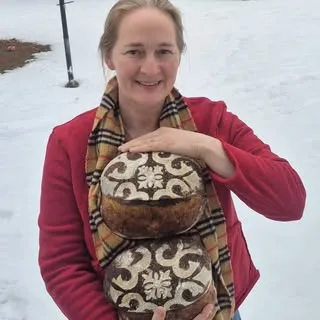
21 porch bakers are already selling across Maine under these exact laws. Browse their pages and learn from people two steps ahead of you — what they sell, how they price, how they talk about their bread. Home bakers are famously generous with what they’ve learned, and most are a DM away on Instagram.
- Anna’s Banana Bread, LLCWindham
- theblushinghenmaineLyman
- Belladonna FarmBOOK
- Sitto’s SourdoughWaterville
- New England Sourdough CoWindham
- Union St. Sourdough | Bagels•Cookies•Bread•Cakes | Micro-BakeryCamden
- dough. Sourdough bread & bakesLewiston
- bread, bakes, and bitesBiddeford
- Pleasant Street BakesMonmouth
- Victoria Nam 🍉 Siblings BakeryPortland




This page is educational, not legal advice — we’re not lawyers, just neighbors who read Maine’s official sources and wrote down what they say (every claim above links to its source). Maine’s home-food paths carry different rules — the $20 Home Food License (shelf-stable foods, sold from home and through stores statewide), the $20 Mobile Vendor add-on for farmers’ markets, and the food-sovereignty path (direct-to-neighbor sales with no state license, but only in a town that adopted an ordinance) — so make sure you know which one you’re on. Check your own town’s ordinance before relying on the food-sovereignty path, because Maine doesn’t publish an official list and the rules vary town to town. Meat and poultry always require state licensing, ordinance or not. Local zoning and sales-tax rules are separate and set locally — check yours. Always double-check the details with your own city and state before you sell. When something here and the law disagree, the law wins; if you spot that happening, tell us and we’ll fix it.