Cottage food laws · Louisiana
Yes, you can sell what you bake in Louisiana.
Louisiana keeps it refreshingly simple: if you make food on the state’s “low-risk foods” list — baked goods, jams, candies, pickles, honey, and more — you can sell it straight from your kitchen with no license, no permit, no inspection, and nothing to register with the health department. You just label it, hold a parish sales-tax certificate, and stay under the sales cap. There’s exactly one path for porch-shop sellers, and this is it. Here’s the whole picture, in plain English.
Verified against La. R.S. 40:4.9 and Louisiana Department of Health — retail-food pages
Last checked June 12, 2026 — every section links its sources.
A plain-English breakdown, not legal advice — we’re not lawyers. Always confirm the details with your own city and state before you sell.
The 2-minute version
- Sales cap
- $30,000/yr
- State registration
- Not required
- Kitchen inspection
- Not required
- Food-handler card
- Not required
- Sell at markets
- Yes
- Shipping
- Not allowed
Three cards, the whole story. Everything below is detail — with the actual law linked, so you never have to take our word for it. (The cap shown is current law; a 2026 bill to raise it is flagged where it lands.)
Selling low-risk foods?
That’s the low-risk foods home exemption (R.S. 40:4.9). Make a food on the nine-item list — baked goods, candies, jams, pickles, honey, and more, with no animal-muscle or fish protein — put one statement on the label, hold a parish sales-tax certificate, and sell direct to neighbors. Nothing to apply for with the health department.
How much can you sell?
$30,000 in gross annual sales — and it’s a cliff, not a ceiling: at or above $30,000 the whole exemption stops applying and you move to the commercial path. (A 2026 bill to raise the cap to $100,000 is at the governor’s desk, not yet law — see “What changed.”)
Kids’ stands?
A young baker selling cookies, breads, or candies follows the same free, no-license, no-inspection exemption an adult does — the label statement, a parish sales-tax certificate, and staying under the cap. Louisiana writes no special kid-stand rule, and doesn’t need to for most stands.
One way to sell — and it’s the simple one
In shortMost states make you pick between two or three programs. Louisiana has one home-kitchen path that fits nearly every porch shop — the low-risk foods exemption — plus the full commercial LDH route if you outgrow it. No in-between tier.
The low-risk foods home exemption
A blanket exemption from the state Sanitary Code for preparing listed “low-risk foods” in your home for sale. No license, no permit, no inspection, no LDH registration.
What you do owe: stay under the cap, put one statement on your label, hold a parish sales-tax certificate, and — if you bake breads, cakes, cookies, or pies — follow the statute’s built-in kitchen rules and bake without employees.
Pick this path if: what you make is on the nine-item list below, contains no meat or fish protein, and your gross annual sales are under $30,000 — that’s nearly every home-scale seller.
The commercial route — a permitted retail food establishment
The full Louisiana Department of Health (LDH) permit path: plan review, inspection, and an annual permit for a commercial-grade facility, under the state Sanitary Code (LAC Title 51). A real step up; many porch shops never need it. Plans review runs $100 standard (≤10 business days) or $1,000 expedited (≤5 business days), effective July 1, 2025 — plus inspection and an annual retail-food permit. Begin at LDH’s “for new businesses” page and your parish sanitarian.
Pick this path if: your sales reach the cap, you hire help to make baked goods, you want to wholesale baked goods to stores, or you make foods that aren’t on the low-risk list (meat dishes, fresh dairy, low-acid canned goods, anything refrigerated that isn’t a baked good).
The bottom line for a beginner: if it’s on the nine-item list, has no animal muscle or fish protein, and you’re under the cap — you can start from your home kitchen today with a label and a parish sales-tax certificate. There is nothing to apply for with the health department.
Sources: La. R.S. 40:4.9 · LDH — for new businesses · LDH — retail food (Sanitary Code)
Where you can sell
In shortThe statute regulates who may resell your food, not which venues you use. Direct to neighbors — home/porch pickup, markets, fairs, events — is open. Wholesale of breads/cakes/cookies/pies is banned; online ordering and shipping aren’t addressed.
Direct to neighbors — yes, broadly. R.S. 40:4.9 places no venue restriction on direct sales, so home/porch pickup, farmers markets, fairs, and community events are all open. The statute simply doesn’t limit where you hand food to the person eating it.
Wholesale/resale — banned, but only for baked goods. The statute says no one who “prepares breads, cakes, cookies, or pies in the home for sale to the public… shall sell such foods to any retail business or individual for resale.” That textual ban covers only breads, cakes, cookies, and pies. For the other categories (jams, candies, pickles, honey, sauces, syrups, dried mixes, cane syrup) the statute is silent on resale — some sellers read that silence as allowing it, but no official Louisiana source confirms that reading, so treat wholesaling non-baked items as an open question, not a green light.
Online ordering and shipping — not addressed. R.S. 40:4.9 says nothing — for or against — about taking orders online or shipping food. There’s telling evidence this is a genuine gap, not an implied yes: a 2025 bill (HB 150) would have added explicit language letting a preparer sell “in person or remotely through the internet or telephone” and “sell and ship” non-hazardous food — and it passed the House but died in Senate committee. Until the law speaks to it, treat in-state shipping as unaddressed rather than permitted, and know that shipping across state lines pulls in federal FDA rules regardless. If shipping matters to your shop, ask your parish sanitarian before you start.
Selling in more than one parish. Your sales-tax certificate is issued by “the sales and use tax collector for the parish in which the sales occur” — so selling regularly in several parishes points toward registering with each parish’s collector. The statute doesn’t spell out the multi-parish case; confirm with the collectors involved.
Sources: La. R.S. 40:4.9 · HB 150 (2025 RS) — failed food-freedom rewrite · LDH — parish sanitarian / retail food program
What you can sell
In shortNine low-risk food categories, none containing animal muscle protein or fish protein. Cane syrup gets a special open-sided-structure rule. The cheesecake question is unusually open here — Louisiana addresses refrigerated baked custard/cream goods with handling rules, though it never names cheesecake.
The nine low-risk food categories
From R.S. 40:4.9(E) — “none of which shall consist of any animal muscle protein or fish protein.”
- Baked goods (breads, cakes, cookies, pies)
- Candies
- Cane syrup
- Dried mixes
- Honey & honeycomb products
- Jams, jellies & preserves
- Pickles & acidified foods
- Sauces & syrups
- Spices
Cane syrup gets a special location rule: under R.S. 40:4.9(A)(1)(a) it may be prepared not only in a dwelling kitchen but also in “an open-sided structure on private property that shelters a cast iron kettle, evaporator, or other equipment for preparing cane syrup in the traditional manner” — so a traditional open-sided cane-syrup operation qualifies, not just the home kitchen.
Out of scope (not on the list)
- Anything with animal muscle or fish protein
- Meat, poultry & fish
- Foods with CBD (until FDA approves it)
- Fresh cheese, yogurt & raw dairy
- Low-acid canned goods
- Fermented drinks, cut produce & prepared meals
The statute doesn’t ban the off-list foods; it just doesn’t excuse them from the Sanitary Code, so they need the commercial path. CBD is out unless and until the FDA approves it as a food additive.
Sources: La. R.S. 40:4.9(E) · LDH — parish sanitarian (cheesecake / handling questions)
The rules that actually matter
In shortA $30,000 gross-sales cap that’s a cliff, not a ceiling. No employees if you bake breads/cakes/cookies/pies. No meat or fish protein, no CBD. No resale of baked goods. The exemption is from the Sanitary Code only — not federal, zoning, or occupational-license rules.
- $30,000 gross-sales cap — and it’s a cliff, not a ceilingR.S. 40:4.9(B): the Section “shall not apply to any preparer of low-risk foods made at a home for sale, whose gross annual sales equal thirty thousand dollars or more.” At or above $30,000 the entire exemption stops applying — you don’t keep the exemption on the first $30,000 and license the rest; you move to the commercial path. (A 2026 bill to raise this to $100,000 is pending — see “What changed.”)
- No employees for baked goodsIf you make breads, cakes, cookies, or pies, the exemption “shall not apply to any preparer… who employs any individual to assist in the preparation of such food for sale” — you bake those alone. (This limit is written only for baked goods.) The same (A)(2) kitchen rules — vermin-proofing, keeping pets out of the baking area, cleanable equipment, refrigeration and custard-handling steps — apply to everyone who bakes those four goods at home for sale, not just to people who hire help. They’re conditions of the exemption.
- No meat or fish protein, no CBD, no resale of baked goodsNo animal muscle or fish protein, and no CBD (built into the food list and subsection (F)). And you can’t sell breads/cakes/cookies/pies to a store or another person for resale.
- The exemption is from the Sanitary Code onlyIt doesn’t override federal rules (e.g., FDA jurisdiction if you ship across state lines) or local zoning and occupational-license rules, which are set parish-by-parish.
Sources: La. R.S. 40:4.9(B), (C), (F) · HB 403 (2026 RS) — pending $100k cap raise
Getting set up
In shortConfirm your product fits the nine categories, get a parish sales-tax certificate (the one mandatory registration), label every item, follow the baked-goods kitchen rules if they apply, and track your gross sales against the $30,000 cap. No food-handler card, no inspection, no LDH registration.
- Confirm your product fitsOne of the nine low-risk categories, with no animal muscle or fish protein and no CBD.
- Get a parish sales-tax certificateThe one mandatory registration: you must be “registered to collect any local sales and use taxes… as evidenced by a current sales tax certificate issued to the seller by the sales and use tax collector for the parish in which the sales occur.” Apply through your parish sales-and-use tax collector. (The cost, if any, is set by the parish — there’s no statewide figure to quote.)
- Label every itemWith the required statement (next section).
- If you bake breads, cakes, cookies, or piesFollow the (A)(2) kitchen rules — keep vermin out, exclude pets from the baking area, keep equipment cleanable, hold perishables at ≤45°F, follow the custard/cream cook-and-chill steps — and bake without employees.
- Track your gross salesAgainst the $30,000 cap, so you know when you’d need to step up to the commercial path.
That’s it — no food-handler card, no kitchen inspection, no LDH registration, no state food permit, none of which appears anywhere in R.S. 40:4.9. (A parish or city occupational license may apply under local law — that’s separate from the food law; check with your parish or municipality.)
Sources: La. R.S. 40:4.9(A)(2), (D) · LDH — for new businesses (commercial path) · LDH — parish sanitarian
Labels
In shortLouisiana pins a meaning, not a verbatim string: the label must clearly indicate the food “was not produced in a licensed or regulated facility.” No exact wording, no minimum type size, and no name, address, or ingredient list is required by the statute. Raw, unfiltered honey is exempt from even the statement.
Louisiana low-risk foods label
- A statement that clearly indicates the food was not produced in a licensed or regulated facility — R.S. 40:4.9(D)(1)(a). The statute states the required meaning, not a verbatim string and not a minimum type size.
- No other elements are required by the statute — it does NOT require your name, your address, an ingredient list, or an allergen statement. The label keys to the disclosure statement, not to any person or business name, so there’s no individual-name, business-name, or address line required at all.
- Declaring allergens and ingredients is still good practice (and federal allergen-labeling rules can apply) — but that’s guidance, not this statute’s command.
- Raw-honey exception: the label requirement “shall not apply to raw honey offered for sale if the honey is not pasteurized, filtered, or otherwise processed in such a way as to remove natural pollen.”
Louisiana is unusual: most states pin an exact sentence and a minimum type size; Louisiana pins a meaning. Any wording that clearly tells the buyer the food wasn’t made in a licensed or regulated facility works — the sample sentence is one acceptable phrasing, not a required string. (Corroborating that only the one statement is required: the 2025 HB 150, which passed the House but died in Senate committee, would have added a name/address/phone + ingredients label — evidence current law requires only the statement.)
Sources: La. R.S. 40:4.9(D) · HB 150 (2025 RS) — would have added a fuller label
What changed recently
In shortA 2026 bill (HB 403) to raise the cap from $30,000 to $100,000 was sent to the governor on June 1, 2026 — pending, not signed, NOT yet law. The page is on $30,000 today. The 2025 HB 150 food-freedom rewrite passed the House but died in committee. The 2022 Act 357 set the current $30,000 cap.
- 2026 — HB 403: cap $30,000 → $100,000, PENDING at the governor’s desk (not yet law)The enrolled bill amends R.S. 40:4.9(B) only, replacing “thirty thousand” with “one hundred thousand dollars.” It passed the House (95-0) and Senate (38-0) and was sent to the governor for executive approval on June 1, 2026. As of June 12, 2026 it has not been signed, carries no Act number, and is not yet law — the live statute still reads $30,000. The bill has no special effective-date clause, so if it becomes law it takes effect August 1, 2026 under the constitutional default. We’ll update this page the moment it’s signed or becomes law. (Until then, the binding cap is $30,000.)
- 2025 — HB 150: a broader “food freedom” rewrite that passed the House but died in Senate committeeIt would have repealed R.S. 40:4.9 and replaced it with a no-cap regime, a longer food list, explicit internet/phone sales and shipping, resale of non-hazardous foods, and a fuller label (name/address/phone + ingredients). It did not become law — the current statute is unchanged, and HB 403’s narrow cap-only raise is the piece that carried forward into 2026.
- 2022 — Act 357: the cap was set at $30,000This is the most recent enacted amendment to R.S. 40:4.9 (its amendment history ends at “Acts 2022, No. 357”) — the cap figure in force today.
Sources: HB 403 (2026 RS) — bill status · HB 403 (2026 RS) — enrolled text · HB 150 (2025 RS) · La. Const. art. III, §§ 18–19 · La. R.S. 40:4.9
Common questions
- Do I need a license or permit to sell homemade food in Louisiana?
- No — not for low-risk foods on the nine-item list. R.S. 40:4.9 exempts you from the state Sanitary Code with no license, permit, inspection, or health-department registration. You do need a parish sales-tax certificate.
- How much can I sell?
- Up to $30,000 in gross annual sales. At or above that, the exemption stops applying entirely — it’s a cliff, not a ceiling — and you’d need the commercial path. (A bill to raise the cap to $100,000 is awaiting the governor’s signature as of June 2026 and is not yet law — see “What changed.”)
- Can I sell cheesecake from home?
- Probably, if it’s a baked cheesecake and you follow the statute’s custard/cream-filled handling rules — pasteurized milk, cook to 145°F for 30+ minutes, rapid-chill and hold at ≤45°F, sanitized equipment, no hands on the cooked filling. But the statute never names “cheesecake” and there’s no LDH guidance on it, so treat this as a reasonable read, not a guarantee — and a no-bake cheesecake isn’t a baked good and isn’t covered. Confirm with your parish sanitarian if it’s your main product.
- Can I sell pickles, jams, or candy?
- Yes — pickles and acidified foods, jams, jellies, preserves, and candies are all on the low-risk list.
- Can I sell anything with meat or fish in it?
- No — the exemption excludes any food with animal muscle protein or fish protein.
- Do I need a food-handler card or kitchen inspection?
- No — R.S. 40:4.9 requires neither.
- Can I sell online or ship my food?
- The statute doesn’t address it — neither allowing nor prohibiting online orders or shipping. Because a 2025 bill that would have explicitly added online-and-ship language passed the House but died in Senate committee, don’t assume it’s permitted; ask your parish sanitarian, and remember shipping across state lines brings in federal FDA rules.
- Can a store carry my cookies?
- Not for resale — the statute bars selling breads, cakes, cookies, or pies “to any retail business or individual for resale.” (The resale ban is written only for those four baked goods.)
- What has to go on my label?
- One thing the statute requires: a statement that clearly indicates the food “was not produced in a licensed or regulated facility.” No exact wording, name, address, or ingredient list is mandated by the statute (raw, unfiltered honey is exempt from even the statement).
Sources: La. R.S. 40:4.9 (exemption, cap, resale ban, label, food list, CBD ban) · HB 403 (2026 RS) — pending $100k cap raise · LDH — parish sanitarian / retail food program
You won’t be doing this alone
26 porch bakers are already selling across Louisiana under this exact law. Browse their pages and learn from people two steps ahead of you — what they sell, how they price, how they talk about their bread. Cottage bakers are famously generous with what they’ve learned, and most are a DM away on Instagram.
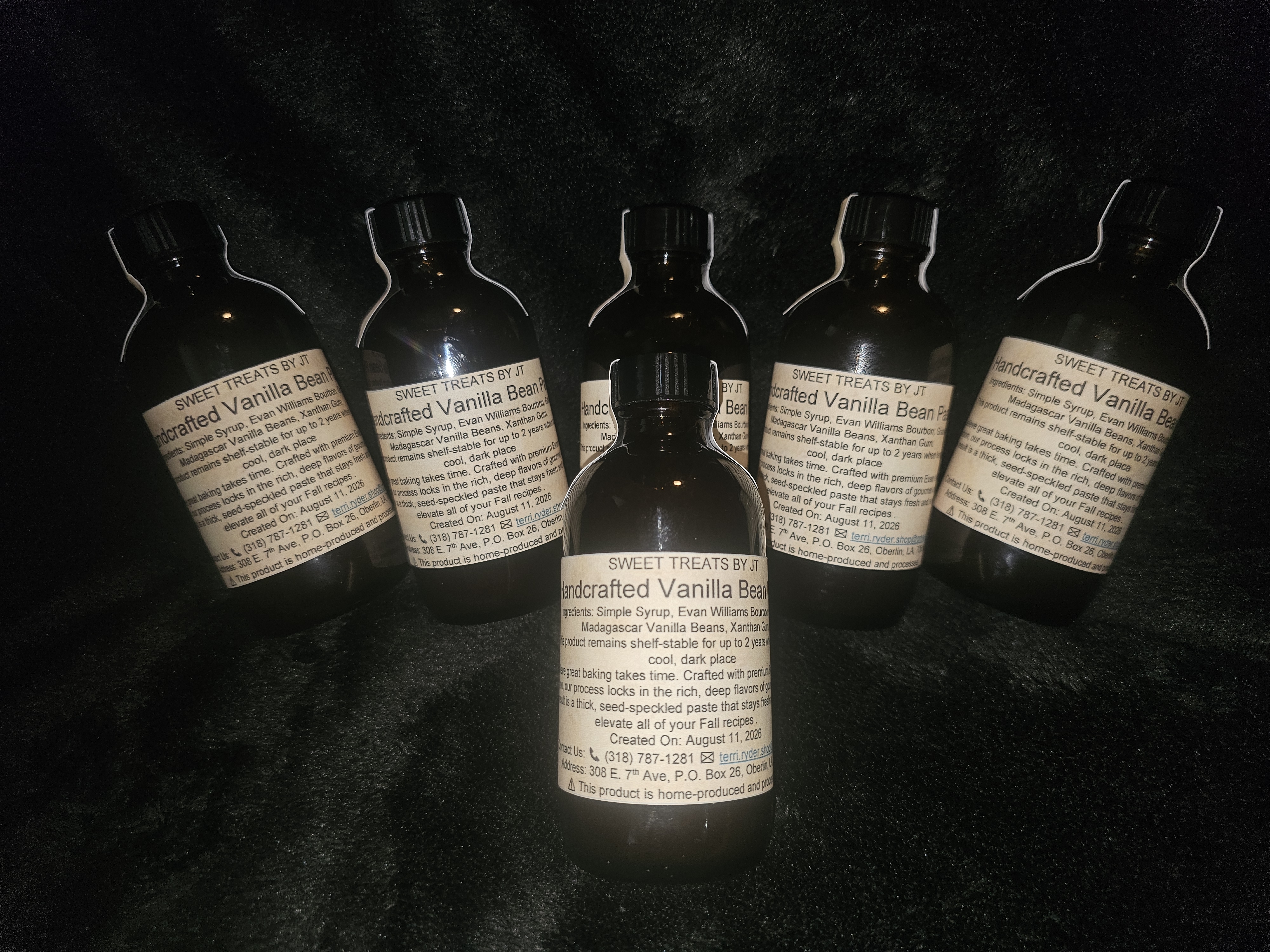
- Sweets by JTOberlin
- Joe’s Bakery - Baton RougeBaton Rouge
- Sadie’s SourdoughShreveport
- Kee’s Treasured Delights LLC | Gonzales, LouisianaGonzales
- Christina PooleWest Monroe
- Baton Rouge Sourdough Cottage Bakery-weekly porch pick-upBaton Rouge
- Little Loaf LALittle Lake City
- The Sourdough Spot Co.Lafayette
- LUNCHBOXLos Angeles
- Katie Ryan McCrayMadisonville


This page is educational, not legal advice — we’re not lawyers, just neighbors who read Louisiana’s official sources and wrote down what they say (every claim above links to its source). Louisiana’s homemade-food cap is $30,000 today; a 2026 bill to raise it to $100,000 was awaiting the governor’s signature when we last checked (June 12, 2026) and is not yet law — confirm the current cap before you rely on a higher number. The statute doesn’t address online sales or shipping, and whether a baked cheesecake qualifies is a reasonable inference the statute doesn’t name outright — when your plan depends on either, check with your parish sanitarian. Parish sales-tax certificates, occupational licenses, and zoning are set locally and vary. Always double-check the details with your own city and state before you sell. When something here and the law disagree, the law wins; if you spot that happening, tell us and we’ll fix it.