Cottage food laws · Iowa
Selling homemade food in Iowa.
Iowa gives home cooks two doors, and the gap between them is one of the better deals in the Midwest: a genuinely free path for shelf-stable goods — no license, no fee, no sales cap — and a $50-a-year path that unlocks the thing most states ban from home kitchens, refrigerated foods like cheesecake and cream pie, plus the right to sell through stores. Here’s the whole picture, in plain English.
Verified against the Iowa Code and the Iowa Dept. of Inspections, Appeals, and Licensing
Last checked June 12, 2026 — every section links its sources.
A plain-English breakdown, not legal advice — we’re not lawyers. Always confirm the details with your own city and state before you sell.
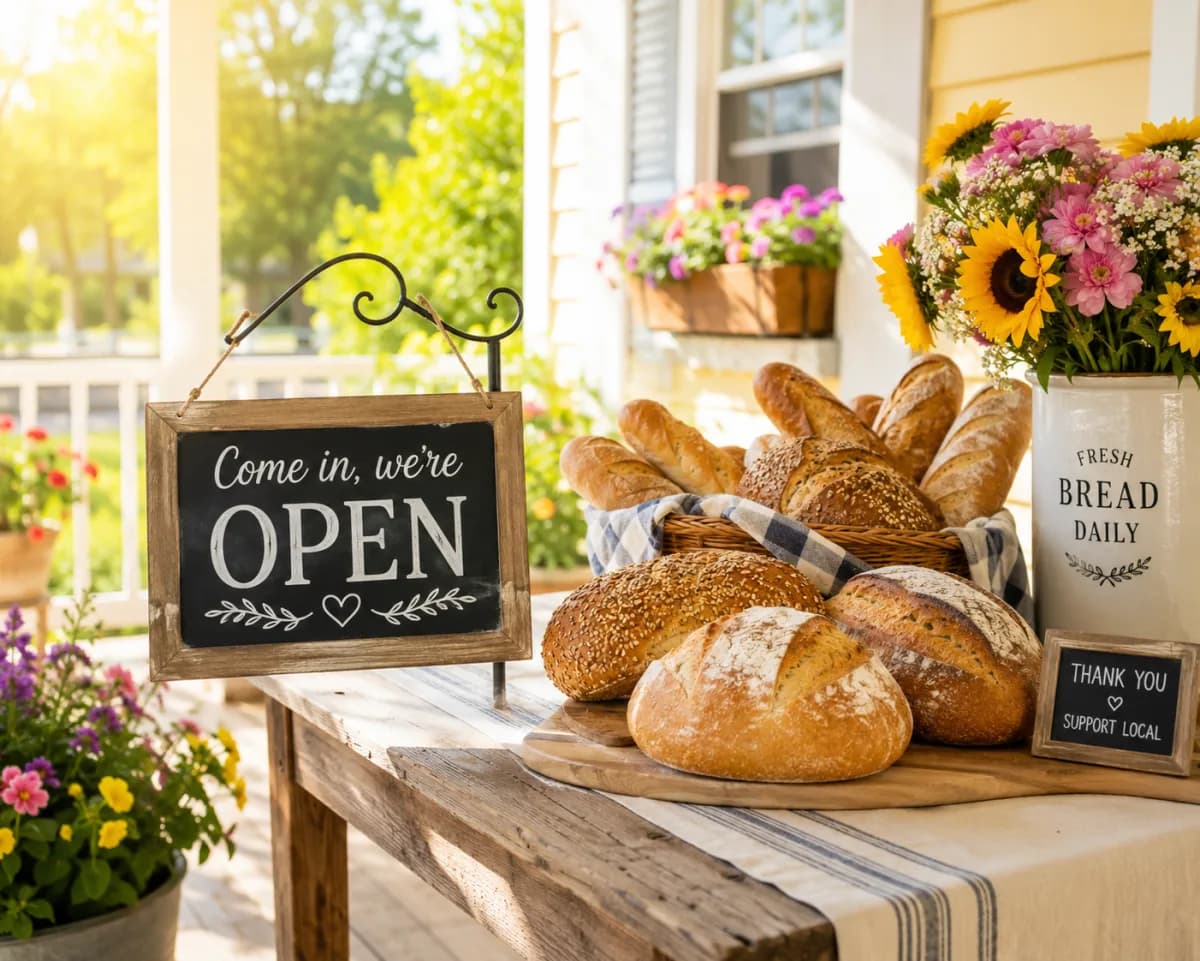
The 2-minute version
Starting path: Cottage Food — other paths differ (see below)
- Sales cap
- None
- State registration
- Not required
- Kitchen inspection
- Not required
- Food-handler card
- Not required
- Sell at markets
- Yes
- Shipping
- In-state only
Three cards, the whole story. Everything below is detail — with the actual laws linked, so you never have to take our word for it.
Selling shelf-stable goods?
That’s cottage food — fully exempt from Iowa licensing, inspection, and registration. Put the right label on cookies, breads, cakes, jams, candy, or granola and sell straight to your neighbors. No registration, no fee, no training.
Want to sell cheesecake?
That takes a Home Food Processing Establishment — $50 a year, an approved food-safety course, and a home inspection. In exchange you can make refrigerated foods (cheesecake, cream pie, made-to-order meals) and sell through stores and other businesses.
Kids’ stands?
Iowa writes a “stand operated by a minor” right into its food law — a young person selling shelf-stable cookies or breads from a temporary, occasional stand on private property needs no license at all.
Two ways to sell in Iowa — pick your path
In shortThe two paths split on one question: does what you make need refrigeration, or do you want to sell through anyone but yourself? Shelf-stable, direct-only → the free cottage path. Refrigerated foods or selling through stores → the $50 establishment.
Iowa’s two home-food paths split cleanly on one question — does what you make need refrigeration, or do you want to sell through anyone but yourself? The cleanest way to see it: a cheesecake can’t legally come out of the cottage food path (it needs refrigeration, which makes it a “time/temperature control for safety” food the exemption excludes), but a Home Food Processing Establishment can make it, for $50 a year, a course, and an inspection. Same product, two answers.
Cottage Food
Fully exempt from Iowa licensing, permitting, inspection, packaging, and labeling laws — no registration, no fee, no inspection, no training, no sales cap. You make shelf-stable food at home, label it correctly, and sell it directly to the person eating it.
The one hard line: it’s direct-to-consumer only — no selling through stores or for resale.
Pick this path if: everything you sell is shelf-stable — cookies, breads, cakes, jams, candy, granola, dry mixes, and home-canned high-acid pickles, fruits, or vegetables you pH-test per batch.
Home Food Processing Establishment
Apply to the Department of Inspections, Appeals, and Licensing (DIAL), take an approved food-safety course, pass a home inspection, and pay $50 a year. In exchange you can make refrigerated foods — cheesecake, cream pies, made-to-order meals — that the cottage path bans, and you can sell through stores and other businesses, not just direct.
The ceiling: gross sales must stay under $50,000 a year. (This is the license that replaced Iowa’s old “home bakery” license — it covers far more than baked goods now.)
Pick this path if: you want to sell anything refrigerated, sell through a shop or another business, or make made-to-order food.
If you pass $50,000 a year, or you want a true off-residence commercial kitchen, that’s a licensed food establishment or food processing plant under Iowa Code chapter 137F, with tiered fees — most porch shops never need it.
Sources: Iowa Code §137F.1 · Iowa Code §137F.20 · Iowa Code ch. 137D · DIAL — Cottage Food · DIAL — Home Food Processing
Where you can sell
In shortCottage food: direct to the buyer through any channel — in person, by phone, online, or by mail — but direct-to-consumer only, no stores. A Home Food Processing Establishment can also distribute through other businesses for resale.
Cottage food — direct to the buyer, through any channel. In person (from your home, at a farmers market, at a stand), or by phone, online, or by mail — the statute lets a producer sell “in person, remotely, by telephone, by internet, or by an agent of the producer,” with delivery directly to the consumer or by mail. At a farmers market, non-refrigerated cottage goods need no extra license; the state’s farmers-market vendor license applies only when refrigerated/TCS food is sold there.
The hard boundary — direct to the consumer only. No selling through stores, no wholesale, no resale. (A 2026 bill that tried to let cottage foods into grocery stores died in the Senate — see “What changed.”)
Shipping out of state isn’t restricted by Iowa — but federal law applies. The statute allows mail delivery without naming a geographic limit, but it also warns that compliance with the cottage food exemption “does not represent compliance with federal law.” Once a package crosses a state line you’re in FDA territory plus the destination state’s own rules; no Iowa source resolves that, so confirm before you ship across state lines.
Home Food Processing Establishment — direct and through other businesses. Sell direct to consumers, and distribute to other businesses for resale (refrigerated/TCS items held at or below 41°F in transit). The rules expressly contemplate distribution to an end consumer, a mobile food unit, a farmers-market food establishment, or a temporary food establishment operated by the same owner. Not allowed: distributing food for further processing by a food processing plant or another home food processing establishment; and the license is for food consumed off the premises — pickup and delivery meals, yes; on-site dining at your home, no.
Sources: Iowa Code §137F.20 · Iowa Code ch. 137D · 481 IAC 34.5 · DIAL — Cottage Food
What you can sell
In shortCottage food is the shelf-stable (non-TCS) rule, plus pH-tested home-canned high-acid goods. A Home Food Processing Establishment adds refrigerated/TCS foods, made-to-order meals, and pH-controlled products — but four processes stay barred even there.
Cottage food — the shelf-stable rule
- Breads & cookies
- Cakes
- Candy & fudge
- Jams & jellies
- Granola
- Dry mixes
- pH-tested canned pickles, fruits & vegetables
Cottage food is any food that is not “time/temperature control for safety” (TCS) — nothing that needs refrigeration or hot-holding to stay safe. Home-processed and home-canned pickles, vegetables, or fruits are allowed, but only if each batch reaches a finished equilibrium pH of 4.6 or lower (or a water activity of 0.85 or less), measured per batch with a pH or water-activity meter, and each container is labeled with the date it was processed and canned.
Not allowed as cottage food
- Cheesecake & cream pies
- Anything refrigerated (TCS)
- Milk & milk products
- Meat & poultry
Anything that needs temperature control for safety is out, as are milk or milk products (regulated under Iowa Code ch. 192/194 — contact the Iowa Department of Agriculture’s Dairy Products Control Bureau) and meat, meat products, poultry, or poultry products (regulated under ch. 189A). A refrigerated cheesecake is a TCS food, so it’s outside the cottage exemption.
Home Food Processing Establishment — much broader
- Refrigerated / TCS foods
- Made-to-order meals
- pH-controlled sauces & dressings
- Dried & dehydrated foods
- Jams & jellies
- Fermented foods (HACCP plan)
A licensed establishment can make most “homemade food items,” including refrigerated/TCS foods (held at 41°F or below or 135°F or above, with a refrigerated shelf-life cap), made-to-order food, pH-controlled high-acid products (≤10% low-acid ingredients, recipe approved, each batch pH-tested below 4.60), dried foods validated to a water activity at or below 0.85, and jams/jellies meeting the federal standard of identity. Fermented foods are allowed only with a HACCP plan approved by DIAL before you ferment. Limited direct-to-consumer poultry and meat fall under narrow federal exemptions.
Barred even for a Home Food Processing Establishment
- Low-acid canning
- Acidified shelf-stable foods (salsa, hot sauce)
- Curing
- Smoking for preservation
The “homemade food item” definition rules out unpasteurized juice, raw sprout seeds, alcohol, bottled water, packaged ice, consumable hemp, TCS food in reduced-oxygen packaging, milk, and meat/poultry beyond the federal carve-outs; raw milk in any form is separately banned. And four processes are barred outright: low-acid canning (canned vegetables), acidification to make shelf-stable acidified foods (shelf-stable salsa, pickled vegetables, hot sauce), curing (bacon, jerky), and smoking for preservation rather than flavor.
Sources: Iowa Code §137F.1 · Iowa Code ch. 137D · 481 IAC 34.6 · DIAL — Cottage Food
The rules that actually matter
In shortCottage food has no sales cap but is shelf-stable and direct-only; a Home Food Processing Establishment caps under $50,000/yr but adds refrigerated foods and selling through stores. Your licensing authority may even be your county.
- Cottage food has no sales capNo dollar limit appears in §137F.1 or §137F.20 — sell as much shelf-stable food, direct, as you can make.
- A Home Food Processing Establishment: under $50,000 a yearThe under-$50,000 gross is built into the definition — pass it and you’re a licensed food establishment under chapter 137F instead. Keep documentation of your annual gross (a tax return, four quarters of figures, a letter from a tax preparer); it’s kept confidential.
- Cottage food is direct-only and shelf-stable-onlyNo stores, no wholesale, no resale; nothing that needs refrigeration, no milk or meat/poultry. A Home Food Processing Establishment adds refrigerated foods and selling through other businesses.
- The establishment is license-bound — but flexibleYou can sell only the homemade food items you listed on your application — but you can add new items any time. The license is not transferable; a new owner or location needs a new license. And your licensing authority may even be your county: DIAL can contract with a county or city to license and inspect.
Sources: Iowa Code §137F.1 · Iowa Code ch. 137D · 481 IAC 34.2 · Iowa Code §137F.6
Getting set up
In shortPath A is nothing to file — confirm your products are shelf-stable and label them. Path B is an online application (≥30 days early), an approved course, a $50 fee, and a periodic home inspection.
Path A — Cottage Food (nothing to file)
- Confirm everything you sell is shelf-stableNo TCS food, no milk, no meat/poultry. If you home-can pickles, fruits, or vegetables, pH- or water-activity-test each batch and date each container.
- Label your products correctlyThe five cottage-food elements, including the verbatim disclaimer — copy the sample below.
That’s it — no license, no fee, no registration, no inspection, no training course. (Local zoning and a sales-tax permit are separate matters outside the food law.)
Path B — Home Food Processing Establishment ($50/year)
- Apply online through DIAL at least 30 days before you openThe application lists your business name, owner, physical address, and every homemade food item you intend to make — items not on the list can’t be sold, but you can add more any time. (Paper applications exist for extenuating circumstances.)
- Take an approved food-safety courseThe person in charge must complete a department-approved course and provide proof before the license issues. DIAL keeps the approved-course list on its food-training page — see it directly for the current options (we don’t name a course or price not read from it).
- Pay the $50 feeThe license expires one year from issue and is renewable. (DIAL says you can renew up to 90 days early; if you let it lapse, you can still renew within 60 days of expiration — after that it’s a full new application.)
- Pass a periodic home inspectionInspectors look only at areas related to preparing food for sale. Kitchen standards: clean, pest-free surfaces; tight-fitting doors/windows/screens; pets kept out of prep areas during processing; a handwashing sink; adequate refrigeration with accurate thermometers; and — on a private well — an annual nitrate-and-coliform water test.
- Get any special-process pre-approvals and keep your recordsHigh-acid recipes must be submitted and approved; a fermentation HACCP plan must be approved before you ferment. Keep standardized recipes, batch, ingredient-receiving, distribution, and gross-sales records. Inspection reports are public at iowa.safefoodinspection.com.
No separate state “food-handler card” or general business license is required — the approved course plus the license are the requirements. Questions? DIAL’s Food Licensing line is 515-725-5342 and Food Plan Review is 515-350-7587.
Sources: Iowa Code §137F.20 · 481 IAC ch. 34 · DIAL — Home Food Processing · DIAL — Food Training
Labels
In shortIowa’s two paths carry different labels — get the path right first. Cottage keys to the individual maker with no net-quantity line; the establishment keys to the business name with net quantity and (for refrigerated TCS) an expiration date. Iowa sets no minimum type size on either.
Cottage food label
- Contact information — the name and address, phone number, or email of the person preparing the food. Iowa keys this to the individual maker, not a business name; a phone or email satisfies the contact element in place of an address.
- The common name of the food
- Ingredients, in descending order of predominance
- The verbatim required statement: “This product was produced at a residential property that is exempt from state licensing and inspection.” If the food contains any major food allergen, add an allergen statement naming each allergen by its common name.
- For home-canned pickles, vegetables, or fruits: the date the food was processed and canned
Home Food Processing Establishment label
- The name of the home food processing establishment. This path keys to the business, not the individual maker.
- The common name of the food
- Ingredients, in descending order of predominance
- Net quantity of contents (the cottage label doesn’t require this; this one does)
- For refrigerated TCS foods, an expiration date — no more than seven days from the date of preparation (day of prep counts as day one), unless a longer date is validated by an accredited food science institution
- The verbatim required statement: “This product was produced at a home food processing establishment.” If the food contains any major food allergen, add an allergen statement naming each allergen by its common name.
Iowa’s statute and rules set no minimum type size for either label (unlike some states’ 10-point floors), but everything must be legible and easy for the buyer to find. Iowa’s “major food allergens” are the federal big nine — milk, egg, fish, crustacean shellfish, tree nuts, wheat, peanuts, soybeans, and sesame. The label maker below builds the cottage food label; the establishment label swaps to the business name and adds net quantity (plus an expiration date on refrigerated TCS items).
Sources: Iowa Code §137F.20 · Iowa Code §137D.2 · 481 IAC 34.7
What changed recently
In shortThe Home Food Processing rules were completely rewritten in 2024; both paths were created/rebuilt in 2022. A 2026 bill to let cottage foods into grocery stores passed the House 89–0 but died at sine die — so today, cottage food is still direct-only.
- Home Food Processing rules rewritten — May 22, 2024Iowa Administrative Code 481 chapter 34 was replaced by ARC 7810C (effective May 22, 2024) — the current rulebook for the $50 establishment, including the TCS-handling, prohibited-process, recipe-approval, and labeling rules cited throughout this page. (The chapter carries a built-in review date of May 22, 2029.)
- Both home-food paths created/rebuilt — July 1, 2022House File 2431 (2022 Acts ch. 1129) created the cottage-food exemption at §137F.20 and modernized the Home Food Processing Establishment chapter (137D), effective July 1, 2022. In 2023, two amendments added the direct-to-consumer poultry/meat federal-exemption carve-outs and §137D.2A, which bars these establishments from selling or using raw milk.
- A grocery-store expansion that did NOT become law — May 3, 2026HF 2444 (renumbered HF 2767) would have let cottage foods be sold through grocery stores and licensed food establishments, and created a $100 annual farm-to-table event license. It passed the House 89–0 on April 27, 2026 but stalled in Senate Ways and Means and died when the legislature adjourned sine die on May 3, 2026. A unanimous House vote is a strong signal it returns in a future session — but today, cottage food is still direct-to-consumer only.
Sources: 481 IAC ch. 34 · Iowa HF 2431 · Iowa HF 2767 (bill history)
Common questions
- Can I sell cheesecake from home in Iowa?
- Not as cottage food — cheesecake needs refrigeration, so it’s a TCS food the cottage exemption excludes. But a Home Food Processing Establishment can make it, for $50 a year, an approved course, and an inspection — labeled with an expiration date within seven days of when you made it.
- What’s the difference between cottage food and a Home Food Processing Establishment in Iowa?
- Cottage food is free, no inspection, no training, no sales cap — shelf-stable goods, sold directly to the buyer only. The establishment is $50/year, a course, and an inspection, capped under $50,000 a year — but it adds refrigerated foods, made-to-order food, and selling through stores and other businesses.
- Is there a limit on how much I can sell in Iowa?
- Cottage food has no cap. A Home Food Processing Establishment must stay under $50,000 a year in gross sales; past that, you’re a licensed food establishment under chapter 137F.
- Can a store carry my cookies in Iowa?
- Not on the cottage path — that’s resale, and cottage food is direct-to-consumer only. A Home Food Processing Establishment can sell through stores and other businesses.
- Can I ship my cookies out of state from Iowa?
- Iowa’s cottage law allows mail delivery and doesn’t draw a state line — but it also says the exemption “does not represent compliance with federal law.” Once a package crosses a state line you’re in federal (FDA) territory plus the destination state’s rules, and no Iowa source resolves that. Confirm the federal side before you build on it.
- Can I sell salsa or pickles from home in Iowa?
- It depends how they’re made — the difference is the method: cottage allows home-canned, pH-tested high-acid pickles, vegetables, or fruits (each batch measured with a pH or water-activity meter and dated). But shelf-stable acidified products like salsa, pickled vegetables, and hot sauce are a barred process even for a Home Food Processing Establishment — those need a licensed food-establishment route.
- Do I need a food-handler card to sell homemade food in Iowa?
- No card is required on either path. The cottage path has no training at all; the Home Food Processing path requires the person in charge to complete one approved food-safety course before the license issues.
- Can I run a dinner from my home in Iowa?
- A Home Food Processing Establishment can make made-to-order food, but the license is for food consumed off the premises — so on-site dining at your home isn’t covered today. (The 2026 farm-to-table bill that would have eased event meals didn’t pass.)
- Can my kid run a stand in Iowa?
- Yes — Iowa specifically exempts a “stand operated by a minor” selling shelf-stable food on a temporary, occasional basis on private property, no license needed.
Sources: Iowa Code §137F.20 (cottage food exemption) · Iowa Code ch. 137D (Home Food Processing Establishments) · 481 IAC ch. 34 (HFPE rules)
You won’t be doing this alone
54 porch bakers are already selling across Iowa under these exact laws. Browse their pages and learn from people two steps ahead of you — what they sell, how they price, how they talk about their bread. Cottage bakers are famously generous with what they’ve learned, and most are a DM away on Instagram.
- Amanda Lynch-Founder Bluff&CrumbCedar Falls
- Six Clems Micro Bakery & Farm StandMaysville
- Hilltop Cottage Bakery - Rachel BrattOakland
- Cross Baked BakeryUrbandale
- Lulu's Delicacies LLC ®️West Des Moines
- Joyful Noises BakerySpencer
- MonCha Bake HouseAmes
- Miss NiNi's Fine DessertsAmes
- Home Plate BakeryWilliamsburg
- Kodie's KreationsKeosauqua



This page is educational, not legal advice — we’re not lawyers, just neighbors who read Iowa’s official sources and wrote down what they say (every claim above links to its source). Iowa’s two home-food paths carry different rules and different labels — make sure you know which one you’re on. We don’t name a specific food-safety course or price because DIAL keeps the current approved-course list on its training page; check it there. Your licensing authority may be a county that contracts with the state, and local zoning and sales-tax rules are separate and set locally — check yours. Always double-check the details with your own city and state before you sell. When something here and the law disagree, the law wins; if you spot that happening, tell us and we’ll fix it.