Cottage food laws · Hawaii
Selling homemade food in Hawaii.
Hawaii calls it “homemade food,” not “cottage food” — but it’s the same idea, and since August 2025 it’s one of the more open versions in the country. For shelf-stable goods made in your home kitchen there’s no permit and no fee from the Department of Health, and no cap on what you can sell. You take a food-safety class (the state’s own class is free), label your products, and — this is the new part — you can sell direct to neighbors, online, through shops and groceries, and by mail or shipping. The one real fork: anything that needs refrigeration (cheesecake, cream pies) can’t come out of a home kitchen at all. Here’s the whole picture, in plain English.
Verified against Hawaii Administrative Rules Title 11, Ch. 50 (amended & compiled effective August 24, 2025), the Department of Health Food Safety Branch and the Hawaii Department of Taxation
Last checked June 13, 2026 — every section links its sources.
A plain-English breakdown, not legal advice — we’re not lawyers. Always confirm the details with your own city and state before you sell.
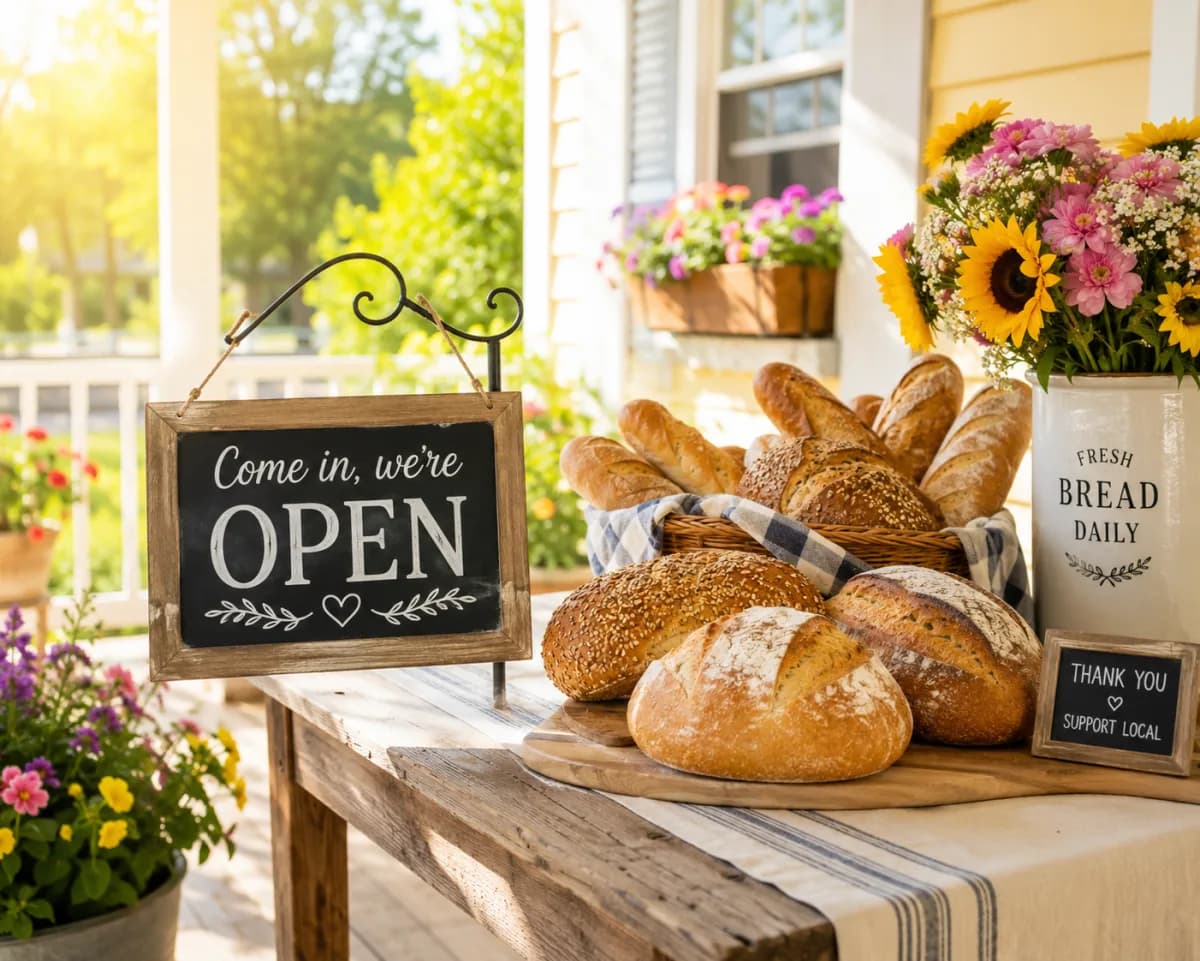
The 2-minute version
- Sales cap
- None
- State registration
- Not required
- Kitchen inspection
- Not required
- Food-handler card
- Required
- Sell at markets
- Yes
- Shipping
- In-state only
Three cards, the whole story. Everything below is detail — with the actual laws linked, so you never have to take our word for it.
Selling shelf-stable goods?
That’s homemade food — exempt from the Department of Health food-establishment permit. Label cookies, breads, cakes, jams, candy, or granola and sell straight to your neighbors. No DOH permit, no DOH fee, no pre-opening inspection. (You take a free food-safety class first.)
Want to sell wide?
This is the part that changed in August 2025. Homemade food can now be sold direct (in person, phone, online), through shops and groceries (wholesale and resale), and delivered by mail or shipping. The old “in-person, direct-only” rule is gone.
Want to sell cheesecake?
Anything that needs refrigeration — cheesecake, cream pies — is a “time/temperature control for safety” (TCS) food the homemade path excludes. It needs a permitted food establishment, and the rules say that can’t be a private home. That’s out of porch-shop scope, but it’s the honest answer.
Two ways to sell in Hawaii — pick your path
In shortHawaii’s home-food question splits on one thing: does what you make need refrigeration to stay safe? Shelf-stable → the free Homemade Food path (no permit, no fee, no cap). Refrigerated/TCS → a permitted kitchen, which can’t be your home. Hand-pounded poi has its own narrow door.
Hawaii’s home-food question splits cleanly on one thing: does what you make need refrigeration to stay safe? The cleanest way to see it: a cheesecake can’t legally come out of the homemade-food path — it needs refrigeration, which makes it a “time/temperature control for safety” (TCS) food the exemption excludes, and the Department of Health’s own examples rule out baked goods with custard or cream fillings. Same kitchen, two answers — the cheesecake needs the permitted route.
Homemade Food (HMF) operation
This is Hawaii’s cottage-food path. If you make shelf-stable food in your home kitchen — or qualifying pickled/fermented/acidified plant foods — you’re exempt from the food establishment permit: no DOH permit, no fee, no pre-opening inspection, and no sales cap. What you owe is a food-safety certificate, a correct label, and a handwashing sink kept stocked while you work.
The state put it plainly: “what the department of health calls ‘homemade food products’ is what most states define as ‘cottage food.’”
Pick this path if: everything you sell is shelf-stable — breads, cookies, cakes, candy, jams, jellies, granola, dry mixes — or you’re making plant-based pickles, kimchi, or salsa to the acidity rule.
Permitted food establishment
If your product needs refrigeration, it’s a TCS food and the homemade path doesn’t cover it. You’d need a permitted kitchen, and it can’t be a private home — the rules say “food establishment operations are not conducted in a private home.”
That means a commercial or shared kitchen, a DOH permit (a “Food Manufacturer – small” runs $100–$300 a year by risk category), plan review, and routine inspections. Out of porch-shop scope, but it’s the honest answer for refrigerated goods.
Pick this path if: your product needs refrigeration — cheesecake, cream pies, fresh or dried meats, most refrigerated items.
A third, narrow door — hand-pounded poi. Hawaii has a separate carve-out for hand-pounded poi: you can make it without a permit or a certified facility, but sales are direct to the consumer only — no shops, no wholesale — and it carries its own label statement (see Labels). This is a poi-specific carve-out; if you’re not making poi, it doesn’t apply to you.
Sources: HAR §11-50-3(c) (homemade food exemption) · HAR §11-50-20(d)(1) (not in a private home) · HAR §11-50-7 Table 7-1 (permit fees) · HRS §321-4.7 (hand-pounded poi) · Act 195, SLH 2024
Where you can sell
In shortThis is where the August 2025 rules changed the game. Homemade food can now go through essentially every channel: direct to neighbors (in person, phone, online), through shops and groceries (wholesale and resale), and by mail or shipping. Hand-pounded poi is the exception — direct-to-consumer only.
This is where the August 2025 rules changed the game. Homemade food products may now be distributed through essentially every channel.
Directly to your neighbors — “whether in person or remotely, including by telephone or the internet.” In person from your porch, at farmers markets, fundraisers, craft fairs — and, expressly, online: the Department of Health’s own FAQ says “You may also sell your product online.”
Through shops and groceries (wholesale and resale). The rules now let an “agent of the homemade food operator or a third-party vendor such as a food establishment” sell your product to the consumer. The Department of Health put it directly: “HMF producers are allowed to sell their non-TCS products to 3rd parties, online and wholesale.” If a restaurant uses your product as a menu ingredient or sells it, it must keep written disclosure that it’s a homemade food product and have your label available to a patron on request.
By mail or shipping. Delivery may be made by you, by an agent or third-party vendor, by mail, or by shipping.
Farmers markets and events — your homemade product needs no DOH permit, but some event organizers require a Special Event permit to participate; the Department of Health will review and sign off on that application.
Hand-pounded poi: direct to the consumer only — no wholesale, no third-party resale.
Shipping out of state isn’t restricted by Hawaii’s rule — but federal law applies. The rule allows “mail, or shipping” without naming a geographic limit. Hawaii’s own flyer warns that “the U.S. Food and Drug Administration does not recognize HMF products as an approved source” — which is the practical barrier once a package crosses a state line. No Hawaii source resolves the out-of-state question either way, so confirm the federal side before you build a mainland shipping business on it.
Sources: HAR §11-50-3(c) · DOH — Highlights of Approved Amendments (eff. 8/24/2025) · DOH — Homemade Food Products flyer · DOH — Special Event Permit applications
What you can sell
In shortHomemade food is the shelf-stable (non-TCS) rule, plus plant-origin pickled, fermented, or acidified foods to a pH ≤4.2 OR water-activity <0.88 threshold. Dried meats and seafood are out, and anything refrigerated needs the permitted route. Cheesecake fails the homemade path.
Homemade Food — the shelf-stable rule
- Breads & cookies
- Cakes (no custard/cream filling)
- Candy
- Jams & jellies
- Granola
- Dry mixes
- Pickles & kimchi (plant only)
- Salsa (plant only)
A homemade food product is, first, “not time/temperature control for safety food produced or packaged in a home kitchen” — nothing that needs refrigeration or hot-holding to stay safe — and it may not include dried meats or seafood. Typical goods, from the Department of Health’s own examples: jams and jellies; baked goods without custard or cream fillings; pickles, kimchi, and salsa (plant foods only); and juice sold direct to the consumer.
Pickled, fermented & acidified plant foods
- pH 4.2 or lower
- OR water activity under 0.88
- No melon-family fruits
- Cut-tomato salsa: keep ≤41°F
The second half of the definition allows foods of plant origin that are pickled, fermented, or acidified — except cantaloupes and other melon-family fruits — that have a pH of 4.2 or lower, or a water activity (Aw) value of less than 0.88. It’s an either/or — meeting either threshold qualifies. (See “What changed” for why this matters: the underlying statute said “and,” but the adopted rule you actually follow says “or.”) One refrigerated exception lives inside this rule: a product with cut tomatoes, such as salsa, must be kept refrigerated at or below 41°F.
Not allowed as homemade food
- Cheesecake & cream pies
- Anything refrigerated (TCS)
- Dried meats & seafood
- No vacuum packaging
- No canning except jams & jellies
Any TCS food — anything needing refrigeration or temperature control — is out. So are dried meats or seafood (beef jerky, dried aku), excluded in the definition itself; the flyer adds dried melons and dried tomatoes. No vacuum packaging, and no canning except jams and jellies. Cheesecake fails the homemade-food path: it’s a refrigerated TCS food, and the Department of Health’s examples specifically exclude baked goods with custard or cream fillings — it needs the permitted-kitchen path.
Sources: HAR §11-50-2 (definition of homemade food products) · DOH — Highlights of Approved Amendments · DOH — Homemade Food Products flyer
The rules that actually matter
In shortNo sales cap, no pre-opening inspection — but the homemade path is shelf-stable only (no dried meats or seafood), plant-foods-only for the pickled category, and still subject to the Department of Health’s inspection authority. The $20 you keep seeing is a tax license, not a food permit.
- No sales capThere is no gross-sales, revenue, or volume limit on a homemade food operation anywhere in the Food Safety Code — the exemption sets none. Sell as much shelf-stable food as you can make.
- No pre-opening inspection — but still subject to oversightThere’s no pre-opening inspection of your home kitchen, but “exempt from a permit” does not mean “unregulated.” Homemade food operations remain subject to the Department of Health’s inspection, embargo/detention, ill-employee, and penalty provisions, and violating any of the homemade-food conditions is a violation of the chapter.
- Shelf-stable only, plant-foods-only for the pickled categoryNothing that needs temperature control; no dried meats or seafood. The pickled/fermented/acidified category is plant foods only, to the pH ≤4.2 or Aw <0.88 rule, with melon-family fruits excluded. A handwashing sink with cleaning compound must be available at all times during food preparation.
- The $20 is a TAX license, not a food permitThe $20 you keep seeing is the state General Excise Tax (GET) license from the Department of Taxation — a one-time registration any home business gets, on Form BB-1 or Hawaii Tax Online. It has nothing to do with the Department of Health; it’s how Hawaii handles business-income tax. County zoning and home-occupation rules are separate too — check yours.
Sources: HAR §11-50-2 · HAR §11-50-3(c) · Hawaii Dept. of Taxation — Licensing
Getting set up
In shortThe homemade path is light: confirm everything is shelf-stable, take the free food-safety class, label everything, and register for the $20 GET tax license. No DOH permit, no fee, no pre-opening inspection. The permitted-kitchen path (for refrigerated foods) is a different, out-of-scope route.
Homemade Food path (the cottage path)
- Confirm everything you sell is shelf-stableNo TCS food, no dried meats or seafood. If you’re doing pickled/fermented/acidified plant foods, hit the pH ≤4.2 or Aw <0.88 rule, and keep cut-tomato products like salsa refrigerated at or below 41°F.
- Get food-safety certifiedComplete a food-safety course from a Department of Health program or a DOH-approved program — ANSI-accredited courses qualify. The DOH’s own in-person class is free (its page states the food-safety class at the food-handler level is offered at no charge); ANSI-accredited online courses are an accepted alternative and may charge their own fee. The DOH page says certification is valid for three years — that’s the agency’s stated cycle; the rule itself doesn’t pin a renewal period, so treat the three years as the practical answer and re-certify on it.
- No DOH permit, no fee, no pre-opening inspection, no applicationFor the homemade product itself there’s nothing to file with the Department of Health. Keep a handwashing sink with cleaning compound available whenever you’re preparing food.
- Label everything correctlyThe five homemade-food elements, including the verbatim disclaimer — copy the sample below.
- Get a state General Excise Tax (GET) licenseAnyone earning business income in Hawaii registers for GET — a one-time $20 registration (Form BB-1 or Hawaii Tax Online). It is a tax registration, not a food or health permit, and has nothing to do with the Department of Health. (You’ll also collect and remit the general excise tax on your sales — that’s the tax side, separate from the food rules.)
- A Special Event permit only if an organizer requires oneFees run $50 (1–5 days), $75 (6–10 days), $100 (11–20 days), with a “Farmers Value Added” rate of $25 and a $0 benevolent/charitable rate. Your homemade product itself needs no DOH permit; this is only for events whose organizer asks for one.
That’s the whole homemade-food path — no DOH permit, no DOH fee, no pre-opening inspection. The only dollar is the $20 GET tax license. (No phone number or email is hard-coded here on purpose — the Department of Health directs homemade-food questions to its Food Safety Branch contact page, which lists the office for each island.)
Permitted-kitchen path (refrigerated / TCS foods)
- A commercial or shared kitchen — not a private homeThe rules say food establishment operations are not conducted in a private home, so refrigerated/TCS goods can’t come out of your house.
- A DOH permit, plan review, and routine inspectionsA “Food Manufacturer – small” permit runs $100–$300 a year by risk category, with plan review and routine inspections. Out of cottage scope, but it’s the route for anything refrigerated.
Sources: HAR §11-50-3(c) · HAR §11-50-20(c) (food-safety certification) · DOH — Food Safety Education · Hawaii Dept. of Taxation — Licensing · DOH Food Safety Branch — contact
Labels
In shortHawaii’s homemade food must carry a five-element label, including a verbatim disclaimer. The name keys to the producer / operation — a business name is fine — not a specific individual. There’s no net-quantity line and no minimum type size. Hand-pounded poi carries a DIFFERENT verbatim statement.
Homemade Food (HMF) label
- The verbatim required statement: “Made in a home kitchen not routinely inspected by the Department of Health.”
- The common name of the food — or, if there’s no common name, an adequately descriptive identity statement
- If made from two or more ingredients, a list of ingredients and subingredients in descending order of predominance by weight
- Notification of the major food allergens present. Hawaii’s allergen list is the federal big nine: milk, eggs, fish, shellfish, tree nuts, peanuts, wheat, soybeans, and sesame.
- The name and contact information of the homemade food product producer. The rule keys this to the producer / operation — a business name is acceptable — not a specific individual’s personal name.
Hand-pounded poi label
- A different verbatim statement: “This hand-pounded poi was prepared in a facility not inspected by the Department of Health.” (Use this only for hand-pounded poi — not for any other homemade food.)
- The name and contact information of the producer.
The product must be packaged in the way it is to be sold, and the rule sets no minimum type size — but everything must be legible and easy for the buyer to find. The Department of Health’s sample label shows a business name plus a website and email (“Aunty’s LLC | website | email”), confirming a business name is fine. The hand-pounded poi statement is a separate, poi-only carve-out — don’t put it on anything that isn’t hand-pounded poi.
Sources: HAR §11-50-35(c)(4)–(5) (label requirements) · DOH — Homemade Food Products flyer (sample label, packaging)
What changed recently
In shortAugust 24, 2025 is the big one: Hawaii broadened the homemade-food definition (plant pickled foods) and opened the sales channels (third-party, online, wholesale, mail, shipping). Any guide still calling Hawaii “in-person/direct only” is describing the pre-August-2025 world. A 2026 home-cooked-meals bill did NOT become law.
- August 24, 2025 — Hawaii broadened the rules and opened the channelsThe Department of Health amended and compiled Chapter 11-50 of the Hawaii Administrative Rules, implementing Act 195 (SLH 2024) and adopting the 2022 FDA Model Food Code. Two changes matter most for porch shops: (1) the homemade-food definition now includes plant-origin pickled, fermented, or acidified foods (to the pH/water-activity rule), and (2) producers may now sell “to 3rd parties, online and wholesale,” and deliver by mail or shipping — channels that were not open before. Any guide that still says Hawaii is “in-person/direct only” is describing the pre-August-2025 world.
- July 3, 2024 — Act 195 (HB 2144) was signedAct 195 directed the Department of Health to make exactly those changes — broaden the definition and adopt rules allowing remote, telephone, internet, agent, third-party-vendor, mail, and shipping sales. The Act framed it as a lifeline for small producers, including those affected by the Maui wildfires. (One drafting wrinkle: Act 195 wrote the pickled-foods threshold as “pH ≤4.2 and Aw <0.88,” but the adopted rule the Department of Health was directed to write says “or” — and the rule is what operators follow, so this page uses “or.”)
- 2017 — the homemade-food exemption first appearedThe Department of Health amended Chapter 11-50 effective September 2, 2017, creating the homemade-food exemption. Hawaii had been one of the last states without a cottage-food-style exemption.
- 2026 — a “microenterprise home kitchen” bill that did NOT become lawHB 2229 would have authorized home cooks to prepare and sell home-cooked meals directly to consumers (the kind of perishable, made-to-order food the homemade-food path doesn’t cover) without permits or routine inspections. It was introduced January 28, 2026 and cleared one House committee, but did not advance before the Legislature adjourned sine die on May 8, 2026 — so it died with the session. There is no microenterprise home kitchen program in Hawaii today; if hot, perishable meals matter to your porch shop, watch for the idea to return in a future session.
Sources: DOH — Highlights of Approved Amendments (eff. 8/24/2025) · DOH — news release on the Food Safety Code update · Act 195, SLH 2024 (HB 2144) · Hawaii HB 2229 (2026)
Common questions
- Can I sell cheesecake from home in Hawaii?
- No — cheesecake needs refrigeration, so it’s a TCS food the homemade-food exemption excludes, and the Department of Health’s own examples rule out baked goods with custard or cream fillings. It would need a permitted commercial kitchen, which can’t be a private home.
- Do I need a permit or a license from the Department of Health in Hawaii?
- No. Homemade food operations are exempt from the food establishment permit — no DOH permit and no DOH fee. You do need a food-safety certificate, a correct label, and a handwashing sink, and you’ll register for the state’s $20 general-excise tax license (a tax matter, not a food permit).
- What’s the $20 I keep seeing for Hawaii?
- That’s the General Excise Tax (GET) license from the Hawaii Department of Taxation — a one-time $20 registration that any home business gets, on Form BB-1 or Hawaii Tax Online. It is not a food or health permit and has nothing to do with the Department of Health; it’s how Hawaii handles business-income tax.
- Is there a limit on how much I can sell in Hawaii?
- No. There’s no sales cap on a homemade food operation anywhere in the rules.
- Can a shop or grocery store carry my product in Hawaii?
- Yes — this is new since August 2025. The rules let you sell to third parties such as a food establishment, online, and wholesale, and the Department of Health confirms it directly. (A restaurant using your product must keep written disclosure that it’s a homemade food product and have your label available on request.)
- Can I sell online and ship my product from Hawaii?
- Yes — you may sell directly to consumers remotely, including by internet and telephone, and deliver by mail or shipping. Out of state is a different question: Hawaii’s rule doesn’t draw a state line, but federal (FDA) rules apply once a package leaves the islands, and the Department of Health notes the FDA “does not recognize HMF products as an approved source.” Confirm the federal side before shipping to the mainland.
- Can I sell salsa, pickles, or kimchi from home in Hawaii?
- Yes, with conditions. Plant-based pickled, fermented, or acidified foods qualify if they hit pH 4.2 or lower, or a water activity under 0.88 — pickles, kimchi, and plant-only salsa are on the Department of Health’s own example list. Salsa or anything with cut tomatoes must be kept refrigerated at or below 41°F. Melon-family fruits are excluded.
- Do I need food-safety training to sell homemade food in Hawaii?
- Yes. Homemade food operators must complete a food-safety course from the Department of Health or a DOH-approved (ANSI-accredited) program before operating. The state’s own in-person class is free, and the Department of Health says certification is valid for three years.
- Can my kid run a stand in Hawaii?
- Yes — Hawaii has no separate kid-stand exemption, but a young person uses the same homemade-food path an adult does, which has no minimum age. Shelf-stable cookies, breads, and candy from a family kitchen are allowed, with the same food-safety certificate, label, and handwashing sink.
- What about hand-pounded poi in Hawaii?
- Poi has its own carve-out — no permit or certified facility needed — but it must be sold directly to consumers only (no wholesale or resale) and carries its own label statement: “This hand-pounded poi was prepared in a facility not inspected by the Department of Health.”
Sources: HAR §11-50-2 / §11-50-3(c) (homemade food definition + exemption) · DOH — Homemade Food Products flyer · Hawaii Dept. of Taxation — Licensing (GET) · HRS §321-4.7 (hand-pounded poi)
You won’t be doing this alone
25 porch bakers are already selling across Hawaii under these exact rules. Browse their pages and learn from people two steps ahead of you — what they sell, how they price, how they talk about their bread. Cottage bakers are famously generous with what they’ve learned, and most are a DM away on Instagram.
- Honolulu Hawaii Cake DecoratorHonolulu
- LEAH’S DESSERTS | O’AHU HAWAI’IOahu
- The Lady & The Lion | Gluten Free BreadKeaau
- Kalyn CrossKapolei
- Kristi PhillipsKailua
- BLOSSOM & RHYZE MICRO-BAKERYWahiawa
- TheQuantumBaker | Organic SourdoughHonolulu
- Abbie St John | The Leafy LoafHonolulu
- Sundog BreadHolualoa
- BEARS BAKERYHawi








This page is educational, not legal advice — we’re not lawyers, just neighbors who read Hawaii’s official sources and wrote down what they say (every claim above links to its source). Hawaii liberalized these rules in August 2025, so older guides may be out of date — when in doubt, the current rule (HAR 11-50, effective August 24, 2025) and the Department of Health’s own materials are what govern. We don’t name a specific online food-safety course or its price, because the Department of Health keeps the approved-course list on its food-safety education page — check it there. The $20 we mention is a state general-excise tax license, a tax registration handled by the Department of Taxation, not a food permit. County zoning, home-occupation rules, and your tax obligations are separate and set elsewhere — check yours. Always double-check the details with your own city and state before you sell. When something here and the law disagree, the law wins; if you spot that happening, tell us and we’ll fix it.