Cottage food laws · California
Yes, you can sell what you bake in California.
California has a reputation for red tape, but its homemade-food law is friendlier than you’d think: one registration from your county is good statewide, you can sell online and ship anywhere in California, and in a growing list of counties you can even run a small restaurant out of your home kitchen. The catch: everything goes through your county, and the details — fees especially — vary by county. Here’s the whole picture, in plain English.
Verified against the California Health and Safety Code and CDPH’s program documents
Last checked June 11, 2026 — every section links its sources.
A plain-English breakdown, not legal advice — we’re not lawyers. Always confirm the details with your own city and state before you sell.
The 2-minute version
Starting path: Class A cottage food — other paths differ (see below)
- Sales cap
- ~$88,878/yr
- State registration
- Required
- Kitchen inspection
- Not required
- Sell at markets
- Yes
- Shipping
- In-state only
Three cards, the whole story. Everything below is detail — with the actual laws linked, so you never have to take our word for it.
Selling to neighbors?
Class A: register with your county, sign a six-rule self-certification checklist (no inspector visits), take a short food-safety course, and sell anything on the state’s approved list — porch, markets, online with shipping or delivery, anywhere in California.
Want store shelves?
Class B adds indirect sales — permitted shops, cafés, and restaurants can stock and resell what you make. The trade: one initial kitchen inspection, then at most one a year.
Cooking real meals?
California has a licensed path for actual dinners from your home kitchen — eat-in, pickup, or delivery by you. Only where your county has opted in (San Diego, LA, and more) — one call to Environmental Health answers it.
Four ways to sell — pick your path
In shortClass A is a county registration and a self-certified checklist — no inspections. Class B unlocks store shelves. MEHKO is the home-restaurant path where counties opt in. And the garden gate needs no registration at all.
Class A cottage food
Register with your county Environmental Health office, sign a self-certification checklist (six common-sense kitchen rules — no statement from an inspector needed, and no initial or routine inspections at all), and sell any food on the state’s approved list directly to the people eating it: porch, markets, bake sales, online with shipping or delivery anywhere in California. A short food-safety course within your first three months. Cap: $88,878 in gross sales for 2026.
Pick this path if: you’re baking, jarring, or drying shelf-stable foods and selling them to neighbors yourself.
Class B cottage food
Same foods, same direct sales — plus indirect sales: permitted shops, restaurants, and markets can stock and resell what you make. The trade: your county inspects your kitchen once before issuing the permit, and may inspect once a year after that. Cap: $177,756 for 2026. One county’s permit is good for direct and indirect sales throughout the state.
Pick this path if: you want your goods on store shelves or a café’s counter.
A home restaurant (MEHKO)
A Microenterprise Home Kitchen Operation is the real-meals path: cook and serve actual dinners from your home kitchen — eat-in, pickup, or delivery by you, your one employee, or a family or household member, same day it’s cooked. Limits: 30 meals a day, 90 a week, $110,442 a year (2026). You’ll pass a food safety manager exam, submit your operating procedures, and get an initial inspection (then at most one routine a year). The catch: MEHKOs only exist where the county (or city with its own health department) has opted in — about 18 jurisdictions covering roughly 60% of Californians so far, per the pending bill’s legislative findings. San Diego and Los Angeles counties are in, and Riverside was among the earliest; ask your county.
Pick this path if: you’re cooking plated meals, not packaged goods — and your county has opted in.
The garden gate
Whole, uncut fruits and vegetables and unrefrigerated shell eggs (up to 15 dozen a month) can be sold straight from your garden gate with no registration at all in most cases — just a sign or label with your name and address, the state’s small-farm food safety practices, and 30 days of simple sales records. A produce stand at a spot you control isn’t even a “food facility” under the law.
Pick this path if: you’re selling whole produce or eggs straight from your garden.
Sources: Cal. HSC §113758 · §114365 · §113825 (MEHKO) · §114376 (community food producer)
Where you can sell
In shortPorch pickup, markets, bake sales, CSA boxes — and online with shipping or delivery anywhere in California. One county’s registration is valid statewide. Nothing crosses the state line, and zoning can’t shut the porch shop down.
Cottage food (Class A and B): the law’s list of direct-sale venues is long on purpose — your home, holiday bazaars, temporary events, bake sales, food swaps, farm stands, certified farmers’ markets, CSA subscriptions, and sales made “via the phone, internet, or any other digital method,” fulfilled in person, by mail, or by any third-party delivery service. Porch pickup at your home is squarely on the list. Class B adds the indirect lane: permitted retail shops and restaurants can carry your products. And since 2022, one county’s registration or permit is valid throughout the state — no re-registering county by county.
MEHKO: meals are eaten at your home, picked up, or delivered — but only by you, your one employee, or a family or household member. Hiring an outside delivery service is not allowed (there’s a narrow exception for neighbors whose disability prevents pickup). Orders can absolutely be taken online.
Everyone: California only. The law defines both “direct sale” and “indirect sale” as “a transaction within the state.” Shipping to another state puts you in federal (FDA) territory; no California path covers it.
Zoning can’t shut the porch shop down. A city or county can’t prohibit a cottage food operation in any residential home — it must treat it as a permitted use or run a reasonable, cost-capped permit process. MEHKOs get an even stronger shield: no zoning permits, no zoning fees at all — in exchange, a MEHKO posts no signage or outdoor food displays and keeps to noise rules.
Sources: Cal. HSC §113758 · §114365 (statewide validity) · §114367.5 (MEHKO delivery) · Gov. Code §51035 (zoning) · §114367.4 (MEHKO zoning shield)
What you can sell
In shortCottage food runs on a state-approved list — generous for baked goods, candy, jams, and dried goods, but salsa, pickles, and anything refrigerated don’t make it. Home restaurants flip the logic: almost any same-day meal.
From the ten approved categories
- Breads, cakes & cookies
- Pies & empanadas (fruit only — no pumpkin)
- Candy, fudge & freeze-dried candies
- Marshmallows (no eggs)
- Vanilla & listed extracts (70+ proof)
- Granola, herbs, tea & roasted coffee
- Real-butter buttercream
- Honey & sorghum (pure only)
- Jams & preserves (federal fruit list)
- Nut butters (roasted/pasteurized)
- Powdered drink mixes
- Plain mustards & fruit vinegars
The flags that surprise people: pies and empanadas are fruit only (no pumpkin); frostings can’t contain eggs, cream, or cream cheese — but real-butter buttercream is explicitly allowed, and meringue powder or pasteurized eggs are fine; extracts are a fixed list of about two dozen flavors; beverages appear only as powdered mixes. The live list is CDPH’s Approved Cottage Foods List (last reviewed April 2026).
Not on the list, not legal as cottage food
- Salsa
- Pickles & home-canned vegetables
- Hot sauce
- Pumpkin pie & cheesecake
- Anything refrigerated
The misses are the classics — low-acid canned foods carry botulism risk, and custard fillings are excluded. If your recipe needs a fridge to stay safe, it needs a different path (a home restaurant covers refrigerated meals; the rest needs a commercial kitchen). The list can grow, though — you can ask CDPH to add a food (form CDPH 8764); the department takes up additions four times a year, with a public comment window. A food isn’t legal until it actually appears on the list.
Sources: CDPH approved foods list (PDF) · HSC §114365.5 (list changes) · CDPH cottage food FAQ · CDPH — adding foods to the list · §113825 (MEHKO foods)
The rules that actually matter
In shortThe caps move every January (most websites still quote old numbers). One helper max. You live where you bake. California only. And a home restaurant can’t also be a cottage operation.
- The caps move every JanuaryThe statute set $75,000 (Class A) and $150,000 (Class B) in 2022 and indexes them to the California CPI; CDPH publishes the adjusted numbers each year. For 2026: $88,878 and $177,756. The home-restaurant cap works the same way: $100,000 set in 2023, $110,442 for 2026. Most websites still quote the old numbers — use CDPH’s current sheet.
- MEHKO meal ceilings30 individual meals a day, 90 a week; your county can lower those numbers but not raise them — with one carve-out: counties that let a MEHKO supply small food carts may set higher limits for those operations (San Diego allows 80 a day, 200 a week, and $150,000).
- One helperBoth cottage food operations and MEHKOs are capped at one full-time-equivalent employee — family and household members don’t count toward it, and for cottage food, neither does someone who only delivers.
- You live thereThe cottage food operator must reside in the home, and prep happens in the home kitchen (plus attached rooms used only for storage). Same idea for home restaurants.
- California only — and the categories stay separateBoth paths stop at the state line. And a MEHKO can’t be a caterer or a cottage food operation at the same time — the categories are legally separate, and MEHKO ads aren’t allowed to use the word “catering” at all.
Sources: Cal. HSC §113758 · CDPH 2026 caps (PDF) · §113825 · CDPH 2026 MEHKO cap (PDF) · HSC ch. 11.7 (food carts) · San Diego MEHKO quickfacts (PDF)
Getting set up
In shortEverything runs through your county Environmental Health office (in a few cities, a city health department) — CDPH keeps the food list and training standards but registers no one. Counties set the fees, so that’s the number that varies.
Class A — cottage food
- Get the application from your county Environmental Health office
- Sign the self-certification checklistSix kitchen rules: no other household activities in the kitchen while you work; no infants, small children, or pets in the kitchen during prep; clean equipment in good repair; wash-rinse-sanitize surfaces before each use; no rodents or insects; no smoking in the work area. No inspector visits.
- Pay your county’s feeCounties set their own fees, so this is the number that varies. Officially published examples (mid-2026): Los Angeles County $118; San Diego County $231 initial, $92 a year to renew.
- Take a CDPH-approved food processor course within three monthsFour hours or less, then a refresher every three years. Everyone who preps or packages takes it, household helpers included.
- Renew annually
Sources: Cal. HSC §114365 · §114365.2 (course) · LA County Class A · LA County Class B · §114365.6 (Class B surcharge) · San Diego fee schedule (PDF) · §114367.2 (MEHKO setup)
Class B and MEHKO — what’s different
Class B — same steps, one inspection
The county issues a permit after an initial kitchen inspection instead of a self-certified registration, and the fee is higher (Los Angeles $292; San Diego $526 initial, $361 renewal). The law also lets counties collect a small state surcharge on Class B permits.
MEHKO — where your county opted in
Confirm your county is in (ask Environmental Health), pass an accredited food safety manager exam (helpers need food handler cards), submit your standard operating procedures, pass the initial inspection, and pay the county fee — capped by law at the county’s reasonable administrative costs. Examples: Los Angeles $597 initial application review fee (waived for up to 1,000 first-time permittees through June 30, 2026, while funds last); San Diego $673 initial, $335 renewal.
The garden stand: nothing to file in most cases — just the sign or label, the state’s small-farm practices, the 15-dozen-egg monthly ceiling, and 30 days of records. (A local ordinance can add a registration; worth one call to your county.)
Labels — and your ads
In shortCalifornia’s label is specific down to the type size — “Made in a Home Kitchen” in 12-point on the front. And uniquely: your ads (including your shop page) must show the county, your number, and that same statement.
Every packaged cottage food product
- “Made in a Home Kitchen” in 12-point type on the principal display panel — the front of the package. (Repackaging a purchased ready-to-eat product? It’s “Repackaged in a Home Kitchen” instead, plus a description of what you repackaged.)
- The common or descriptive name of the food, on the front panel
- The name of your cottage food operation, plus city and ZIP (street address too if your operation isn’t in a current telephone directory)
- Your registration or permit number and the county that issued it
- Ingredients, heaviest to lightest, if there are two or more
- Net quantity in both English and metric units
- An allergen declaration if the food contains any major allergen — the nine under federal law: milk, eggs, fish, crustacean shellfish, tree nuts, wheat, peanuts, soybeans, and sesame (added effective January 1, 2023)
- In English (translations may sit alongside); food-grade materials; Nutrition Facts only if you make a nutrient or health claim
Your ads carry three of those too
Any cottage food operation that advertises to the public — “including through an internet website, social media platform, newspaper, newsletter, or other public announcement” — must show the county of approval, the permit or registration number, and “Made in a Home Kitchen.” A porch-shop page counts; a compliant California page shows all three. (Home-restaurant ads have their own trio — agency name, permit number, the same statement, spoken aloud in a verbal ad — and never the word “catering.”)
Sources: Cal. HSC §114365.2 · CDPH labeling guide (PDF) · §114367.6 (MEHKO ads) · FDA — sesame (FASTER Act)
What changed recently
In shortThe caps moved again in January 2026, the county home-restaurant wave keeps growing — and a pending bill would make home restaurants statewide by mid-2027.
- January 1, 2026 — the caps moved againThe annual inflation adjustment took Class A to $88,878, Class B to $177,756, and the home-restaurant cap to $110,442. This happens every January; CDPH posts the new sheet.
- The county home-restaurant waveLos Angeles County authorized home restaurants in May 2024 and began permitting that November — with the $597 initial application review fee waived for up to 1,000 first-time permittees through June 30, 2026, while funds last. San Diego’s Board of Supervisors made its program (running since 2022) permanent in November 2023. The pending bill AB 2315’s legislative findings count about 18 jurisdictions in, covering roughly 60% of Californians.
- Watch item — AB 2315 (pending, not law)A bill in the Assembly would end the county opt-in entirely and make home restaurant permits available statewide by mid-2027. As of June 11, 2026 it’s still in committee. If it passes, the “is my county in?” question disappears.
Sources: CDPH 2026 caps (PDF) · AB 2315 (pending) · LA County MEHKO page
The last big statute changes landed earlier: 2022 opened internet sales, mail and delivery fulfillment, and statewide validity for cottage operations, and set the caps that now index annually; ads got their disclosure rules the same day. July 2023 doubled the home-restaurant cap to $100,000 and raised meals to 90 a week; 2023 also let a cottage operation or MEHKO supply up to two small non-motorized food carts, with county sign-off.
Common questions
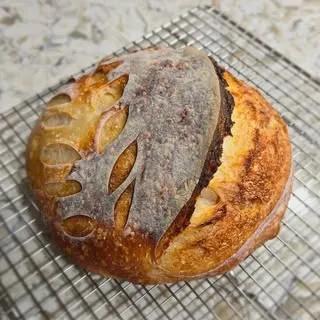
- Can I sell sourdough from home in California?
- Yes — bread is squarely on the approved list; register Class A with your county Environmental Health office and label it.
- Can I sell salsa, pickles, or hot sauce in California?
- No — none are on the approved cottage foods list, and CDPH’s FAQ explains why (low-acid canned foods carry botulism risk). Same answer for pumpkin pie and cheesecake: custard fillings are excluded.
- Can I do custom cakes with buttercream?
- Yes — frostings can’t contain eggs, cream, or cream cheese, but real-butter buttercream is explicitly allowed (meringue powder and pasteurized or powdered eggs are fine too).
- Can I sell online and ship?
- Yes — phone, internet, or “any other digital method,” fulfilled in person, by mail, or by delivery service — anywhere in California. Out of state, no.
- Can a grocery store or café carry my cookies?
- That’s exactly what Class B is for — its permit covers indirect sales through permitted shops and restaurants statewide.
- Do I need a kitchen inspection in California?
- Class A: no — you self-certify, and no initial or routine inspections apply (a county can come only on a food-safety complaint, and only into the registered area). Class B: one initial inspection, then at most one a year. MEHKO: initial, then at most one routine a year, scheduled with you.
- How much can I earn selling homemade food in California?
- For 2026: $88,878 (Class A), $177,756 (Class B), and $110,442 (home restaurant / MEHKO) in gross annual sales — all adjusted each January for inflation.
- Can I cook actual meals — pozole, biryani, Sunday dinners?
- Yes, if your county has opted into home restaurants (MEHKOs): same-day meals, 30 a day, 90 a week, delivered only by you, your one employee, or family — no third-party delivery apps doing the dropoff. Ask your county Environmental Health office whether it’s in.
- Is my homemade food taxable? Do I need a seller’s permit?
- Generally not for cold food sold to go: the state tax agency says cold-food-only sales are “generally considered nontaxable” with no seller’s permit required. Hot prepared food is treated differently, so MEHKO cooks should ask the CDTFA.
- The thing I make isn’t on the approved list. Am I stuck?
- You can ask CDPH to add a food (form CDPH 8764) — the department takes up additions four times a year, and the public gets a comment window. It’s not legal until it actually appears on the list, though.
You won’t be doing this alone
693 porch bakers are already selling across California under these exact laws. Browse their pages and learn from people two steps ahead of you — what they sell, how they price, how they talk about their bread. Cottage bakers are famously generous with what they’ve learned, and most are a DM away on Instagram.
- LA Micro BakeryLos Angeles
- KimmiSomeSourdoughMenifee
- Stella's SourdoughCorona
- Stella's SourdoughCorona
- Fancy Free Gluten-Free Bakery | Orange CountyOrange
- Oak Grove Farm Stand | Sebastopol MicrobakeryGraton
- Sweet and Sour BakeryUpland
- Melissa HelmRiverside
- Little Arellano FarmLong Beach
- Sweets and Treats by TamiCamarillo


This page is educational, not legal advice — we’re not lawyers, just neighbors who read California’s official sources and wrote down what they say (every claim above links to its source). Counties run the registration desks and set their own fees — the dollar figures here are each county’s published numbers as of mid-2026, and yours may differ; check with your county Environmental Health office. Always double-check the details with your own city and state before you sell. When something here and the law disagree, the law wins; if you spot that happening, tell us and we’ll fix it.